

























































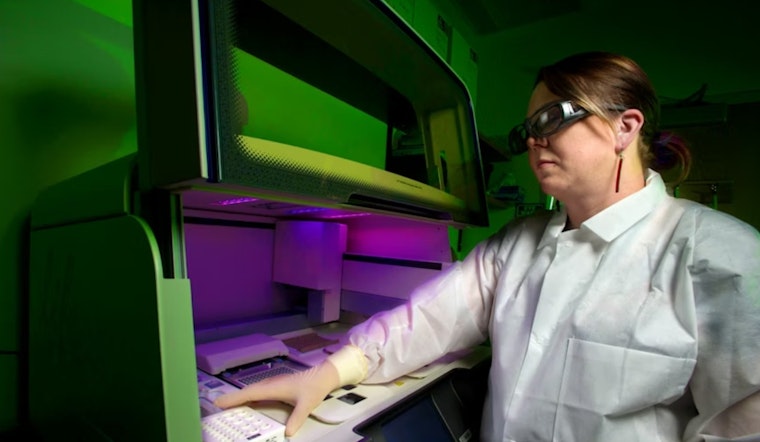
San Diego’s Element Biosciences is taking a direct swing at industry heavyweight Illumina, rolling out a new high-throughput benchtop sequencer called VITARI that the company says can deliver a high-quality whole human genome for roughly $100. The San Diego-based sequencing startup has opened pre-orders for the system, which carries a list price of $689,000 and is slated to start shipping in the second half of 2026, dropping the machine squarely into Illumina’s lane even as the two companies battle in court.
What VITARI promises and who it’s for
Element is pitching VITARI as a workhorse for labs that want to do population-scale sequencing without building a giant facility to match. The company says the instrument will generate up to 10 billion reads per run and will work with its Cloudbreak Freestyle and Trinity sequencing kits, according to Business Wire. The list price lands at $689,000, with Element repeating that VITARI will begin shipping in the second half of 2026 and framing it as a $100-per-genome option for high-coverage whole-genome runs.
The target customers are not small clinics dabbling in genetics. Element is going after biotech companies, big pharmaceutical labs and academic genomics centers that need both serious throughput and lower per-genome costs. The promise, if the numbers hold in the field, is that standard labs could shoulder projects that used to be reserved for national centers and mega-consortia.
Legal cloud over the launch
The big debut comes while Element is still locked in litigation with Illumina. Illumina has accused the startup of infringing patents related to flow-cell, fluidics and imaging technology, filing a lawsuit in 2025 that seeks both damages and injunctions, as reported by Biotech Insider. That complaint zeroes in on Element’s AVITI line and its consumable cartridges, arguing those products use patented features Illumina developed.
Element has not taken those accusations quietly. The company has filed antitrust and patent countersuits and has accused Illumina of relying on exclusive discounts and coercive sales tactics to keep would-be competitors out of the market, according to company materials. The antitrust case is listed in the Northern District of California as case no. 5:25-cv-08026, and Element’s filings say the complaint seeks injunctive relief along with damages, according to the U.S. District Court docket.
What this means for San Diego’s biotech scene
Behind the courtroom drama, investors have steadily bankrolled Element as it moved from prototypes to commercial instruments. Coverage of the company and the litigation points to a recent large funding round and hundreds of millions of dollars raised overall, backing that has helped scale up instrument and reagent manufacturing, according to Biotech Insider. With VITARI and its advertised per-genome price drop, more sequencing contracts and large-scale studies could drift toward San Diego-based providers and local labs, potentially reshaping where population-scale projects and contract work land inside the region’s biotech hub.
Element, founded in 2017, has grown to hundreds of employees in San Diego as it builds out instrument and reagent capacity, according to Element Biosciences. The company says it is still expanding hiring in the area, notes instrument placements outside the United States and reports rising customer interest. Executives say pre-order commitments for VITARI are already in place even as the legal fights continue in multiple courts.
Why the court fights matter
The outcome of the patent and antitrust cases will help decide whether key sequencing designs stay closely held by incumbents or whether new entrants can offer lower-cost systems without striking broad licensing deals. That decision could shape genome sequencing prices and access for years to come. Federal dockets in Delaware and California already show a steady churn of motions and responses, and judges will be weighing dense technical patent arguments against Element’s competition claims. Recent filings are available on the U.S. District Court docket.
Even so, Element’s leadership is trying to keep the spotlight on the tech rather than the lawsuits. The company presents VITARI as a way to lower barriers to genomic research. “We hope to push the field as a whole and raise the bar,” Element co-founder Matthew Kellinger told The San Diego Union‑Tribune, arguing that competition, not litigation, is what will ultimately drive sequencing costs down.



