

























































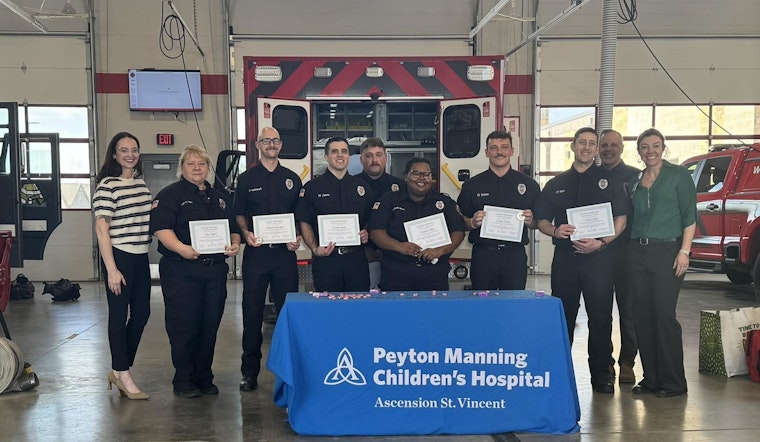
The Westfield Fire Department says medics from Station 81's B shift administered blood products in the field to a patient who suffered serious blood loss. The department's post names the B shift crew as Pam Taylor, Michael Vanshoyck, Quentin James, Cole Howard and Liz Moore, and notes that WFD now carries blood products on its rigs. The post also adds that representatives from Ascension St. Vincent Indianapolis and Peyton Manning Children's Hospital visited Station 81.
WFD's account of the response
In its Facebook write up, the department says the crew "administered blood products pre-hospital" to help stabilize the patient and publicly thanks hospital staff for their support (Westfield Fire Department). The brief post highlights the serious hemorrhage that required immediate action, lists the involved medics by name, and omits any patient-identifying details.
Why some EMS units carry blood
Across the United States, a small but growing number of EMS and fire agencies have added whole blood or low-titer O blood to their kits to treat life-threatening bleeding before patients reach the hospital, according to a federal EMS briefing (EMS.gov). Recent peer-reviewed work reports that prehospital transfusion programs can shorten the time to transfusion and may prevent deaths in some trauma cases, while also pointing out substantial logistical hurdles (PubMed Central).
Local push and community ties
Westfield has been encouraging blood donations and building community partnerships as it expands emergency capabilities; earlier this year, local police and fire officials put out a January blood-drive appeal. The city identifies Station 81 as the fire department's primary facility on its website, underscoring the station's central role in the department's recent operational upgrades (City of Westfield).
Training, safety and supply hurdles
Programs that put blood on ambulances or fire apparatus require focused training, strict cold-chain controls and close hospital partnerships to limit waste. Implementation guides emphasize product rotation systems, warming devices and recurring competency checks for crews. Peer-reviewed guidance on setting up whole-blood programs offers practical steps for minimizing wastage and maintaining transfusion safety standards (PubMed Central).
WFD's social media post does not include clinical outcome details, and hospitals typically keep patient information confidential for privacy reasons. Even without those specifics, the department's message and the follow up hospital visit point to a local move toward more advanced care in the field that lines up with a broader national shift toward earlier control of severe bleeding.


