

























































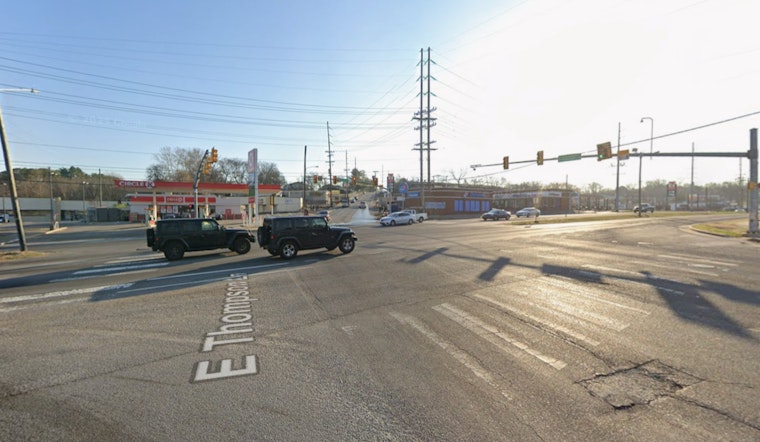
Relief is finally on the way for one of South Nashville’s most clogged commute chokepoints. City officials say bus-only lanes and new “smart” traffic signals are headed to the Murfreesboro Pike and Thompson Lane intersection, a move designed to untangle one of WeGo’s busiest corridors and keep the 55 Murfreesboro Pike route running on time.
The project is a joint effort between WeGo Public Transit and the Nashville Department of Transportation and Multimodal Infrastructure, according to Nashville.gov. The goal is to keep buses spaced roughly 8 to 10 minutes apart, which may occasionally mean drivers will hold briefly at stops to even out gaps along the line, WKRN reported. Officials say the tweaks are aimed squarely at a corridor that has a habit of running late.
How the signals and lanes will work
Smart signals, known as transit signal priority, allow buses to “ping” a central controller so traffic lights can be slightly extended or shortened to favor transit. Queue-jump lanes give buses their own short approach to the intersection, letting them move a few seconds ahead of backed-up traffic when the light turns green. According to WeGo Public Transit, this kind of setup can cut down on time spent idling at red lights and, in some cases, lets buses slip past long lines of cars.
When and where the work will happen
WeGo and its partners expect the Thompson Lane bus lanes to be finished by the end of July 2026, WKRN reported. Construction will focus on the busy Murfreesboro Pike–Thompson Lane intersection and build on earlier queue-jump and signal improvements already installed along Murfreesboro Pike, including a recent queue-jump at Edge O Lake Drive described by Mass Transit.
Why this matters to riders
The 55 Murfreesboro Pike is WeGo’s highest-ridership route and was specifically called out in a Metro announcement about federal SMART grant funding that will help cover technology and operations upgrades, according to Nashville.gov. Riders have felt the strain: local reporting has highlighted ongoing punctuality problems along the corridor, and one analysis put on-time performance at roughly 60 percent in some segments, WTVF reported.
City and transit officials argue that a mix of dedicated lanes and signal-priority technology should make travel times more predictable and help the route stick to its schedule, which they hope will make daily bus use a more appealing option for South Nashville commuters.
How to follow the project
WeGo is posting project materials, implementation notes, and service updates on its project and news pages, and riders can sign up for alerts through the agency’s customer channels. For stop-by-stop schedules and official notices about detours or service changes, visit WeGo Public Transit and check the agency’s news releases.



