

























































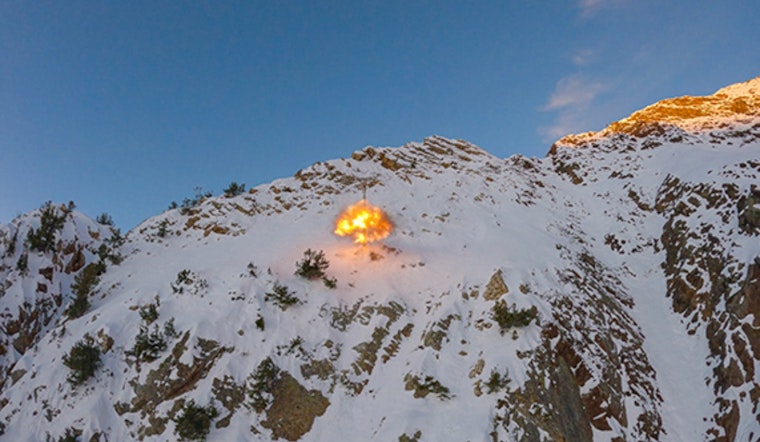
Utah transportation officials are quietly weighing a high-tech twist on an old problem: using drones that carry and drop small explosive charges to trigger controlled avalanches above canyon highways and nearby communities. The idea is straightforward enough on paper: keep people out of harm’s way by sending machines into terrain where workers have traditionally had to stand. Officials say any move toward a drone program would first have to clear legal, safety and operational reviews.
According to KSL NewsRadio, the Utah Department of Transportation has already met with Drone Amplified to learn about the company’s MONTIS and DART systems. UDOT spokesman John Gleason told the outlet that state leaders still need to determine whether Utah law allows drones to carry explosives at all, and that crews would have to be confident it is safe to drop charges near busier canyon approaches and terrain that sits close to ski resorts before the agency would move forward.
For now, UDOT still leans on helicopters, fixed remote tower charges and artillery often described as a World War II-era howitzer to knock unstable snow off steep slopes. The agency has been steadily expanding remote avalanche-control systems to pull workers back from blast zones and canyon traffic, according to UDOT. Any future drone program would be folded into that existing “toolbox” rather than replacing current methods outright.
Alaska Already Tested The Technology
While Utah debates the idea in meeting rooms, Alaska has already taken it to the snow. State agencies there ran public tests of Drone Amplified’s DART system, with the Alaska Department of Transportation and the Alaska Railroad using an unmanned aircraft to place and detonate small explosive rounds and trigger controlled slides along key transportation corridors.
In a January press release, the agency said those tests showed the approach is feasible and pledged to share its Federal Aviation Administration waiver paperwork with other states to help them navigate regulatory approvals. Alaska officials framed the work as a way to move away from artillery in places where fixed Remote Avalanche Control Systems do not make sense, and that demonstration is now being held up by manufacturers and other transportation departments as a playbook for bringing the technology into service safely.
How The Systems Work And Who Uses Them
Drone Amplified’s MONTIS platform is built to haul and precisely release small explosive charges onto targeted snow slopes, while its IGNIS system is designed to drop igniters that land managers use for prescribed burns and vegetation management. The company and industry reports say the systems combine aerial mapping with pinpoint drops that limit collateral damage and keep crews off the most dangerous terrain.
Federal and state land-management agencies have already tested or adopted aerial ignition tools for controlled burns, applying the same basic concept without the avalanche angle. For more on the company’s programs, see Drone Amplified and industry coverage in POWDER.
Regulatory And Safety Questions
Loading explosives onto unmanned aircraft brings a thicket of rules with it. The FAA requires specific waivers for hazardous payloads, and agencies must file detailed risk-mitigation plans before such operations can be approved, according to public FAA filings. Alaska’s tests and its promise to share that waiver documentation underline that regulatory navigation and not just engineering will dictate how quickly other states can adopt the concept. Closer to home, local operators and law enforcement would still need clear plans for flight paths, drop zones and emergency responses before anything could turn into a routine program.
Manufacturers argue the safety case rests on layers of protection, including GPS geofencing, redundant navigation and encrypted release systems that are meant to prevent accidental drops. State tests so far have also emphasized heavy training, contingency drills and strict limits on where charges can be delivered. Even with that pitch, Utah officials will have to weigh the technology against canyon population density, how close potential drop zones sit to resort boundaries and the legal complications of flying drones that carry explosives over state roads and popular recreation areas.
The conversation comes on the heels of a rough winter in the Salt Lake mountains, including a deadly backcountry avalanche near Brighton in February that reminded officials and resort operators how quickly sidecountry terrain can turn lethal. Local incident reviews and reporting from the Salt Lake Tribune and the Utah Avalanche Center noted that slab failures and persistent weak layers have produced large avalanches this season, sharpening interest in any tool that might safely tip unstable snow before it fails on its own.
For now, UDOT is urging patience. As KSL NewsRadio reports, Gleason said it is conceivable Utah could see drone-based avalanche mitigation within the next few years, but only after legal reviews, FAA approvals and on-the-ground pilot testing. How fast that happens will depend on regulators, local governments and canyon communities signing off on flight plans and safety protocols. In the meantime, canyon closures, remote tower charges and traditional manned mitigation work will remain the backbone of keeping roads and resorts open and as safe as conditions allow.





