

























































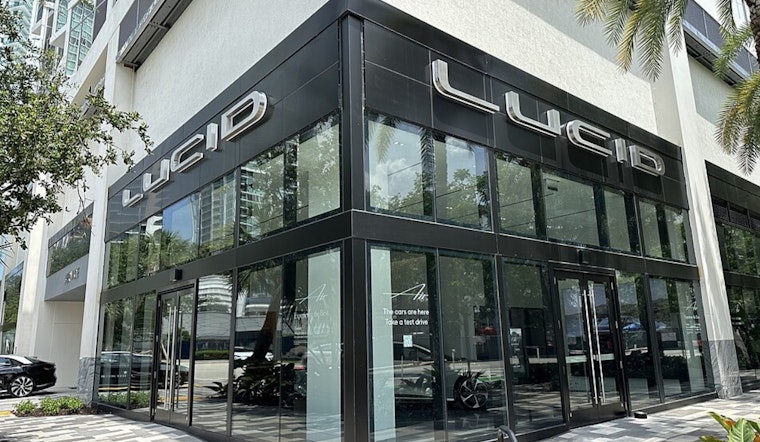
Lucid Group is shaking up the corner office and the balance sheet at the same time, naming Silvio Napoli as its next chief executive today while locking in roughly $750 million in fresh commitments from its biggest backers as the Bay Area automaker tries to steady operations. The new cash includes a $550 million commitment from an affiliate of Saudi Arabia’s Public Investment Fund and a $200 million commitment from Uber, alongside a roughly $300 million registered stock offering. Lucid said it produced about 5,500 vehicles in the first quarter and reaffirmed 2026 production guidance of 25,000 to 27,000 units, even as it signaled weaker revenue and a steep operating loss. The leadership change and financing are meant to bankroll a push into lower-cost midsize models and a larger robotaxi program while management tightens execution.
How the raise is structured
The company laid out a three-part package: a $550 million convertible preferred purchase by Ayar Third Investment Company (a Public Investment Fund affiliate), a $200 million private placement from an Uber subsidiary, and an underwritten public offering sized at about $300 million. Taken together, the moves add up to roughly $1.05 billion in gross proceeds, according to Lucid Group. The offering is slated to close on or about April 15, subject to customary conditions. Executives said the money will support Lucid’s production ramp, autonomy development and margin improvement efforts.
A CEO with industrial chops
Napoli, who previously served as both chair and CEO of Swiss industrial heavyweight Schindler, will take a seat on Lucid’s board and relocate from Switzerland once he secures U.S. work authorization. He framed his mandate around getting the basics right, telling Bloomberg Television that “my job is to come in and make a sustainable business out of this incredible company,” a remark reported by the Los Angeles Times. Schindler’s corporate materials highlight Napoli’s long run overseeing global manufacturing and operations, a resume that fits Lucid’s current need for disciplined execution more than flashy product launches.
Robotaxis and production targets
On the strategic front, Lucid and Uber expanded their robotaxi partnership to a floor of at least 35,000 vehicles, covering both Gravity SUVs and the upcoming midsize platform, and Uber added $200 million to its stake under the deal, according to the company’s press materials. Lucid reiterated its 2026 target of 25,000 to 27,000 vehicles while reporting production of roughly 5,500 cars in the first quarter, matching figures in the company’s operational update. The midsize model is still slated to enter production late this year with a targeted starting price near $50,000, a move aimed at stretching Lucid’s reach beyond the high-end luxury crowd.
What it means locally and for investors
For the Bay Area, the announcements keep Lucid’s strategic brain trust rooted locally. The company remains headquartered in Newark while most assembly capacity sits in Arizona, according to company materials and prior reporting. Investors appeared to welcome the added liquidity, but the multilayered package also underscores how heavily Lucid continues to rely on deep-pocketed backers while it chases profitability. Choosing an industrial operations veteran as CEO signals a clear tilt toward manufacturing scale and cost discipline rather than a pure design-led story.
What's next
Lucid expects to close the offering in mid-April and plans to report full first-quarter financial results on May 5, when investors will get a cleaner look at whether the fresh capital and leadership change can start nudging the business toward positive cash flow. In the meantime, the company still has to prove it can build and sell the lower-cost midsize vehicles at scale, hit its robotaxi commitments and materially shrink its cash burn. That is a tall to-do list for a carmaker that is still leaning heavily on its biggest strategic partners.



