

























































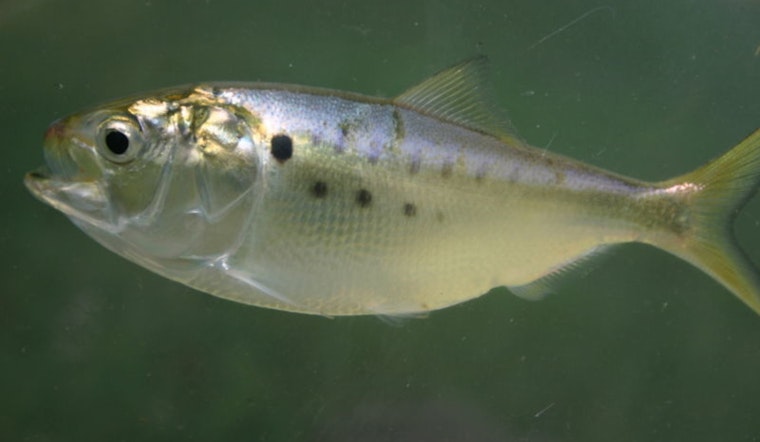
Louisiana lawmakers took a big step Wednesday toward tightening the rules on commercial menhaden fishing, advancing a slate of bills that would push the industrial pogie fleet farther from shore while ramping up reporting and penalties. The debate laid bare a growing fight between the reduction fleet and charter captains, guides, and conservation groups who say bycatch in the menhaden nets is hammering nearshore redfish and seatrout.
What the committee approved
The House Natural Resources Committee voted to send four menhaden-focused bills to the full House, including Rep. Joseph Orgeron’s proposal that would allow purse seines only in waters at least 22 feet deep. That bill advanced on an 8-7 vote, according to the Louisiana Legislature.
Committee members also backed measures that would peel away confidentiality from certain harvest reports, tighten reporting and data collection, and add vessel-tracking requirements. A separate penalties bill was rewritten into a graduated fine system for fishing inside coastal buffer zones, as detailed by New Orleans CityBusiness.
The science and the bycatch debate
A season-long, observer-backed bycatch study conducted for the state by LGL Ecological Research Associates documented millions of non-target fish and estimated tens of thousands of red drum in the menhaden fishery’s bycatch, according to the final LGL report hosted by the Louisiana Department of Wildlife and Fisheries.
At the committee hearing, LGL biologist Scott Raborn told lawmakers that shifting menhaden sets into roughly 22-foot water could cut redfish bycatch by about 30 percent, testimony reported by New Orleans CityBusiness.
Industry pushback and politics
Menhaden industry representatives pushed back hard, arguing that a hard depth rule would shove boats into leaner fishing grounds and drive up operating costs. Trade coverage, including National Fisherman, has highlighted the fleet’s preference for gear changes and other management tools instead of broad spatial restrictions.
Conservation groups and many charter captains counter that the state Wildlife and Fisheries Commission’s recent rollback of several nearshore protections undercut a hard-fought compromise that followed large fish-kill events. Their concerns have been amplified by both national and local conservation organizations.
Where buffers stand
The Wildlife and Fisheries Commission published maps and a Notice of Intent last winter that redrew buffer lines along the coast. Agency materials show that many stretches of shoreline are now covered by quarter-mile exclusions instead of the half-mile protections adopted in 2024, with department maps spelling out the specific zones affected.
The timing of those changes, and the rulemaking schedule tied to the notice, helped spur the Legislature’s push this spring, a point raised repeatedly by conservation coalitions and anglers during the public comment period.
Legal and enforcement
Lawmakers also scaled back one of the tougher early enforcement proposals. A six-figure fine structure for buffer-zone violations was pared down, and the engrossed bill now sets penalties at $2,500 for a first offense, $5,000 for a second, and $7,500 for a third, according to the engrossed bill text.
Other bills advanced out of committee would open up more harvest data to legislators, tighten reporting, and in at least one proposal require vessel tracking to give enforcement agencies a clearer view of where the fleet is working.
What’s next
The package now heads to the House floor, where votes and potential amendments will decide whether Louisiana adopts a statutory depth limit, expanded reporting, new fines, or tracking mandates. If the measures pass, they would reshape how the state’s menhaden reduction fleet operates close to shore and could offer a playbook for other Gulf states watching the fight unfold.





