

























































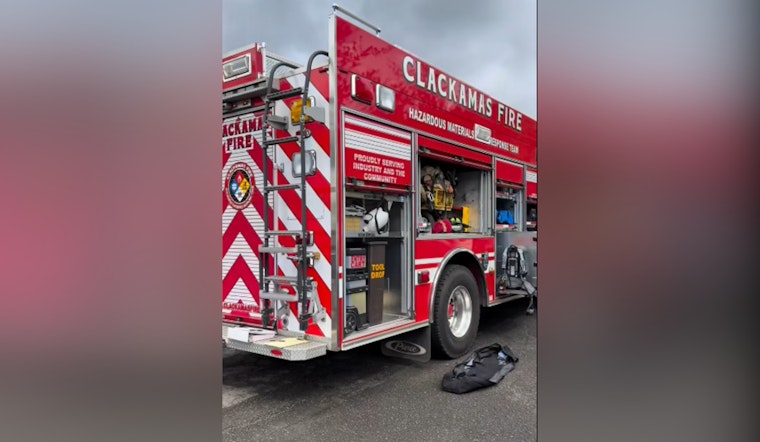
A routine night at a Clackamas commercial building turned tense on Thursday when workers spotted a 55-gallon drum bulging inside the property on the 11200 block of SE Highway 212. Fire crews were called in on a hazardous materials response, everyone in the building was evacuated, and officials said no one was hurt.
According to Clackamas Fire, the swelling container was under pressure and visibly expanding before it was identified as holding paint-waste chemicals. Responding units included BC303, E308, HM307, CRO301, Gresham HazMat 3 and the Clackamas County Sheriff’s Office. An ICOR robot was sent in first to grab a temperature reading, giving HazMat personnel crucial data before they moved in to deal with the problem directly.
How Crews Sized Up the Bulging Drum
When a steel drum starts puffing up like a balloon, the last thing you want is guesswork. Hazmat teams rely on robots and remote sensors to gather temperature, visual and gas readings from a safe distance, so they can understand what they are dealing with before anyone walks through the door. A systematic review in Disaster Medicine and Public Health Preparedness highlights the growing role of unmanned tools for situational awareness in disaster response, noting how they help reduce risk to human responders.
Once the situation inside is better understood, hazardous-waste rules kick in. Oregon guidance explains that paint waste and similar residues may be regulated and that they require specific storage and handling so they do not become an emergency in the first place. Oregon DEQ notes that making proper waste determinations and storing containers correctly are key steps in preventing incidents like a pressurized drum.
What Officials Reported From the Scene
In its post about the incident, Clackamas Fire said that crews conducted a controlled entry after using the robot, then mitigated the container holding the paint-waste chemicals. Everyone inside the commercial building had already evacuated by the time mitigation began, and officials reiterated that there were no injuries. The agency also listed its responding units and noted that Gresham HazMat 3 provided assistance on scene.
Why Paint-Waste Drums Can Balloon Out
A drum full of paint waste might look harmless, but chemical reactions, trapped vapors or excess heat can build up pressure inside the container. That pressure can turn a basic storage drum into a rupture hazard. The U.S. Environmental Protection Agency points out that leftover solvents and certain paint residues can be flammable or otherwise hazardous, which is why storage drums must be labeled, staged and handled under strict rules. EPA guidance, along with state regulations, sets out how to dispose of these wastes and when it is time to call in specialized hazmat teams.
What Residents Should Do if They Spot Trouble
If you ever stumble across a suspicious drum, a container that looks damaged or swollen, or a strong chemical odor that does not belong, the safe move is to get away from the area and call 911. Trained responders are equipped to size up and contain hazards that the average person should not try to tackle with a roll of duct tape and good intentions.
For anyone trying to keep old paints and solvents from becoming the next emergency call, Oregon DEQ and the EPA offer guidance on hazardous-waste collection, disposal and safe handling for both households and businesses. Questions about local response and public information can be directed through Clackamas Fire.





