

























































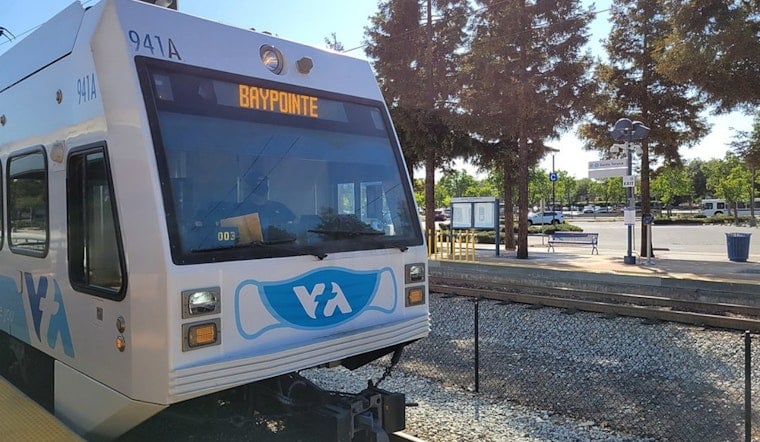
Santa Clara County’s transit leaders are taking aim at federal immigration agents, asking whether U.S. Immigration and Customs Enforcement can be kept off Valley Transportation Authority property as the South Bay gears up for a crush of major events.
The VTA board has directed staff to draft a policy that would bar ICE from using agency-owned sites, including parking lots, as staging or operational bases while the agency tightens safety protocols for the busy summer ahead. A draft is expected back in May, and board members say the goal is to keep buses, trains and stations feeling safe and welcoming for immigrant riders, not like a federal checkpoint.
Board referral and timeline
At an April meeting, the board formally asked staff to research how far VTA can go in limiting ICE activity on agency property and to return with proposed policy language in May, according to San José Spotlight. VTA Board Chair Sergio Lopez told the outlet that the referral grew out of concerns about community trust and public safety as the region prepares for large, multi-jurisdictional events. Lopez has pushed similar restrictions in Campbell, where he also serves on the city council.
What VTA staff warned
Even as they study options, VTA staff have warned that there are legal limits on how much the agency can box out federal officers. “By law, VTA cannot prohibit law enforcement agencies from accessing its facilities, including buses, light rail vehicles, stations and parking areas,” VTA spokesperson Stacey Hendler Ross told San José Spotlight. Officials said staff will also look at whether to update employee guidance on what to do if ICE officers show up on VTA property.
Where this fits in locally
The transit move follows earlier steps by San Jose and Santa Clara County to carve out spaces where ICE is not welcome as a matter of local policy. In January, the San Jose City Council voted unanimously to bar ICE from using 11 city garages and the parking areas of 75 community centers and libraries as staging or operational sites, Local News Matters reported. Santa Clara County previously backed a plan to inventory county-owned lots and garages, and to use signs and gates where appropriate to discourage federal enforcement operations on selected properties. Local leaders described both efforts as attempts to reduce fear and keep public services accessible.
Lessons from recent events
Board members said they are drawing on recent experience with national-scale events. Before the Super Bowl in February, officials publicly said there were no planned ICE enforcement operations around Levi’s Stadium. The NFL and local public-safety coordinators stated there were no planned ICE activities during Super Bowl week, according to Axios. Looking ahead, FIFA World Cup matches are scheduled to bring crowds to Levi’s Stadium starting June 13, 2026, and VTA says clear protocols for staff and riders need to be in place well before fans start pouring in.
Advocates welcome the idea
Immigrant-rights organizers have cheered VTA’s decision to pursue a formal policy and updated staff rules. Mariam Arif of the Services, Immigrant Rights and Education Network (SIREN), part of a Rapid Response Network that monitors ICE activity, told SFGATE that measures like this can lessen fear in immigrant communities and help ensure that public transit remains safe and accessible.
Legal and operational limits
VTA and city officials have repeatedly stressed that local rules can shape how employees respond and whether local resources are offered up, but they do not create a legal force field around public property. Federal law makes it a crime to assault, resist or impede certain federal officers, among other protections, under 18 U.S.C. § 111, a statute that limits the ability of local actors to physically interfere with federal agents, according to the Legal Information Institute at Cornell Law School. In practice, “ICE-free” policies typically focus on withdrawing voluntary cooperation and posting signs or closing specific city-owned spaces, rather than physically blocking agents who have valid legal authority.
What to expect next
Agency staff are slated to return in May with research findings and recommended language before the full VTA board debates any official policy. If a draft moves forward, expect more discussion about how such rules would be enforced, what kind of employee training is needed and how the policy would mesh with parallel efforts by county and city partners as VTA locks in security plans for this summer’s marquee events.





