

























































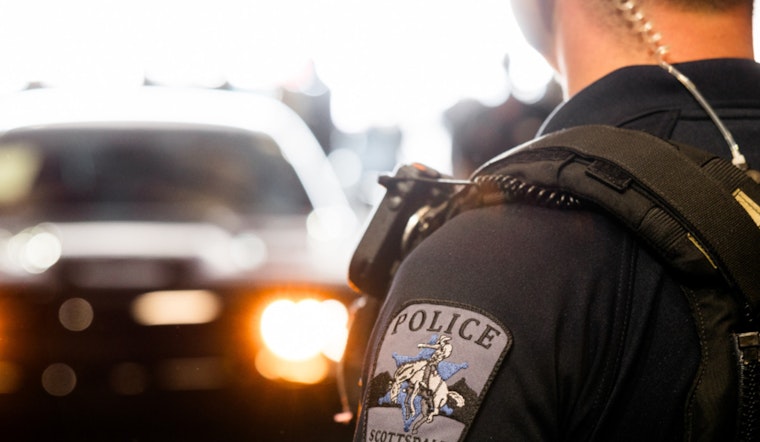
Scottsdale police are getting ready to put an AI voice agent on their non-emergency phone line later this year, a move city officials say should speed up routine calls and cut those dreaded hold times while human dispatchers stay locked in on 911 emergencies. Anyone who still wants a real person will be able to opt out and get sent to a live dispatcher.
The platform, identified by the city as Motorola HYPER, will help callers check on reports, get guided into online reporting and answer basic questions, according to the City of Scottsdale. Officials say the rollout has already started behind the scenes, with staff training, testing and a phased launch planned while the department keeps an eye on system performance and public feedback.
How The Phone Agent Will Work
As reported by KJZZ, the AI system, which the outlet says is supplied by Motorola, will be able to collect basic information, walk people through filing police reports online and let callers request a callback from an officer. Karen Sutherland, the city’s deputy director of communications, told KJZZ that “the phone just rings” as non-emergency call volume has grown, and she stressed that anyone who prefers a human will be transferred to a dispatcher.
Where The Technology Comes From
Motorola Solutions has been pushing a suite of public safety AI tools meant to give call takers real-time transcription and offload routine tasks. In April, the company announced it had acquired Hyper, a startup that builds conversational agents for non-emergency call triage, according to Motorola Solutions. The company says its agentic tools can automate non-emergency triage while keeping humans in the loop through built-in controls.
Local Context And What To Expect
Scottsdale’s move follows similar efforts around the region to put AI on the front line of routine calls. Phoenix, for example, rolled out an AI-powered triage system for its Crime Stop non-emergency line last year, part of a broader push to lighten the clerical load on telecommunicators. Scottsdale’s announcement notes that emergency-related calls will still go straight to communications staff and that the city will seek public feedback as the rollout continues, per the city news release.
Privacy And Oversight
As more AI tools slide into public safety workflows, questions about accuracy, bias and how caller data is handled have followed from community members and technology watchers. Vendors and cities alike say human oversight is supposed to remain front and center. Local officials say they plan to monitor how the system performs and how the public responds during the phased deployment, while technology providers point to human supervision features and audit logs built into their products.
The city has not set a firm launch date yet, only saying that testing and staff training are underway. For now, residents with non-urgent needs can keep using Scottsdale’s existing non-emergency channels and, once the AI agent goes live, will still be able to ask for a live dispatcher if that feels more comfortable.





