

























































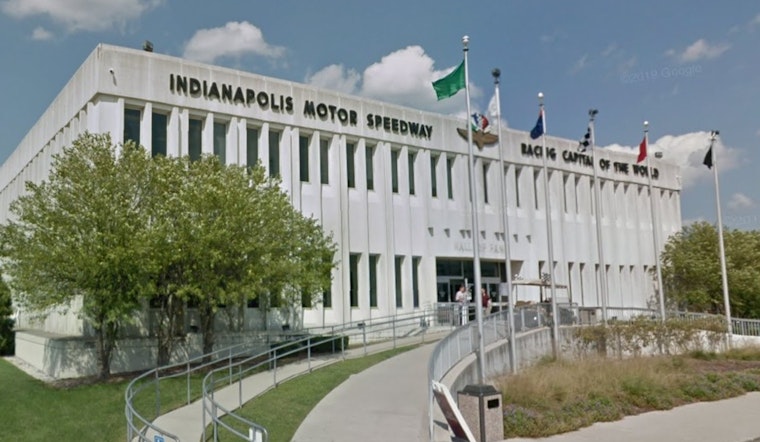
INDYCAR announced today that it is changing how race control decides when a local yellow becomes a full-course yellow after a near-miss at the Sonsio Grand Prix at the Indianapolis Motor Speedway. The move follows a tense moment on the front straight when Alexander Rossi’s No. 20 car stalled and race control kept the situation under a local yellow until he began to climb out of the cockpit while cars continued to blast past at high speed. INDYCAR said the adjustment is effective immediately and is intended to make safety the only factor in deciding when to throw a full-course yellow.
What IndyCar changed
As reported by The Indianapolis Star, the Independent Officiating Board announced that pit windows and the running order will no longer play any role in the decision to upgrade a local yellow to a full-course caution. INDYCAR Officiating said that FCY escalation will now be judged strictly on safety inputs such as the driver’s status, vehicle position, the readiness and access of safety and recovery crews, and the speed difference between the stranded car and oncoming traffic. The statement added that Saturday’s race results will not be changed and that teams and drivers have already been notified of the new standard.
How the incident unfolded
Rossi’s car reportedly suffered a hybrid failure and stalled on the drivers' right side of the start-finish straight, off the racing line, according to Motorsport. Race control escalated to a full-course yellow on the following lap as Rossi began to get out of the cockpit, according to post-race reports, and he later told media that “the fact that it took that long to throw a full-course yellow ... seems insane” while cars were flying by at roughly 170 mph. Those comments amplified criticism that competitive considerations had influenced what should have been a straightforward safety call.
Race impact and strategy
The timing of the caution scrambled pit strategies and shuffled the order, with some teams choosing to pit under the local yellow while others stayed out, a split that helped Christian Lundgaard and David Malukas move forward while Alex Palou and Kyle Kirkwood lost out. That strategic ripple was widely highlighted in race coverage as an avoidable consequence of the previous full-course yellow practice. The episode underscored why officials say clearer, safety-first standards were needed, according to RACER.
Independent officiating steps in
INDYCAR created INDYCAR Officiating as an independent, not-for-profit organization and named Scot Elkins as managing director of officiating in April, giving the Independent Officiating Board a direct role in overseeing race control, as outlined by INDYCAR. The board is chaired by Raj Nair, with Ray Evernham and FIA appointee Ronan Morgan as members, and was designed to insulate officiating decisions from competitive pressure. Officials say that this governance structure helped the IOB and race control staff reach agreement on the updated full-course yellow criteria.
What this means next
The change takes effect immediately and was communicated to teams ahead of the Month of May's marquee events, including the Indianapolis 500 on Sunday, May 24. Drivers and teams will be watching closely to see how race control uses the clarified standard in heavy traffic and high-pressure moments, and the ongoing debate over safety versus spectacle is likely to follow the series into the oval portion of the schedule. INDYCAR says the aim is straightforward: when there is any risk to a driver's safety, race control’s first move will be a full-course yellow.



