

























































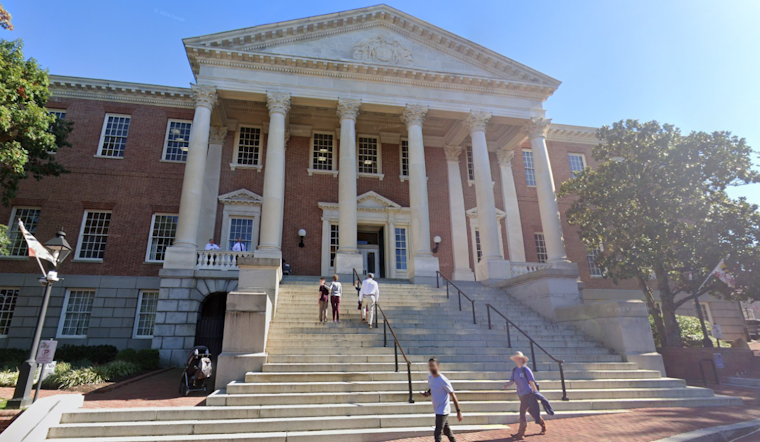
With the June 23 primary bearing down, Maryland’s 3rd Congressional District is staring at a crowded ballot and some big decisions. The district, which covers much of Howard County and parts of Anne Arundel and Carroll counties, leans suburban and policy-heavy, and it is about to test how much value voters put on experience versus fresh faces. Incumbent Rep. Sarah Elfreth is seeking a second term while a mix of Democratic challengers and a smaller Republican bench tries to shake up the status quo.
Who’s on the ballot
County ballots list Democrats Austin Dyches, Sarah K. Elfreth, Jennifer Cross, Sean Hammond, and Robert Gerald Morrison on the June primary ballot. On the Republican side, the field includes Felix M. Seier, Ray Bly, Berney Flowers, and John White. Those names appear on county primary ballots published by the Maryland State Board of Elections, which posts official ballots and candidate filings for the June 23 primary.
What the voter guide surfaced
According to The Baltimore Sun, a newly published voter guide pulled together candidate questionnaires that put affordability, government accountability, infrastructure, the federal workforce, and the environment at the center of this year’s debate. In her responses printed by the paper, Rep. Elfreth cited about 1,775 constituent cases resolved and roughly $2.3 million in refunds returned. She also highlighted the Port of Baltimore’s reported jobs footprint and referenced the March 26, 2024, collapse of the Francis Scott Key Bridge, which killed six Marylanders.
Challengers and messages
Austin Dyches describes himself as a veteran, father, and democratic socialist focused on workers’ issues and Medicare-for-All-style policies, and Austin Dyches lists Mount Airy as his home and outlines the platform he is running on. On the Republican side, Felix M. Seier shows an Annapolis campaign office on his site, and public profiles link him to the Cryonics Initiative advocacy project. Ray Bly, Berney Flowers, and John White round out the current GOP field.
What to watch before June 23
Analysts say the Democratic primary is widely expected to decide the district’s next representative because of the area’s partisan tilt, and outside spending and turnout could loom large in what is likely to be a low-turnout contest. The Cook Political Report has pointed to MD-03’s contentious recent primaries and the influence of outside money. The Maryland State Board of Elections lists June 23, 2026, as the primary date and notes that early voting runs June 11 through 18 with polls open 7 a.m. to 8 p.m., per the Maryland State Board of Elections.
Over the next few weeks, expect candidates to sharpen their contrasts on housing costs, government oversight, and local infrastructure projects. The primary will test whether Elfreth’s incumbency and record can withstand an insurgent push from the left and whether Republicans can coalesce ahead of November. Voters can turn to the official ballots and the published questionnaires to compare stances before casting their votes on June 23.





