

























































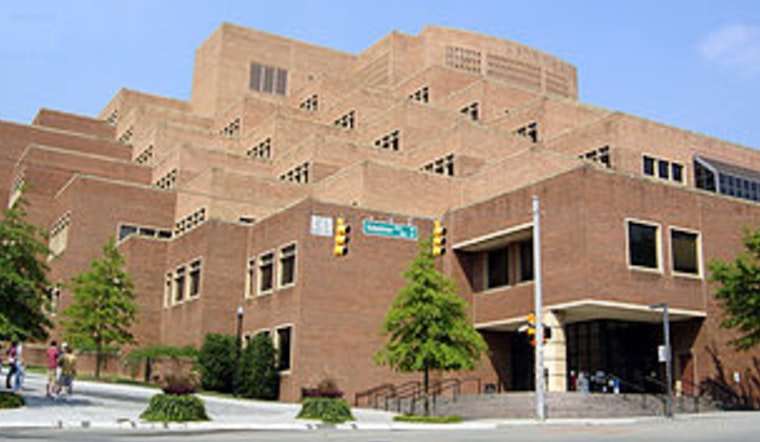
The University of Tennessee in Knoxville has quietly scored a literary jackpot, taking in the bulk of Cormac McCarthy’s personal library. Thousands of the late novelist’s books have been packed up from his Santa Fe home and reshelved on campus, where students and local scholars will soon be able to sift through everything from rare annotated editions to dog-eared nonfiction. Librarians say the haul is set to reshape McCarthy studies in Knoxville by letting readers work directly with the books that helped fire his imagination.
What the university received
UT Libraries has accepted roughly 16,000 to 18,000 volumes from McCarthy’s estate, according to WBIR. The estate as a whole is estimated to contain about 20,000 books, with just over 2,000 carrying McCarthy’s own marginalia, numbers that were compiled and reported by Smithsonian Magazine.
How the collection will be divided
Project organizers and McCarthy’s family worked with several institutions to divide the material in a way that would keep it useful for researchers. The most heavily annotated and research-critical volumes have been set aside for The Wittliff Collections at Texas State, while the Santa Fe Institute will receive a curated group of McCarthy’s science and technical titles, per Texas State University. The remaining volumes, still a sizable mountain of books, were allocated to the University of Tennessee in Knoxville to be folded into the university’s collections.
Cataloging and access
To wrangle the sheer volume of material, UT Libraries sent a six-person team to New Mexico to assist with the cataloging project. The library estimates that fully processing the books will take about 10 months, and it expects that most general volumes will ultimately land in the circulating collection. The rarest items, especially those thick with McCarthy’s handwritten notes, will go into special collections for in-person research only, according to WBIR. Library staff told reporters they plan to release a more detailed timeline and access guidelines as the cataloging moves forward.
What scholars hope to find
Researchers are especially interested in the marginalia and the sweep of topics represented on McCarthy’s shelves, which range from advanced mathematics and philosophy to architecture and auto mechanics. Smithsonian Magazine reported that catalogers logged about 18,520 catalog entries, which scholars estimate comes out to just over 20,000 physical volumes, and counted roughly 2,170 annotated books. Coverage from Centre College notes that the Cormac McCarthy Library Project plans to publish an open-access, searchable database so scholars everywhere can see what he owned and where each item is now housed. The University of South Carolina Press is partnering on publication of that database and on a monograph about the project, organisers say.
Local impact and next steps
For Knoxville, where McCarthy spent part of his youth and later took classes at UT, the donation is a rare cultural and research windfall. Faculty expect it to fuel new courses, student projects and public programming that can plug directly into the freshly arrived primary material. The university’s arts and humanities pages already highlight active McCarthy scholarship on campus, and library staff and project partners say they will share more information on exhibits, reading-room rules and digital access as cataloging continues. Updates on the project are being posted by the Cormac McCarthy Society and by campus offices including the University of Tennessee, Knoxville.





