

























































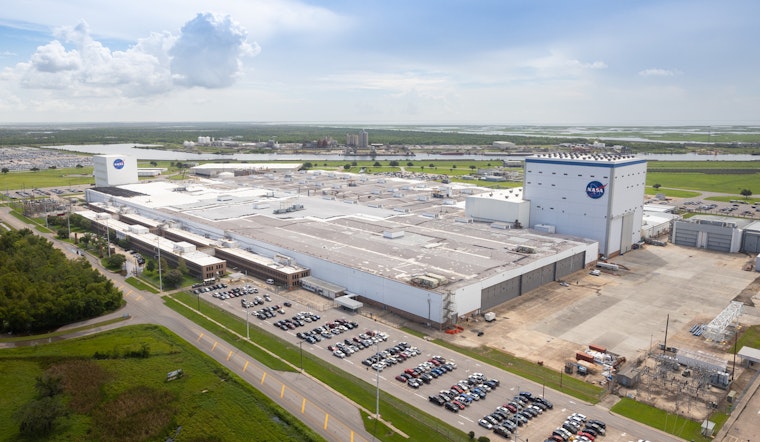
NASA Administrator Jared Isaacman dropped a bold prediction in New Orleans East on Thursday, May 7, telling a packed town hall at the Michoud Assembly Facility that Artemis II is "just the opening act" and that the space agency is shifting from headline-grabbing one-offs to a production-line cadence. That new rhythm, he said, could eventually include nuclear-powered spacecraft and hardware for a Moon base built right in New Orleans.
As reported by NOLA.com, Isaacman toured Michoud with House Majority Leader Steve Scalise and Louisiana Economic Development Secretary Susan Bourgeois before fielding questions from several hundred workers. He told employees that hiring at the facility is ramping up, while the outlet noted that work on Space Launch System rockets for Artemis IV and V is already underway and supplies are being staged for Artemis VI.
Michoud's role and local jobs
The Michoud Assembly Facility sprawls across roughly 829 acres and includes more than 43 acres of climate-controlled factory floor where large rocket stages are welded and assembled, according to NASA. State officials and regional reports say the site supports about 3,500 jobs tied to NASA and its tenants, a roster that includes heavyweights like Boeing and Lockheed Martin. That blend of government and contractor work is a big reason Michoud keeps landing in national plans for Artemis and whatever comes after it.
Isaacman's 'opening act' and a faster tempo
Isaacman cast Artemis II as the first leg of a lunar "relay race," using his "opening act" line to signal that NASA wants to fly more often, not just bigger, as Space.com reported. The current retooling plan would convert Artemis III into an orbital integrated systems test and push NASA to standardize hardware so launches and surface deliveries can happen on a far tighter schedule.
Nuclear power, lunar reactors and deep-space goals
To keep that long game going, NASA and the Department of Energy have inked agreements to speed work on a fission power system for the lunar surface, with an agency target of having that capability ready by 2030, according to a NASA news release. Coverage of recent agency briefings also points to a planned nuclear-electric demonstrator, dubbed Space Reactor-1 Freedom, which has been described in industry reporting as a stepping stone to higher-power missions beyond the Moon (Live Science).
Robotic landers and factory lines
Isaacman also said commercial partners are being pushed to scale up so robotic landers and rovers touch down a lot more often, shifting from a handful of missions per year toward something closer to monthly deliveries, according to local coverage and public interviews summarized by WUSF. Industry analysis frames that as a manufacturing challenge: Commercial Lunar Payload Services providers will need to move from bespoke builds to "build-to-print" production lines, a change detailed in coverage by Space Daily.
Money, politics and job security
Michoud's work does not just ride on science and engineering; it is strapped to the federal budget. The Commerce-Justice-Science appropriations language enacted for fiscal year 2026 includes funding and direction that kept SLS and Orion production streams intact, according to the appropriations text on Congress.gov. Local leaders frequently cite that funding cushion, along with strong congressional interest in keeping suppliers busy, as the backbone of Michoud's near-term economic outlook.
What it means for New Orleans
Isaacman's visit put a national spotlight back on a massive local shop floor. If NASA and its commercial partners hit their stated timelines, Michoud could be in line for an extended run of work and new hires tied to building out lunar infrastructure. At the same time, analysts and technical coverage flag the schedule as aggressive and the engineering and supply-chain hurdles as significant, making the final outcome highly dependent on both political follow-through and how fast industry can actually industrialize the pipeline (NASASpaceFlight).
The tour boiled it down to a simple point: New Orleans builds big rocket hardware, and NASA now wants that talent feeding a steady stream of parts and payloads instead of one-and-done missions. For Michoud workers and the regional supply chain, the coming months will show whether the talk of a future "moon construction site" turns into sustained payroll and packed production lines.





