

























































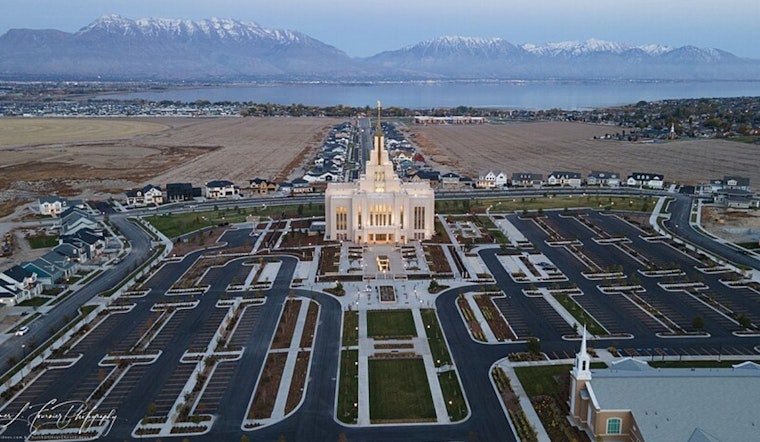
Saratoga Springs and Eagle Mountain are doing the population equivalent of flooring the gas pedal, dominating Utah’s city-level growth in 2025 and quietly rewriting where the state is actually filling in. Together, they added more than 8,800 new residents, with Saratoga Springs alone tacking on 4,682 people for roughly 8.4 percent growth, and Eagle Mountain pulling in about 4,169 residents for a 6.8 percent jump. Utah County as a whole carried the biggest load, adding 15,914 new residents last year, more than any other county in the state.
What the new city numbers show
The statewide list of 279 municipalities, which ranks both numeric and percentage growth, confirms what many commuters already feel in their drive times: the growth hot spots are shifting. Salt Lake City and St. George each logged sizable numeric gains of about 3,300 residents, while Lehi, Spanish Fork, and Mapleton helped round out the roster of Utah County’s fastest-growing communities. According to the Utah Population Committee’s new subcounty estimates, Saratoga Springs tops the charts by both raw population increase and percent change, with Eagle Mountain not far behind. Those city-by-city results are summarized in the reporting by KSL.
County and statewide context
A separate research brief from the Kem C. Gardner Policy Institute, which chairs and staffs the Utah Population Committee, estimates Utah’s population at about 3,551,150 as of July 1, 2025, and notes that statewide growth eased to roughly 1.3 percent. The brief reports that natural change (births minus deaths) was the primary driver of 2025 growth and that Utah County’s approximately 15,914 new residents represented about 36 percent of the state’s overall increase. The institute prepared those estimates for the Utah Population Committee and released the county and state figures in its December report.
Where populations fell
Not every city is riding the same wave. The report also flagged a few notable pockets of decline: Orem lost an estimated 943 residents, with Sandy down 751 and Provo down 498. The pattern points to growth concentrating in larger suburbs and satellite cities rather than in some long-established urban centers. Report authors described this as “shifting growth patterns across communities of different sizes,” language that has been echoed in local coverage. Those decline figures and that wording appear in KSL’s summary of the Utah Population Committee data.
Why planners will pay attention
Behind the population drama is a very practical spreadsheet problem: the new subcounty file is what a lot of everyday budgeting will hinge on. School districts, road builders, and water managers often depend on local population estimates when they apply for funds and set long-term capital plans. HB 379, passed in the 2025 legislative session, made the Utah Population Committee estimates the standard in much of the state code; the Kem C. Gardner Policy Institute FAQ explains how those city-level figures were adjusted and produced. With that change in place, the UPC’s subcounty estimates are poised to guide local planning and resource decisions moving forward.
For residents and city officials, the takeaway is straightforward: growth is pushing outward and reshaping where housing, schools, and services will have to go. Expect plenty of fights over new development, school capacity, and road funding as municipalities start to digest the latest city-by-city numbers.





