

























































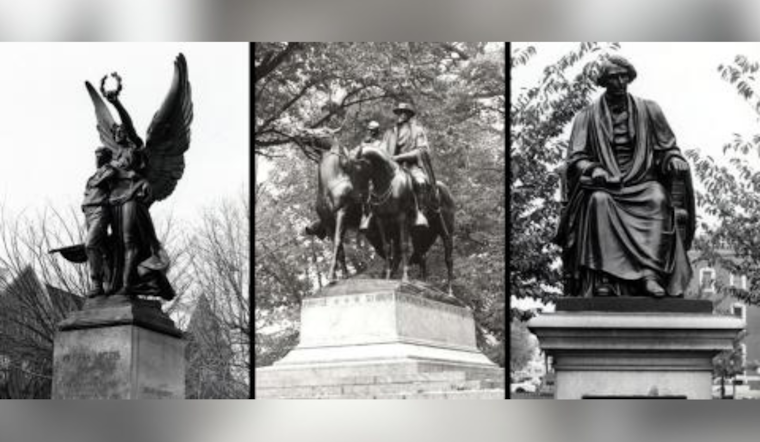
Four Confederate monuments that Baltimore hauled away in 2017 are headed back to the city from a Los Angeles museum, and their return is already kicking up a fresh storm. Officials, preservationists, and neighbors are split, with some calling for the pieces to stay in museums while Mayor Brandon Scott says he would be perfectly comfortable seeing the bronzes melted down.
From the Geffen Back to Charm City
The four works - Confederate Soldiers and Sailors, Confederate Women of America, the Lee-and-Jackson double equestrian, and a statue of Roger B. Taney - were recently featured in "MONUMENTS," a two-venue exhibition at the Geffen Contemporary at MOCA and The Brick in Los Angeles that closed May 3. As reported by the Los Angeles Times, the show placed decommissioned monuments alongside contemporary works to provoke tough conversations about memory, protest, and who gets space in the public square.
Mayor Doubles Down on Destruction
At a Wednesday press conference, Mayor Brandon Scott repeated that he still favors destroying the statues rather than restoring them to city parks. Asked about the idea of melting the bronzes, he replied, "I think you know the answer to that. Yes." The mayor's office said it is keeping tabs as city agencies sort through next steps, and city leaders have yet to give a timetable for when the pieces will physically return to Baltimore, according to WBAL-TV.
Neighbors Want Them in Museums, Not Parks
On the ground, many residents told reporters they would rather see the sculptures remain in museum settings than go back to neighborhood parks or plazas. "I don't think that they should be back," Eve Addison said. Another neighbor, Scott Ryan, told WBAL-TV the bronzes are still covered in protest paint and "have their own conservation issues," and he added that he does not believe public money should be used to preserve them.
Deeds, Easements and a Legal Maze
Actually carrying out any plan, whether destruction or permanent relocation, will not be simple. Three of the four works are bound by a deed of easement that gives oversight to the Maryland Historical Trust, which has to approve any major move or formal removal from the public collection. As noted by Baltimore Fishbowl, trustees have historically pushed back on outright destruction, which means the city will need formal approvals and likely some hard negotiations to change the statues' legal status.
Fork in the Road for Baltimore
City leaders now face a limited but heavy set of options: permanent accession into a museum, a carefully interpreted indoor or outdoor reinstallation, legal deaccession, or some form of physical destruction. Every route will require money, legal sign-offs, and the political appetite to see it through. Reviews of the "MONUMENTS" exhibition suggest that moving contested statues indoors changes how people meet them and can cool some public anger, but it does not settle Baltimore's core policy question about whether to honor, contextualize, or finally consign these symbols to history. For more on how museums are handling that conversation, see Artnet.





