

























































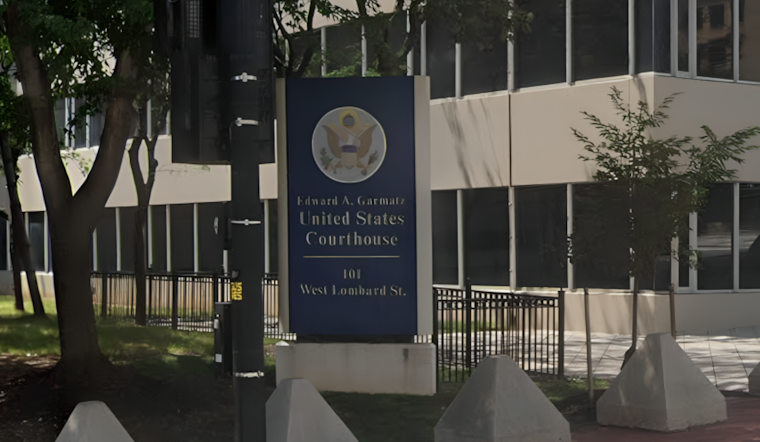
A federal judge in Maryland has shut down a closely watched effort to force the U.S. Equal Employment Opportunity Commission to resume aggressively enforcing workplace protections for transgender employees.
Chief U.S. District Judge George L. Russell III ruled Friday that Baltimore legal-services nonprofit FreeState Justice did not have the Article III standing it needed to bring the case and that the dispute centers on enforcement choices courts typically do not second-guess. The decision leaves advocates debating whether to appeal at a moment when the agency’s posture toward gender-identity claims has shifted under the Trump administration.
The court granted the EEOC’s motion to dismiss, holding that the lawsuit targeted discretionary enforcement decisions and that FreeState had not shown an injury that a federal court could fix. The memorandum opinion in Civil Action No. GLR-25-2482 is available in court filings posted by the National Women's Law Center.
The suit, filed July 29, 2025, on behalf of FreeState Justice, was brought with backing from advocacy groups including Democracy Forward and the National Women’s Law Center. The complaint accuses the EEOC of adopting a "Trans Exclusion Policy" that halted processing of many gender-identity complaints, tossed out active cases, and effectively cut transgender workers off from the agency’s investigation process. Court summaries and docket entries are compiled by the Civil Rights Litigation Clearinghouse.
Advocates and coverage of the case say that under Chair Andrea Lucas, the EEOC moved quickly to implement President Donald Trump’s January 2025 Executive Order 14168 and scaled back enforcement of gender-identity claims. Reporting by The Washington Post notes the agency has dropped some lawsuits and instructed staff to give heightened scrutiny to new gender-identity complaints.
Legal trade outlets have tracked the ruling as part of a broader pattern in which judges are reluctant to referee how agencies deploy limited enforcement staff. Bloomberg Law reported that courts frequently treat enforcement allocation as a discretionary judgment that is not subject to judicial oversight.
Judge's reasoning
Russell’s opinion walks through binding standing precedent and the Administrative Procedure Act, then concludes that the harms FreeState described are not concrete or traceable enough to justify federal court intervention. The judge stressed that letting the case proceed would effectively invite courts to micromanage the EEOC’s internal enforcement process, something the opinion says clashes with Article III limits on judicial power.
Local impact
In filings, FreeState Justice told the court that the EEOC’s change in course has made it harder to represent Maryland clients and has forced the nonprofit to divert scarce resources and route some cases to state agencies instead. Those operational headaches and the group’s broader allegations are detailed in coverage by The Associated Press.
Agency response and what’s next
The EEOC declined to comment on the lawsuit and referred questions to the Department of Justice, which did not immediately respond to requests for comment, according to The Washington Post. In court papers, the agency argued that plaintiffs cannot use the judiciary to dictate how the Commission allocates its investigatory resources.
Liz Theran, senior director of litigation at the National Women’s Law Center, said the organization is reviewing the ruling and "considering our options," and added that "regardless of the outcome of this case, transgender people deserve workplaces free from discrimination," as reported by The Associated Press. The decision sets up a likely next chapter in litigation and advocacy over how far courts can go in policing agency enforcement choices.





