

























































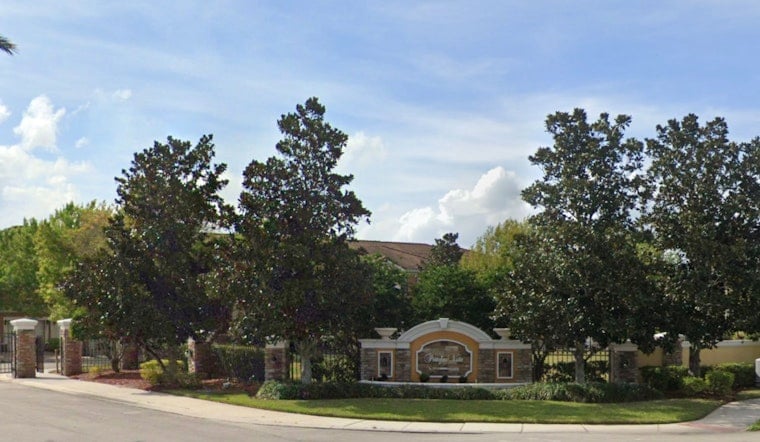
Across Florida, homeowners say they thought they were signing up for a straightforward deal: builders would “build, sell and step back.” Instead, in community after community, residents say the developers never really left. From St. Cloud to Homestead, Doral and Brickell, owners describe the same script playing out: developer affiliated directors stay in charge of boards, assessments keep climbing and amenities slide into disrepair.
At Portofino Vista in St. Cloud, residents say a project that was pitched as 262 townhomes wrapped up with only 57 units completed. Yet they report that developer affiliates still control the HOA and collect assessments that include a developer owned clubhouse. In June, the state health department cited problems at the community pool during an inspection and ordered it closed, and homeowners say they have seen little clarity on how money is being spent or how records are kept, as reported by The Real Deal.
Public records for the Portofino Vista Community Development District list supervisors using Prime Group and PMG email addresses and identify the clubhouse as the district’s meeting site. Residents say that setup blurs the lines between public district business and private development interests, creating overlapping fees with limited independent oversight. Community Development Districts are quasi government entities that can levy non ad valorem assessments on property tax bills, so CDD charges stack on top of monthly HOA costs. Meeting schedules and contact details are posted on the district’s website: Portofino Vista CDD.
How Turnover Is Supposed To Work
On paper, Florida law lays out clear handoff rules. For most homeowners associations, Section 720.307 of the Florida Statutes generally requires the developer to give up control three months after 90 percent of the parcels are conveyed to buyers. Condominiums are supposed to turn over earlier. Under Section 718.301 of the Florida Statutes, control shifts based on a combination of milestones, including when 50 percent of the units are sold.
Cases Piling Up
With many owners feeling trapped in permanent “temporary” governance, more of them are going to court. In Homestead, Madeline Garcia filed suit last month against the Villa Portofino East HOA, alleging that developer affiliates have “artificially suppressed” conveyance counts so they could hold onto control for roughly two decades, according to The Real Deal.
A similar pattern is alleged in other corners of South Florida. At the Grand at Doral I, court records describe a series of transfers and corporate reshuffling that left Premier Properties at Doral with a disproportionately large block of units, according to Trellis. Over in Brickell Key, residents are fighting roughly $32 million in seawall and baywalk assessments that they argue should not be dumped on individual unit owners, a dispute covered by CBS Miami and local trade outlets.
Why Developers Hang On
Industry veterans and legal analysts have a fairly unsentimental explanation for why some builders are slow to hand over the keys. Keeping association control allows them to steer management contracts and vendor work to familiar companies, keep fee streams flowing and, in some cases, delay the clock on construction defect claims that owners might later bring. Academic work and trade press coverage have cataloged the common tactics, from shuffling parcels between affiliated entities to bundling turnovers with broad settlement packages that limit future claims. A deeper dive into these dynamics appears in an academic paper on SSRN and in a trade discussion in the Construction Defect Journal.
Legal Options For Owners
Owners who think their communities are stuck in a never ending developer phase are not completely powerless. They can demand access to official records, push for a detailed accounting of how many parcels or units have actually been conveyed, file complaints with the Division of Florida Condominiums, Timeshares and Mobile Homes at the Department of Business and Professional Regulation, or pursue lawsuits, depending on whether they live in a condo or an HOA. The Division’s FAQ walks owners through what kinds of complaints it will take and when it has jurisdiction after turnover. For step by step procedures and forms, see DBPR's Division.
Together, these fights highlight a growing gap between how Florida’s association laws are written and how large, complex communities actually operate on the ground. With inspections multiplying, lawsuits stacking up and lawmakers taking notice, the next legislative session in Tallahassee could turn into a pivotal test of who really runs Florida’s neighborhoods once the sales trailers are gone.


