

























































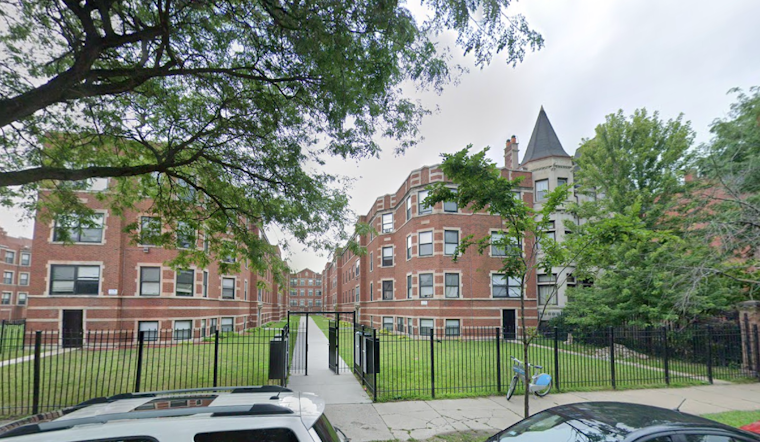
Greystone has launched a new foreclosure bid that could strip the Lowenstein family of control over a 68-unit apartment building in Bronzeville, intensifying a lender fight that has already rattled the Drexel block. The move stacks on top of an earlier foreclosure against neighboring Drexel Terraces and follows years of tenant complaints, unpaid mechanics liens, and multiple city code actions. Lenders are asking a Cook County judge to fast-track a judicial sale, appoint a receiver, and seize rents, steps that could quickly shift who handles repairs and who collects the monthly checks.
According to The Real Deal, Greystone, acting as special servicer for CMBS bondholders, sued 4520-26 S. Drexel Residences LLC after a Morgan Stanley loan that originated in May 2022 for $15.4 million swelled to more than $19.4 million by June 1 because of default interest, prepayment penalties, and liquidation fees. The complaint cites about $1.6 million in default interest, another roughly $1.6 million in a yield-maintenance prepayment premium, and $192,717 in liquidation fees, with interest still piling on at about $4,769.72 per day.
The Lowensteins, brothers Raphael and Ariel, and their father John, have long been under the microscope, as reporting and tenant accounts have linked their portfolio to persistent habitability complaints and city enforcement. Injustice Watch notes John Lowenstein’s family connection to the Sportmart chain and details tenant claims of mold, pests, and slow-walked repairs that have repeatedly drawn the attention of city officials.
A block under strain
Earlier this spring, lenders representing CMBS investors filed a separate $35 million foreclosure case over Drexel Terraces, the 116-unit property next door, and public loan tracking shows the two Bronzeville buildings have shed about $27 million in combined value. As The Real Deal reported, underwriting appraisals have plunged: one building that was valued around $23.6 million in 2022 was reappraised at $15.6 million this March, wiping out roughly a third of its equity on paper.
Inspection logs and liens
Loan-servicer inspection logs referenced in the foreclosure filings describe “significant evidence of microbial growth” in both common areas and individual units, along with exposed wiring and an uninsulated electric box noted in a July 2024 inspection. The city placed five building code violation liens on the property between October 2022 and April 2026, and contractors lodged mechanics liens in May 2024, alleging unpaid rehab work. Those operational problems lined up with occupancy sliding from about 95 percent to roughly 85 percent and the debt-service coverage ratio dipping below 1.0 in late 2024, a squeeze on cash flow that helped push lenders toward more aggressive action.
What lenders are asking
Greystone tells the court it will not accept a deed-in-lieu of foreclosure and is pressing the judge to speed up a sale, appoint an emergency third-party receiver, and remove the current landlords from possession. If the court signs off, a receiver would step in to control rents and oversee repairs while the foreclosure proceeds, a standard play that servicers often use to stabilize properties and cap losses for bondholders.
Why it matters
The case highlights how quickly equity in CMBS-backed buildings can evaporate when occupancy, appraised values, and day-to-day operations all trend the wrong way at once. It also raises immediate, practical questions for tenants about who will be responsible for repairs and for paying off vendors who say they are still owed. For city regulators and investors, the fight is a reminder that the courtroom remains a central tool when servicers decide whether to keep working with a borrower or move ahead to seize and sell a troubled asset.
Requests for comment to Greystone, Raphael Lowenstein, and an attorney for the Lowensteins were not returned, according to reporting and court filings. The next steps on the Cook County docket will determine whether lenders win appointment of a receiver or push straight toward a judicial sale, a decision that could significantly reshape who runs rental housing on this stretch of Bronzeville’s Drexel corridor.





