

























































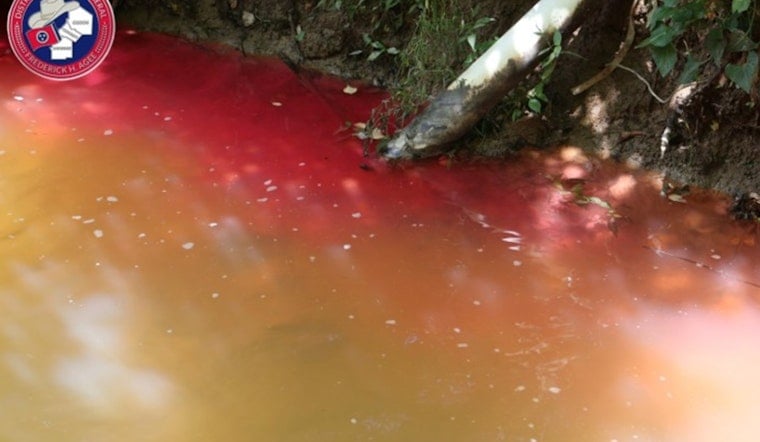
Trenton's City Limits Bar and Grill is staring down a possible shutdown after investigators said a dye test showed wastewater and sewage flowing from the building into the North Fork Forked Deer River. Gibson County District Attorney Frederick H. Agee said his office coordinated with Trenton police and state environmental staff to execute a court-authorized search earlier this week. The Tennessee Department of Environment and Conservation has issued a notice giving the business 30 days to fix the problem before prosecutors consider further action.
According to a post from the Office of the District Attorney General for the 28th Judicial District, Agee said his office, the Trenton Police Department and TDEC executed a search warrant at City Limits Bar and Grill. Investigators used a dye test that, according to the post, confirmed the bar's plumbing discharged wastewater and sewage directly into the North Fork Forked Deer River. The post also says the business had earlier denied TDEC permission to perform the dye test. TDEC issued a formal notice of violation that gives the owner 30 days to correct the wastewater issue before criminal charges may be filed, and Agee wrote that he is preparing to petition the Gibson County Circuit Court to close the establishment until the unsafe condition is remedied.
How dye tests work and why investigators used one
Dye testing is a straightforward method regulators use to trace where drains discharge by releasing a harmless tracer into suspected piping and then checking downstream locations for color or fluorescence. Federal guidance notes that dye tests are commonly used in illicit-discharge investigations because they quickly reveal whether a building's plumbing connects to a stormwater outfall or surface water. In this case, investigators said the tracer appeared in the North Fork Forked Deer River, establishing a direct link from the bar's plumbing to the stream.
Where the river runs and local context
The North Fork Forked Deer River flows just east of Trenton and is monitored by the U.S. Geological Survey; the monitoring station "North Fork Forked Deer River at Trenton" sits near State Highways 77/104 about three-quarters of a mile east of town. According to USGS, the river is an active surface-water resource for parts of Gibson County, meaning any release of untreated wastewater can reach downstream users quickly. That proximity helps explain why regulators moved quickly to trace the source and why prosecutors are treating the matter as potentially serious for public health and the environment.
Legal and enforcement consequences
The Tennessee Department of Environment and Conservation's Division of Water Resources handles complaints, investigations and enforcement for surface waters and can issue notices of violation and pursue administrative remedies. Under state law, the unlawful pollution of waters, including discharges of domestic sewage, is prohibited. Tennessee's statute on pollution of waters treats such violations as a Class A misdemeanor and treats each day's continuing discharge as a separate offense. For the statutory language see Tennessee Code § 70-4-206 on Justia, and citizens with concerns may report suspected discharges through the Tennessee Department of Environment and Conservation website.
Agee closed his post by thanking those who assisted and reiterating the 30-day window to remedy the problem before possible court action. Prosecutors said they will consider criminal charges or a court-ordered closure if the owner does not take corrective steps within that period.





