

























































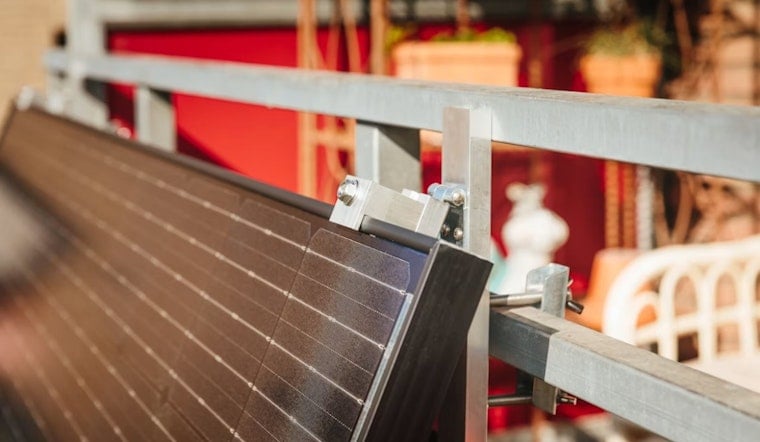
Utah lawmakers probably did not expect a relatively short bill in 2025 to kick off a national balcony solar craze. Yet when they passed House Bill 340, they cleared the way for compact “balcony solar” kits that plug into a standard household outlet. On paper, it was a technical tweak with a certification deadline. In practice, it pushed manufacturers and standards bodies to move faster and gave other states a template for copycat laws.
How Utah's Law Set The Template
The measure, sponsored by Rep. Raymond Ward, was the first in the U.S. to formally define a legal category for plug-in solar and to send a clear signal to safety labs that a domestic testing pathway was needed. The statute caps exported power at 1,200 watts, limits how much risk utilities shoulder, and calls on a nationally recognized testing body to spell out product-level requirements for these kits. Those details are set out in the bill text itself and summarized in reporting by Utah Public Radio.
UL Steps In, Safety Rules Follow
Underwriters Laboratories has since rolled out a testing and certification framework based on the UL 3700 standard. It lays out construction, performance, and labeling criteria for plug-in systems, with a particular focus on risks like backfeed and overloading. “We take it very seriously,” Ken Boyce, a UL engineering executive, told Grist after the company published an earlier white paper on potential hazards. UL Solutions says the new outline finally gives manufacturers a clear path to fully certified products.
Who Is Selling And What It Costs
Because most manufacturers are still waiting on U.S. certification, plug-in kits have not yet become a staple on big-box store shelves. Online vendors and importers, though, are already testing the waters. Companies such as EcoFlow say they are in talks with UL, and they list inverter-style hardware starting around a few hundred dollars, with simpler battery-bundled systems hovering near $1,200. Compatible panels typically run from about $250 up to $1,000. Industry price guides and reporting by Solar.com show the range most consumers are seeing right now.
Policy Ripple Effects Across Statehouses
Utah’s strategy has quickly turned into a go-to model. New York’s SUNNY Act cleared the legislature this spring, and other states have rushed to craft similar rules for small plug-in generation. Governors in several states have already signed plug-in laws, while others are weighing bills that mirror Utah’s mix of technical limits paired with certification requirements. Reporting and bill tracking by PV Magazine USA and Solar Power World chart those moves, and Colorado renters plug in for a closer look at one state’s local rollout.
Legal Implications For Utilities And Renters
Utah’s statute spells out that owners of these small systems cannot demand payment from utilities for any power they export, and it narrows utilities’ liability for customer-connected kits. Lawmakers designed those guardrails to dial down resistance from power companies while opening the door to lower-cost solar for renters and other customers who cannot install full rooftop systems. Those legal contours come straight from the bill language and are echoed in media coverage; the Utah Legislature provides the exact statutory wording lawmakers enacted.
How smoothly this trend rolls out will depend on certified products carrying a recognized mark and on regulators ironing out meter and inspection rules. UL says its framework makes that realistic and that certified U.S. models should follow once manufacturers finish testing. For would-be balcony solar customers, that likely means waiting for a UL listing and shopping for kits that clearly meet the new standard rather than piecing together DIY systems from separately certified parts. UL Solutions and national product trackers will be the quickest way to see when new kits are officially cleared for sale.





