

























































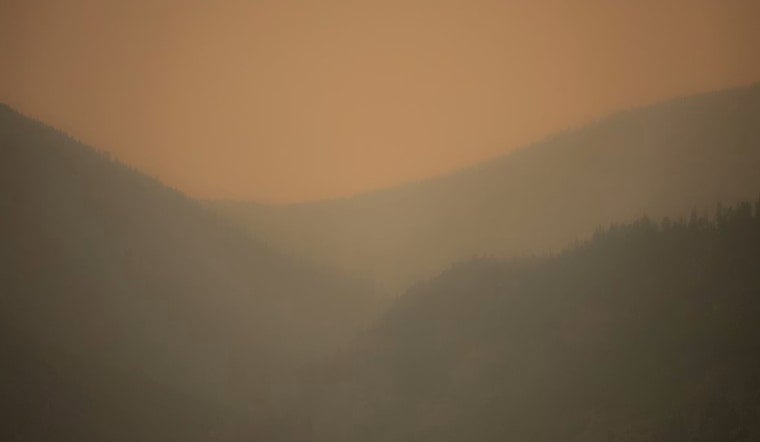
Bay Area residents woke up to gray, smoky skies this week, and the view out the window is only the most obvious warning sign. Scientists and doctors say the real trouble is what you cannot see: tiny particles and a stew of combustion chemicals in wildfire smoke that can slip past the body’s defenses and reach the bloodstream, aggravating the heart, lungs and brain. With new studies and federal tracking data sharpening the picture, health officials are urging people to limit outdoor time, use quality respirators when necessary and improve indoor filtration.
New research puts a number on the risk
A causal modeling study published in Science Advances estimated that wildfire-specific PM2.5 contributed to about 24,100 deaths per year in the contiguous U.S. from 2006 to 2020. A 2021 global analysis in Atmospheric Environment estimated roughly 677,745 premature deaths annually from landscape-fire smoke, with nearly 39% of those fatalities among children under age five.
How smoke attacks the body
The most dangerous parts of wildfire smoke are fine and ultrafine particles that can slip past nose hairs and mucus, lodge deep in the lungs and then enter the bloodstream, triggering inflammation and immune responses across organs, as described by the Los Angeles Times. Scientists have identified more than 1,000 chemicals in wildfire plumes, and the smallest particles, roughly a micron or less, tend to travel farthest and do the most damage. Those direct pathways help explain why emergency departments often see spikes in asthma, pneumonia and other respiratory visits; a retrospective analysis in BMJ Open of Yellowknife’s 2014 smoke episode found emergency-department asthma visits doubled and pneumonia visits rose sharply.
Who’s most at risk
Older adults appear especially vulnerable. A nationwide analysis in the European Heart Journal linked long-term wildfire PM2.5 exposure to higher stroke incidence among people 65 and older. Pregnant people and newborns also show concerning signals, with systematic reviews and cohort studies tying wildfire PM2.5 exposure to higher odds of preterm birth and reduced birth weight. And global mortality models warn that a disproportionate share of smoke-related deaths falls on young children, according to the 2021 analysis in Atmospheric Environment.
Practical steps - when the sky turns gray
Public-health agencies advise staying indoors with windows and doors closed, running a properly sized HEPA air cleaner in a sealed “clean room,” and switching HVAC systems to recirculate when outdoor smoke is heavy, according to guidance from AirNow/EPA. If you have to be outside, a well-fitting NIOSH-approved respirator (N95, KN95 or P100) can cut down particle intake, although masks do not filter gases in smoke and can be tough to tolerate in extreme heat. People with heart or lung disease, parents of young children, and pregnant people are urged to prepare medicines and a safe-place plan in advance and to consider community clean-air shelters if home filtration is not available.
Local resources and preparing ahead
Bay Area residents can sign up for alerts and localized guidance through the Bay Area Air Quality Management District’s wildfire program and check regional monitor updates and health guidance from the district. National incident summaries and year-to-date burned acreage are posted by the National Interagency Fire Center, which helps explain why smoke from distant fires often reaches the region. If symptoms worsen or you are in a high-risk group, contact your health provider or seek emergency care and treat heavy smoke days as a real health hazard, not merely an inconvenience.





