

























































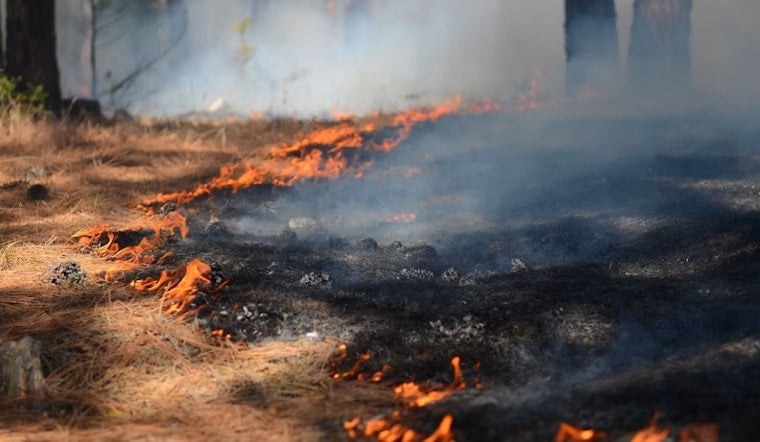
Heat-driven wildfires are tearing across hillsides faster this season, and local officials say evacuation plans built for slower-moving blazes are starting to buckle under the pressure. In Marin and other Bay Area communities, narrow, twisting streets and single-exit neighborhoods can turn a “go now” alert into a miles-long standstill. Fire crews and planners are scrambling to test new tactics for staged departures, traffic control and temporary refuge areas as the season ramps up.
That tension is especially clear in the Ross Valley, where fire officials warn that some neighborhoods have only one realistic escape route. “In a lot of areas, there’s only one way in and out,” Ross Valley Fire Department official Dan Mahoney said, according to Bloomberg. Fairfax’s recent wildland-urban interface code updates similarly flag the town’s steep hills and tight roads as a problem for both residents trying to flee and fire engines trying to get in, as the town’s WUI update documents. Planners say those hard physical limits are forcing a rethink of how and when people are told to leave.
The same story is playing out across the West, where thousands of personnel are battling more than 50 large incidents and residents are being pushed through repeated evacuations, coverage by The Washington Post shows. That reporting underscores both the emotional toll of packing up again and again and the strain on stretched fire crews. Officials warn that faster-moving flames can outrun detection systems, public alerts and the time it takes people to actually reach the highway.
Closer to home, Marin County supervisors have signed off on measures meant to speed the initial response, including a PG&E-operated helicopter on standby for the 2026 season, county staff note in a board report. The Marin Wildfire Prevention Authority is also paying for roadside vegetation work and a Central Marin evacuation-route project aimed at keeping key corridors open when everyone is trying to get out at once. County staff and local chiefs say the goal is to sharpen rapid initial attack and cut the odds of massive, last-minute evacuations.
On the ground, the Ross Valley Fire Department posts evacuation maps and a preparedness guide and urges residents to register for Alert Marin and keep a go-bag ready. The department is running community drills and outreach ahead of peak season to test how long it really takes to move cars and to fine-tune traffic-control plans. Officials stress knowing more than one way out of your neighborhood, keeping gas tanks topped off and maintaining defensible space so families can move quickly when an order hits their phones.
Why fast fires break plans
Scientists link the trend to heat and drying: a study in Nature found that anthropogenic warming has already increased the risk of extreme daily wildfire growth in California by roughly 25 percent and could raise that risk substantially under future warming. The paper connects higher temperatures to drier fuels and higher vapor pressure deficit, conditions that let flames sprint across ridgelines and jump roads. In practical terms, that can shrink evacuation windows from hours to minutes in some situations.
What officials are doing and what to do
Emergency agencies advise treating an evacuation warning as the moment to get ready and a mandatory order as the signal to leave immediately. Local agencies say residents should register for Alert Marin, identify two routes out of their neighborhood, pack essentials, secure pets and medications and think seriously about leaving early if they live in a single-exit area. Planners emphasize that those earlier, individual choices to head out can prevent traffic jams that slow both evacuees and incoming fire engines.
Planners also acknowledge there is no single fix. You cannot harden every hilltop or widen every road, so the focus is on clearer roadsides, strategic fuel breaks, staggered departures and more pre-positioned aircraft and crews. The Marin Wildfire Prevention Authority and local agencies say these steps will not stop every fast-moving blaze, but they can lower the risk of deadly traffic snarls and give firefighters more room to work. For now, officials are pressing residents to update their plans, stay plugged into alerts and take early warnings seriously.



