

























































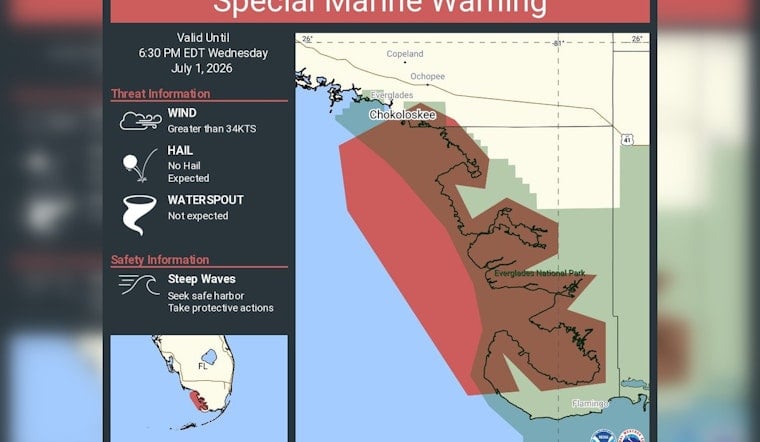
Fast-moving summer squalls put parts of the Everglades' Gulf coast on alert Wednesday, as the National Weather Service's Miami office issued a Special Marine Warning for Gulf-side coastal waters from East Cape Sable to Chokoloskee out 20 nautical miles, set to expire at 6:30 p.m. EDT. The alert named Copeland, Ochopee, Everglades, Chokoloskee, Everglades National Park and Flamingo among the locations affected and urged small-boat operators and park visitors to take immediate protective action. Officials cautioned that these pop-up storms can whip up sudden, dangerous winds and sharply building waves that leave little time to react.
Special Marine Warning including the Coastal waters from East Cape Sable to Chokoloskee FL out 20 NM until 6:30 PM EDT
- NWS Miami (@NWSMiami) July 1, 2026
Official Alert and Areas Named
As posted by NWS Miami, the Special Marine Warning covered coastal waters from East Cape Sable to Chokoloskee out 20 nautical miles and remained in effect until 6:30 p.m. EDT on Wednesday. The bulletin specifically listed Copeland, Ochopee, Everglades, Chokoloskee, Everglades National Park and Flamingo as impacted areas, advising mariners to seek shelter until the hazardous weather passed.
Hazards: Gusts and Sudden Seas
According to the National Weather Service, the primary hazards were wind gusts greater than 34 knots and sharply building waves capable of damaging small craft. The advisory urged mariners to "move to safe harbor until hazardous weather passes" and noted that waterspouts and hail were not expected with this issuance.
Why This Area Flashes Up Fast
Along the Everglades' Gulf coast, daytime sea-breeze collisions over very warm water often trigger isolated but intense thunderstorms that develop and move quickly, producing the pop-up squalls that lead to Special Marine Warnings. A similar episode unfolded last weekend when boaters were urged to head for shelter; see sudden squall had boaters racing for more context.
Safety Tips For Boaters And Park Visitors
Officials advise moving to safe harbor until the cells pass, lashing down loose gear, keeping a close watch on the sky, and monitoring local forecasts and VHF channel 16. The U.S. Coast Guard recommends that boaters prepare for rapidly changing conditions and contact local marine authorities if they need assistance.
NWS Miami and local marine forecasts will post updates if the situation evolves, and mariners are urged to treat Special Marine Warnings as short-fuse alerts that require immediate action. Officials requested that anyone who observes hazardous marine conditions report them to the Coast Guard or National Weather Service to assist with response and safety coordination.



