

























































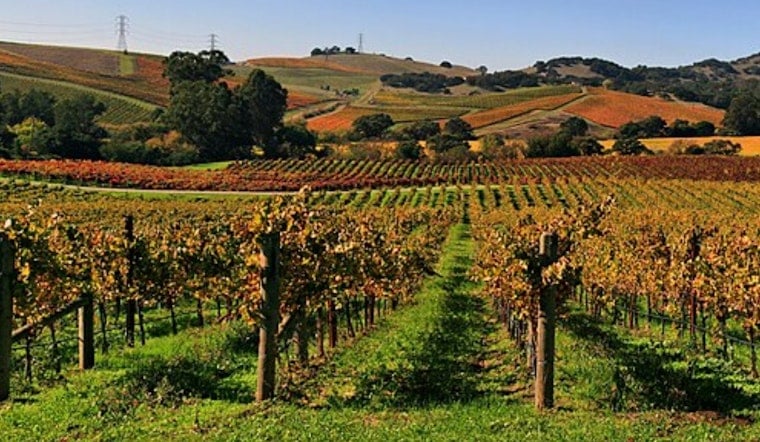
Under a blazing Mendocino County sun last Tuesday, a lineup of robots, drones and smart irrigation valves took over a block of vines in Hopland, performing for an audience of California winegrowers. From an ultraviolet robot designed to blast mildew to tractors retrofitted with built-in autonomy, the machines ran real-time trials amid tight labor markets and housing pressure. Growers, funders and county officials saw tools that could ease chronic labor bottlenecks, while also warning that the same technology could change who gets to do the work.
Hopland Becomes The Test Track
UC ANR Innovate hosted the UC ANR Connect Field Day last Tuesday at the Hopland Research and Extension Center, putting eight agtech startups into the vineyard for live, in-row demonstrations, according to UC ANR Innovate. The event is part of an applied-innovation pipeline that lets companies trial products in working conditions and collect unvarnished farmer feedback before they try to scale up.
One of the most eye-catching machines on site was Thorvald, an autonomous platform from Saga Robotics that uses UV-C light to suppress powdery mildew in strawberries and grapevines. The company pitches Thorvald as an alternative to chemical applications, and reporters in Hopland watched a unit slowly cruise the rows as it dosed demonstration vines, The Mendocino Voice reported.
Machines Aimed At The Mundane Jobs
The UC ANR roster also featured Ag-Bee spray drones, Lumo smart irrigation valves, Agtonomy’s factory-embedded autonomy and several crop-intelligence firms, per UC ANR Innovate. Companies such as Agtonomy say their software and hardware can take on repetitive tasks like mowing, spraying and weeding by building autonomy into existing equipment instead of forcing growers to swap out whole fleets. Agtonomy describes its platform as a way to run routine jobs with fewer people on site while keeping human operators in supervisory roles.
Napa’s Workforce Reality Check
The timing of the Hopland showcase landed squarely in Napa Valley’s long-running labor debate. A 2024 county assessment estimated there are roughly 9,000 farmworkers in Napa County, peaking around 11,000 during harvest, and found that about 60 percent work seasonally, a structural vulnerability that could make mechanization particularly disruptive, according to Napa County. Local coverage has pointed out that a shift toward machines could chip away at the region’s hand-labor image and pressure officials to accelerate plans for housing and long-term workforce strategies, The Press Democrat noted.
How The Money Talks About Robots
Organizers and investors framing the Hopland trials insist that field days are meant to steer technology toward augmenting people, not simply replacing them. Farmhand Ventures, a partner on UC ANR Connect events, says it backs pre-seed and seed-stage agtech that centers on farmworker wellbeing and even includes workers on company cap tables. Farmhand’s founding partner told AgTechNavigator that robots are not a flip-the-switch replacement for people and need to be rolled out alongside deliberate workforce planning.
Growers Kick The Tires
The crowd at Hopland ranged from small independent growers to larger vineyard managers, most there to learn rather than sign purchase orders on the spot, according to The Mendocino Voice. The mood in the rows was pragmatic: watch how the tools handle real terrain, then decide whether they are worth adopting. Hopland’s hundreds of research acres make the center a particularly useful proving ground, station director John Bailey told the outlet, and hands-on trials help sort which shiny gadgets actually work in production landscapes.
Why The Debate Feels Hotter Now
The Hopland demos arrived just as automation anxiety was flaring again. National outlets ran pointed coverage, including dystopian-tinged videos picked up by the New York Post, and that rush of attention has fueled local arguments over how fast Napa should move toward robotic tools. County officials and UC program leads counter that the real work sits at ground level: test equipment, evaluate results, build worker-centered transition plans and tie any tech rollout to housing and training policy, per the Napa County assessment.
For now, whether robots become a complement or a substitute will be decided vineyard by vineyard, as growers juggle cost, performance and the social impact of automation. Field days like the June 30 session in Hopland give farmers a clear look at what is technically possible, and a reminder that policy, investment and community planning will help determine whether Napa Valley keeps its skilled hands in the rows or gradually hands more of the work to machines.





