

























































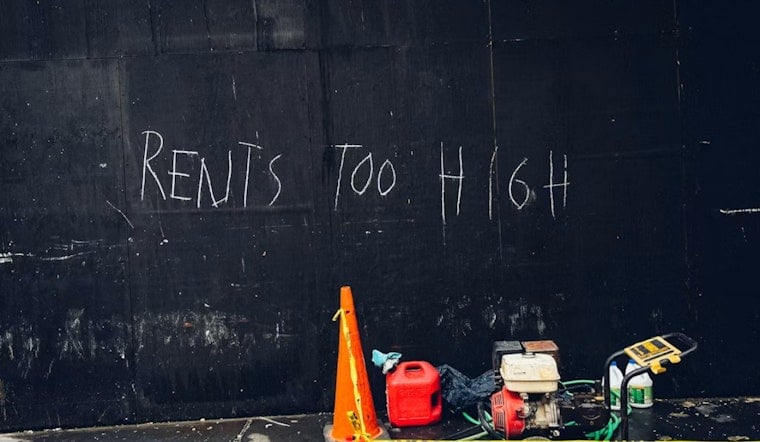
Drop $1,500 a month on rent in Salt Lake City, and you are looking at roughly 737 square feet of apartment living. That is about a modest one-bedroom or a roomy studio, and it is a bit less space than the same budget would have scored you a year ago. How far that money stretches depends heavily on where you land, with some suburbs offering a lot more elbow room and high-cost pockets of the city delivering a lot less. Meanwhile, local one-bedroom rents hover near $1,400, a mismatch that keeps plenty of households on a financial tightrope.
How much space $1,500 actually buys
That 737-square-foot snapshot comes from Axios, drawing on a national analysis by RentCafe that used Yardi Matrix data to calculate how much space $1,500 buys in 200 U.S. cities. In that ranking, Salt Lake City lands around 120th, solidly middle of the pack for square footage per renter dollar.
Nationally, RentCafe’s analysis finds that $1,500 gets renters about 703 square feet on average, while the same budget can buy nearly 1,378 square feet in places like McAllen, Texas. Closer to home, the Salt Lake area’s own spread is telling: West Valley City shows up as a spot where $1,500 stretches farther, at roughly 895 square feet, compared with the tighter space in the city proper.
Local rents and who’s feeling the squeeze
On the listings sites, one-bedroom apartments in Salt Lake City still average around $1,430 a month with an average unit size of 659 square feet, according to rental market trends from apartments.com. Put that side by side with the $1,500-for-737-square-feet benchmark and the story is familiar: even when a place looks “affordable” on paper, the numbers leave renters feeling stretched.
The city’s own research backs that up. In the Phase One summary of its Thriving in Place anti-displacement project, Salt Lake City reports that nearly half of renter households are rent-burdened, meaning they spend more than 30% of their income on housing. At that level, even small bumps in rent or modest drops in square footage can tip a household from barely manageable to scrambling.
Why the local market matters now
The squeeze on space and price is playing out in the middle of an apartment construction boom. New buildings and fresh supply have pushed more units onto the market, with enough competition that some landlords are dangling concessions, short-term deals that trim the effective monthly bill. Recent reporting noted that this has cooled headline rent growth a bit, but it has not actually solved long-term affordability for most tenants. Coverage from Axios points out that the market is still highly sensitive to how fast those new units get filled.
Where $1,500 stretches farther
If it is square footage you are hunting, RentCafe’s ranking makes a clear case that geography is everything. Suburbs and smaller cities often deliver a lot more room for the same $1,500. Within the Salt Lake Valley, West Valley City shows up as one of the better bets for renters chasing extra square feet, while other suburbs and nearby towns often list more two-bedroom options for those willing to tack a longer commute onto the day. Nationally, McAllen, Texas, is RentCafe’s standout for sheer space per $1,500.
For Salt Lake renters searching on a $1,500 budget, that means looking beyond downtown, comparing concessions carefully, and deciding what tradeoff hurts less: more time in traffic for more living space, or a smaller place closer to work and transit. Online tools from RentCafe and apartments.com can help stack options side by side and factor in incentives and fees to get a clearer picture of the real monthly cost.
For now, the takeaway is stubbornly simple. In Salt Lake City, $1,500 still rents you a livable spot, but not necessarily the roomy setup that number might have promised a few years ago. With nearly half of renter households already cost-burdened, a few dozen square feet or a single month of free rent can be the difference between barely staying afloat and slipping under.




