

























































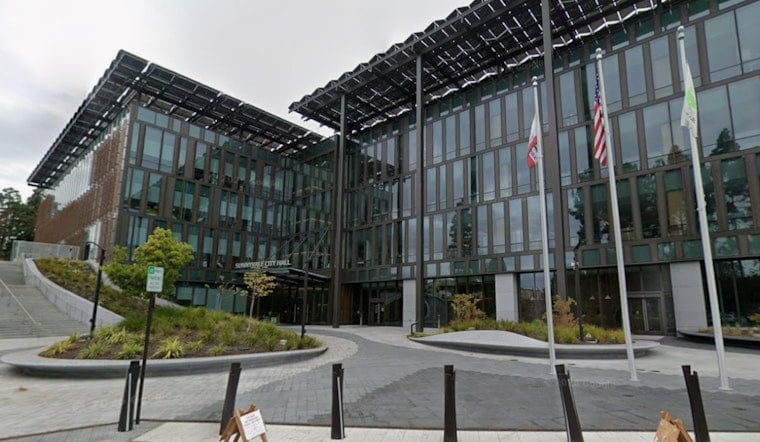
Sunnyvale’s old Wells Fargo branch at 295 South Mathilda Avenue may be done handing out cash, but it could soon be handing out keys. Nonprofit developer MidPen Housing is proposing to turn the shuttered bank into a mostly affordable, five-story apartment community with roughly 110 units, on-site resident services and a landscaped interior courtyard built around transit-friendly living.
The Sunnyvale Planning Commission took its first official look at the concept during Monday's study session. Commissioners weighed in on the early design and the usual questions about height, parking and neighborhood fit, then sent the proposal back for more work and a future hearing instead of taking any final action.
Proposal and Site Details
According to City of Sunnyvale records, the city bought the roughly 1.05-acre property from Wells Fargo in 2023, then signed an Exclusive Negotiating Agreement with MidPen to explore a housing project. The council packet approving that agreement outlines multiple scenarios that tweak building height, parking counts and the mix of apartment sizes while MidPen and city staff sort through what will actually pencil out financially.
Those same city documents set the stage for the Planning Commission’s July study session, laying out the big sticking points that commissioners and residents are now dissecting as the design evolves.
Design, Units and Affordability
MidPen Housing describes the proposal as a five-story, transit-accessible community with about 110 apartments and on-site resident services. In its current design packet, the developer labels the concept a 100 percent affordable community.
The plans lean into green building features, calling for all-electric systems, rooftop solar panels and a reduced car-parking ratio paired with expanded secure bicycle parking to fit downtown Sunnyvale’s transit-oriented setting. MidPen’s materials state that the design package was submitted to city planners in April 2026 after a series of design sessions and outreach meetings with stakeholders.
What Locals Heard at City Hall
Coverage in The Mercury News reports that residents and community groups weighed in before the July Planning Commission meeting with written comments that ran the gamut. Some praised the project’s density and its proximity to transit, while others warned about the building’s height and whether parking would be tight if and when the homes fill up.
The Mercury News account notes that commissioners used the study session to wrestle with those tradeoffs and ultimately chose not to move the project forward that night. Instead, they asked staff and MidPen to return with revisions, a familiar Silicon Valley storyline where the urgent need for deeply affordable homes runs headlong into worries about neighborhood impacts.
Endorsements and Advocacy
Regional housing advocates have already lined up behind the proposal. The Greenbelt Alliance has publicly endorsed the 295 South Mathilda plan, calling it a compact, transit-oriented infill project. Meanwhile, SV@Home has highlighted it as one of several MidPen developments inching forward in Sunnyvale this year.
Support from those groups translated into letters of backing that landed in the city’s review packet for the July session. Advocates point in particular to the site’s walkable access to Caltrain and downtown shops and services as a major selling point.
Next Steps and Timeline
MidPen’s project timeline, posted on the developer’s site, anticipates locking in major financing and funding awards in 2027 and 2028, then starting construction if tax credits and grants come through. A memo that MidPen filed with the city outlines its financing approach and states that the nonprofit plans to apply in 2026 for programs such as the Affordable Housing and Sustainable Communities (AHSC) grant.
That particular funding source requires that projects be fully entitled before they apply, which means the next stretch of local approvals and public hearings will heavily influence whether this 110-unit concept makes it off the drawings and into the ground. The city’s broader push to turn underused commercial parcels into homes near transit is clearly on display here, but 295 South Mathilda’s future still depends on how the community responds and how it fares in a crowded state funding lineup.
For now, residents can expect more design tweaks, more chances to sound off at public meetings and more city deliberations before any final vote on the former bank’s potential new life as affordable housing.





