

























































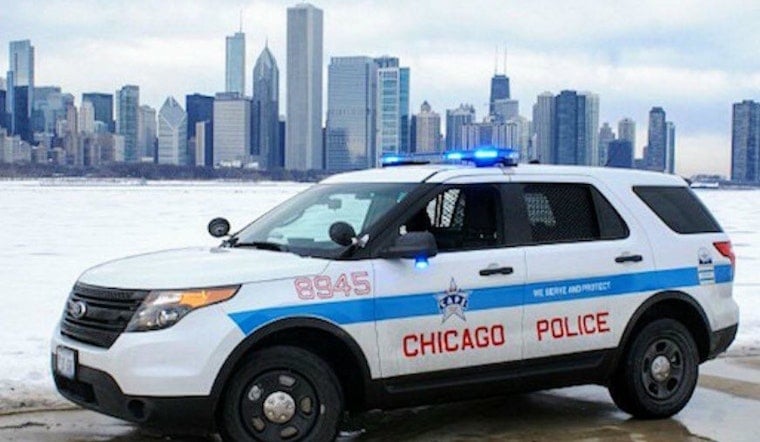
On a July morning commute that went spectacularly sideways, a Chicago woman says video from a nearby security camera undercuts the Chicago Police Department's version of a West Side crash that left her car destroyed and her workday derailed.
Ashley Stewart Holmes says she was driving to work on July 9 when a CPD squad SUV slammed into her Buick Envista at Madison Street and Kilpatrick Avenue on the West Side, leaving her injured and the vehicle totaled. She was later hit with three citations and is scheduled to appear in court on Aug. 17 to fight the tickets.
Her attorney, Derek Martin, points to private surveillance footage that he says "appears to show the police vehicle's emergency lights being activated only after the collision" and that "the squad car had just stopped skidding when those lights flipped on," according to NBC Chicago. The department, in its written narrative, acknowledged the collision and stated that Holmes' vehicle struck parked cars, and that officers suffered minor injuries and were taken to a hospital. Martin says Holmes was cited for failure to reduce speed, running a stop sign and having tinted windows, and that they are weighing a potential personal-injury claim.
Video Clashes With Police Accounts Before
Disputes like this are not new in Chicago, where footage that contradicts initial police reports has previously fueled public backlash and legal fallout. In a 2019 case, body-camera and bystander video that later became public helped lead to a proposed $3.25 million settlement with a family, according to CBS Chicago. Incidents like that show how quickly crashes involving officers can escalate into civil claims or internal reviews once independent video enters the picture.
What Comes Next In Court
Holmes is expected in traffic court on Aug. 17 to contest the three citations, and her attorney says they are still evaluating a personal-injury case, according to NBC Chicago. The surveillance video has no audio, so it does not reveal whether a siren was sounding before impact, and Martin maintains his client did not hear one. The dispute highlights how a routine traffic stop can quickly turn into a broader accountability fight when cameras and official reports do not line up.




