

























































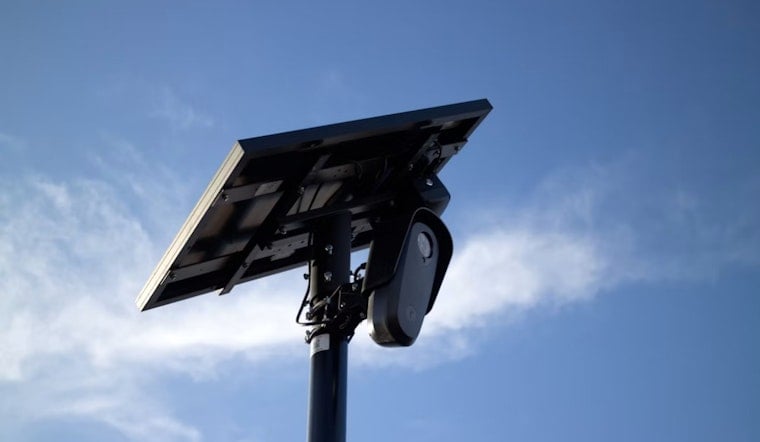
Davis County commissioners voted 2-1 on Tuesday to approve a memorandum of understanding governing how the county's automatic license plate reader cameras share data with the Utah Department of Public Safety, over the objections of residents who packed the meeting to voice fears about privacy and out-of-state surveillance. Commissioners Bob Stevenson and Lorene Kamalu voted in favor, while Commissioner John Crofts cast the lone dissenting vote, saying he wasn't ready to sign off until he understood the measure better.
The five-year agreement, detailed by KSL.com, restricts use of license plate data strictly to law enforcement purposes and requires it to be stored in a secure government cloud, according to Citizen Portal. Davis County's sheriff's office currently has four of the automated license plate recognition cameras, though none are deployed yet and one is undergoing testing. The deal is required under state law for Utah agencies that want to cooperate with other agencies on sharing plate data, and the Utah Department of Public Safety has said the agreements are specifically meant for Utah law enforcement.
The cameras work by reading passing vehicles' license plates along roadways, helping authorities track suspects' movements and flag stolen vehicles or missing persons cases through what are known as hotlist hits. Davis County Sheriff Kelly Sparks touted the technology at the meeting, saying license plate readers can be a great tool but arguing the information should be used restrictively to protect citizens' rights.
Weber County's Numbers Fueled the Debate
The vote came just two days after public records showed that 96.6% of the roughly 5.1 million searches run on Weber County's 10 Flock cameras between February 2022 and July 2026 originated from out-of-state law enforcement agencies, with Houston Police Department alone accounting for more than a third of all searches, according to the Standard-Examiner. That disclosure, released by the Utah Civic Compact, was still fresh in residents' minds when they showed up to oppose the Davis County agreement.
Weber County Sheriff's Office spokesperson Colby Ryan said monthly internal audits confirmed the out-of-state queries, including those from Houston, were manual, officer-initiated searches backed by documented justifications tied to active investigations, warrants, stolen vehicles, or missing persons. Weber County commissioners had approved their own memorandum of understanding with the Utah Department of Public Safety on the technology back in June.
Bountiful resident Ronald Mortensen told commissioners that opposition to license plate readers unites Utahns across the political spectrum, and he noted that the Utah State Privacy Commission is currently conducting a formal study on law enforcement use of the technology, with official policy recommendations expected by the end of September. Critics at the meeting argued that the data collection invades privacy and worried the information could be misused, urging commissioners to wait for those state guidelines before signing anything.
What the Agreement Actually Requires
The memorandum outlines guidelines for how participating agencies can use the systems and authorizes information sharing among them, but it stipulates that authorized Utah users may only assist a non-party agency when doing so complies with internal policies and Utah law. Participating agencies must audit how their camera data is used, and audit logs are required to capture the number of searches, the crime type, and an incident number for each query, verifying that searches are conducted solely for legitimate law enforcement purposes.
That auditing requirement traces back to Section 639.5 of the Utah Department of Public Safety Policy Manual, which mandates that ALPR searches capture user credentials, crime types, and incident numbers, and that agencies preserve those audit logs for at least five years, per the Utah Department of Public Safety. Separately, Utah Code § 41-6a-2004 requires government entities to purge non-evidentiary plate scan data after 30 to 90 days, with a statutory maximum retention of nine months unless the data is flagged for an active investigation, warrant, or court order.
Stalled Legislation Leaves Rules to Local Deals
Efforts to set statewide ALPR standards through the Legislature have repeatedly failed. Utah House Bill 327, sponsored by Representative Kristen Chevrier to establish encryption standards, mandatory usage reporting, and a 150-day retention cap, died in committee in March, following a 2025 reform bill that passed the House 64-2 but stalled in the Senate. With statewide reform unresolved, agreements like Davis County's have become the primary mechanism for setting data-sharing rules at the local level.
Camera vendor Flock Safety announced in August that it will require all law enforcement customers to implement audit tools flagging abnormal search behavior starting in 2027, a response to nationwide scrutiny over system misuse, according to the Associated Press. Independent tracking from lprmaps.com found Utah has at least 944 total ALPR cameras operated by 30 to 50 law enforcement agencies statewide, ranking the state 28th nationally in camera deployment.
Ogden City remains the largest municipal investor in the technology in the state, having spent $123,000 to deploy and maintain 41 active cameras across its streets. Ogden Police Chief Jake Sube gave city leaders a detailed presentation on the technology in January, and Flock's own transparency portal showed Ogden's cameras produced 414,597 unique license plate reads and 2,225 hotlist hits in the 30 days ending August 14. Davis County's four cameras represent a far smaller footprint by comparison, though residents made clear at Tuesday's meeting that scale wasn't the only concern driving their objections.





