

























































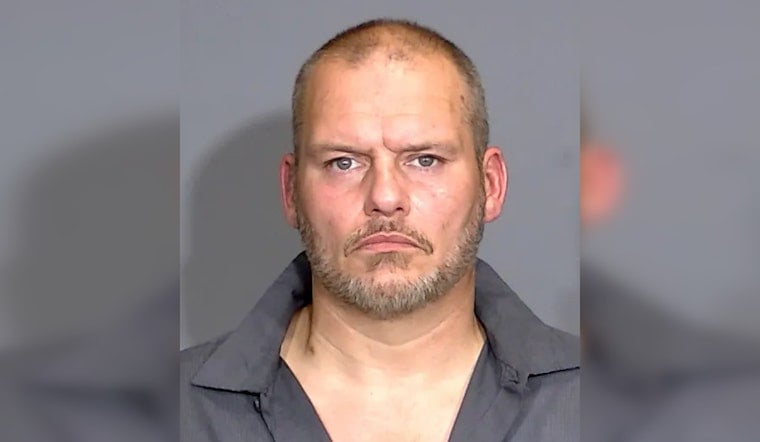
Nearly ten months after Clifford Hudson was found lying in the street with a gunshot wound to the head on Indianapolis' near west side, police say they've arrested the man they believe pulled the trigger. The Indianapolis Metropolitan Police Department announced the arrest of 49-year-old James Summit in connection with Hudson's October 2025 killing, closing out one of the department's longer-running open homicide cases.
Hudson, 40, was discovered on October 12, 2025, in the 1400 block of North Tibbs Avenue, lying in the street next to an SUV with a gunshot wound to the head, according to WIBC 93.1 FM. He was rushed to a hospital in critical condition but died two days later. Police believe Summit shot Hudson at that location, per the outlet's report, though the circumstances that led to the shooting have not been detailed publicly.
Hoodline previously reported on Hudson's death in the days after the shooting, when investigators were still seeking public help identifying a suspect. The case remained open for nearly a year before Wednesday's arrest, which the station reports was carried out jointly by detectives from IMPD's Homicide Office and its Violent Crimes Unit.
Booking Records Show No Charges Filed Yet
Summit was booked into the Marion County Jail, but online booking records reviewed by the station show no preliminary charges or bond information listed as of Wednesday. That gap is standard procedure rather than an oversight: under Indiana criminal procedure, an arrest leads to preliminary booking, but formal charging documents must be separately prepared and filed by prosecutors, according to Banks & Brower. The Marion County Prosecutor's Office will make the final charging decisions in Summit's case, the station's report notes.
If prosecutors pursue and secure a murder conviction, Summit would face a statutory prison term ranging from 45 to 65 years under Indiana Code § 35-50-2-3, with a recommended advisory sentence of 55 years and fines that could reach $10,000, according to Justia Law. Prosecutors can also seek life without parole under aggravating circumstances, per the same legal reference.
A Corridor With a Troubled Recent History
North Tibbs Avenue has seen repeated violence over the past year. In March, a juvenile male was critically injured in an alley shooting in the 1100 block of North Tibbs Avenue, just blocks from where Hudson was shot, as Hoodline reported at the time. Neighbors in the area have repeatedly voiced concerns about ongoing gun violence along the corridor, which sits within IMPD's Northwest District — a 66-square-mile territory patrolled by 161 sworn officers serving more than 143,000 residents, according to city data.
Hudson's case is one of dozens IMPD has worked to resolve amid a broader citywide shift in homicide numbers. Indianapolis recorded 133 murders in 2025, a 45% decrease from the city's record peak of 241 murders set in 2021, according to WFYI. City officials attributed the decline to targeted policing strategies, and department leadership has credited multi-agency partnerships such as the Indiana Crime Guns Task Force, along with focused enforcement on high-risk individuals and areas, for the improvement.
Most Homicides Still Go Unsolved
Even with the citywide drop in killings, clearing cases remains a challenge. By July, IMPD detectives had opened 62 homicide investigations during the year, with 45 cases still actively open and 15 arrests made in connection with homicides, per a WIBC 93.1 FM report from that month. Separate reporting in May found that roughly four out of every five homicides committed in Indianapolis in 2026 remained unsolved, according to FOX59 WXIN, underscoring why a nearly year-old arrest like Summit's stands out.
The near west side has produced other recent case resolutions as well. Hoodline reported in March on an arrest tied to a homeless camp killing on South Tibbs Avenue, and in May covered a conviction in a separate west-side murder case that hinged on gas station surveillance footage along Tibbs Avenue. Summit's arrest adds another chapter to that pattern of slow-moving but ongoing enforcement along the corridor, though it remains unclear when or if formal charges will be filed against him.





