

























































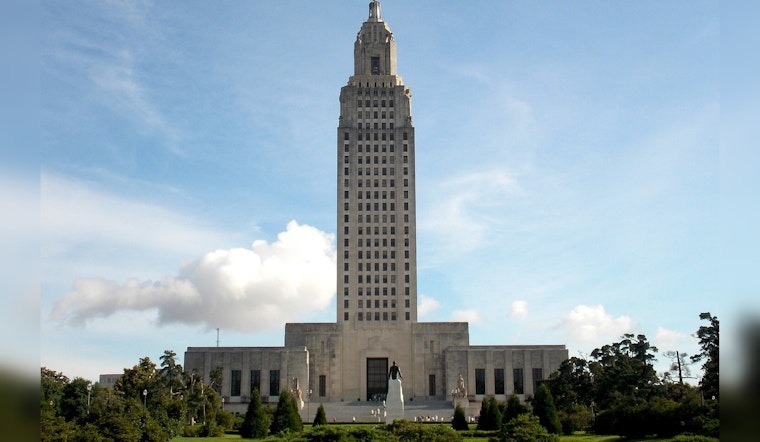
Louisiana lawmakers are weighing whether to approve a $54 million, 10-year no-bid contract with Motorola that would put the company in charge of body cameras, dashboard cameras, disaster communications and other public safety technology across seven state agencies. The Jeff Landry administration is pushing the deal, but members of the Joint Legislative Committee on the Budget are demanding vendor comparisons and full contract terms before they will consider a vote.
Evelina Broussard, Landry's chief information officer, told lawmakers in July that the contract would be worth about $54 million, according to reporting by New Orleans CityBusiness. The proposed agreement would let the state negotiate long-term discounts on Motorola technology, and administration officials have said it could save Louisiana between $40 million and $70 million. State Police Chief Administrative Officer Robert Burns said Louisiana State Police reviewed other vendors' products over a nine-month period before determining it wanted to work with Motorola.
Under the proposal, the Motorola integrated system would be used by Louisiana State Police, the Department of Corrections, the Department of Probation and Parole, the Office of Juvenile Justice, the State Fire Marshal, the Department of Wildlife and Fisheries, and the Governor's Office of Homeland Security and Emergency Preparedness. The deal would also allow the state to negotiate discounts on Motorola equipment for local law enforcement agencies. Motorola already holds the state's business for some, but not all, of its public safety equipment and services, including a role helping run the Louisiana Wireless Information Network, a statewide communications system used by first responders during natural disasters.
Why the No-Bid Route Is Raising Flags
The state did not solicit competitive bids for the contract, a fact that has drawn bipartisan objections. Some lawmakers have questioned why the deal was not put out for competitive bidding, and others have warned the Landry administration not to rush the exclusive contract through the approval process. Sen. Gerald Boudreaux, a Democrat from Lafayette, said rushing approval of such an important contract would reflect badly, adding that other vendors might feel they could provide the same services.
Under Louisiana's Procurement Code, sole-source contracts are permissible only when the chief procurement officer determines in writing that no functional equivalent exists, and public bid rules prohibit agencies from restricting purchases to a single brand when competitive alternatives are available, according to the Louisiana Legislative Auditor. State law also requires agencies to submit annual sole-source procurement reports to the legislature. The deal would replace Axon Enterprise Inc., formerly known as Taser International, which has been the Louisiana State Police body camera supplier since 2017; that contract ended earlier this year.
Before the budget committee can even take up the contract, state law required the Joint Legislative Committee on Technology and Cybersecurity to first authorize no-bid negotiations to proceed, according to an American Press editorial. That committee granted initial authorization, clearing the legal path for budget committee consideration. Louisiana procurement statutes also mandate that any multiyear state IT contract extending beyond three years must receive formal approval from the Joint Legislative Committee on the Budget, per the Legislative Fiscal Office, meaning the agencies involved cannot legally execute the 10-year Motorola agreement without that sign-off.
Lawmakers Want Numbers Before They'll Vote
Budget committee vice chairman Rep. Jack McFarland, Rep. Tony Bacala and Sen. Regina Barrow joined the criticism in July, demanding vendor cost comparisons and contract drafts before taking a vote. Barrow said she was “definitely not inclined” to endorse the 10-year deal without complete contract documentation and competitive options, the American Press reported. The committee, chaired by Sen. Glen Womack and co-chaired by McFarland, convenes monthly during legislative interims to review executive budget adjustments and multiyear state contracts, and its leaders have indicated they won't schedule a binding vote until officials present complete terms and vendor comparisons.
Scrutiny of the proposed deal has also been fueled by reports of recurring coverage gaps, tower outages and mounting operational expenses on the Motorola-operated Louisiana Wireless Information Network, according to the Jennings Daily News. That network, built after Hurricane Katrina on Motorola's P25 platform to resolve the catastrophic multi-agency communication failures of the 2005 hurricane season, now serves more than 114,000 local, state and federal first responders across 118 radio tower sites without charging user fees to local agencies. Motorola's contract to run that network expires in 2030. Louisiana's fiscal year 2024-2025 budget allocated $2.21 million specifically for network repairs and maintenance, alongside $1.068 million for equipment such as emergency tower trailers, encryption upgrades and tower batteries, according to the Legislative Fiscal Office.
Body Camera Reliability Carries High Stakes
Burns has argued that a fully integrated Motorola system should mean fewer instances of missing body camera footage, telling lawmakers the setup provides extensive video evidence. Motorola's body cameras can sense when other officers' cameras nearby have been activated and can turn themselves on automatically based on activity detected by Motorola radios, a feature state police leaders say addresses a persistent problem.
That problem has deep roots. Louisiana State Police's body camera program has been under a federal U.S. Department of Justice pattern-or-practice civil rights investigation since June 2022, stemming from the 2019 in-custody death of Ronald Greene, according to PBS. Body camera footage from that arrest was suppressed for two years, and federal investigators found troopers routinely turned off or muted their cameras during violent encounters. In December 2023, state police reinstated Lt. John Clary, the highest-ranking officer at the scene of Greene's fatal arrest, after he had previously been accused of withholding graphic body camera video from internal investigators, Courthouse News reported.
Whether the automated activation features Motorola is promoting will resolve those long-standing evidence problems remains to be seen, and it is still unclear when the Joint Legislative Committee on the Budget will schedule a vote. For now, the contract sits in limbo as lawmakers wait on the vendor comparisons and full documentation they say are necessary before Louisiana commits to a decade with a single supplier.





