

























































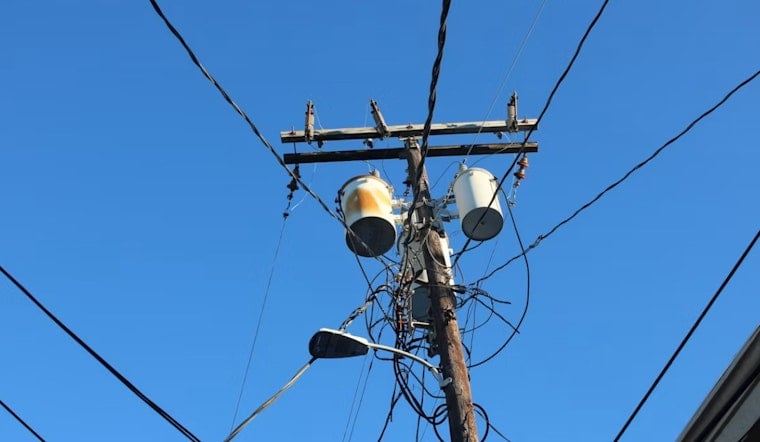
Just after 11 a.m. Wednesday, the lights went out for nearly 3,000 Rocky Mountain Power customers across Midvale, Salt Lake City, and surrounding areas. The utility reported about 2,985 customers without electricity, with crews notified and dispatched to assess the cause and begin repairs.
Rocky Mountain Power estimated that service would be restored before 1:30 p.m. the same day, according to ABC4 Utah. Customers looking for live updates on the outage were told they could text “stat” to 759677 or check the utility's website for real-time status information.
A Third Outage in Less Than Three Weeks
Wednesday's disruption lands amid a string of Rocky Mountain Power outages that have rattled Salt Lake County residents through the summer. Just seventeen days earlier, a blackout knocked out power to more than 3,600 homes and businesses in Sugar House and South Salt Lake, an incident Hoodline traced to tripped local equipment. Earlier in the year, a pre-dawn blackout on February 18 plunged more than 28,000 customers in Sandy and Draper into darkness, disabling traffic signals across southern Salt Lake County — a disruption caused by high canyon winds ahead of a winter cold front.
Wednesday's outage struck under very different weather. Salt Lake City saw sunny skies with high temperatures in the lower 80s and gusty daytime winds, following earlier August days that peaked near 97 degrees, per weather data reported by AccuWeather. Summer power demand across the Wasatch Front typically climbs during hot afternoon hours, though it remains unclear whether Wednesday's wind or heat played any role in the outage.
Midvale's Role in the Regional Grid
Midvale, a suburban community of roughly 36,100 residents packed into 5.9 square miles along Interstate 15, sits at the center of a densely populated commercial and residential corridor that depends on the broader Salt Lake Valley power grid. The city is home to major retail hubs including Bingham Junction and the Shops at Fort Union, making any daytime outage there a disruption felt well beyond residential streets.
Rocky Mountain Power, a division of Portland-based PacifiCorp headquartered in Salt Lake City, serves more than 1.2 million electric customers across Utah, Wyoming, and Idaho, with over 800,000 of those accounts in Utah alone. Under Utah Administrative Code and Public Service Commission rules, the utility must give customers at least two days of advance notice before planned service interruptions, while unplanned equipment failures instead trigger emergency crew dispatches and real-time outage-map updates — the process apparently underway Wednesday.
How This Outage Stacks Up
Utility performance data shows Rocky Mountain Power customers typically experience an average of 0.97 power outages per year with a mean duration of 107 minutes, compared to a nationwide average of 1.44 outages and 123 minutes. Measured against that baseline, Wednesday's estimated restoration window, projected to fall under two and a half hours, would track close to the utility's typical outage length even as it marks the third significant disruption to hit the county since February.
Rate Settlement and Grid Investment Backdrop
The outage comes weeks after the Utah Public Service Commission approved a rate settlement on July 31 resolving Rocky Mountain Power's general rate case appeal, a deal that includes a stay-out provision barring new general rate increases before January 1, 2029, according to Sanger Greene PC, which noted the settlement ended a rate dispute that had reached the Utah Supreme Court. As part of that multi-year regulatory agreement, Rocky Mountain Power has committed to roughly $2 billion in capital investments across Utah aimed at modernizing grid infrastructure, improving system resilience, and enhancing wildland fire mitigation, PacifiCorp said.
Salt Lake County households continue to benefit from relatively low electricity costs, paying a typical residential bill of about $105 per month in 2025, roughly $50 below the national average of $158, supported by regional retail rates averaging 12.11 cents per kilowatt-hour. Still, the repeated outages this year, from the February windstorm in Sandy and Draper to the early-August blackout in Sugar House and now Wednesday's disruption in Midvale, raise ongoing questions about how quickly the pledged infrastructure upgrades will translate into fewer interruptions for Salt Lake Valley communities.





