

























































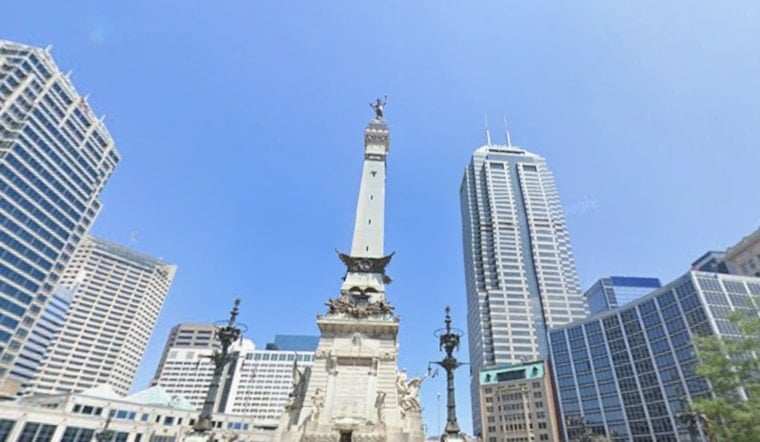
The observation deck atop the Soldiers and Sailors Monument in downtown Indianapolis has reopened to the public, capping a years-long closure for repairs and the pandemic. Visitors can once again ride a small elevator partway up the 284-foot monument before climbing a final staircase, or tackle all 330 steps, to reach a perch offering a 360-degree view of the city.
The reopening was reported by WISH-TV, which detailed the return of an Indianapolis landmark that had been closed to the upper deck for years. The monument sits at Monument Circle in downtown Indianapolis, and is currently open from 9 a.m. to 5 p.m. on Fridays, though officials plan to extend the hours later, according to the station's report. Timothy Winslow, executive director of the Indiana War Memorials and Museum and a retired U.S. Army major general, said the monument's purpose is to honor soldiers and sailors who sacrificed while providing civic pride, per the same account.
Visitor Mike Braun offered a simpler review after taking in the vista, telling the station, “Heck of a view!” Braun also said the main memorial should never fall into disrepair, the report notes — a sentiment that echoes the years of behind-the-scenes work required just to get the deck open again.
A Decade of Water Damage Forced the Closure
The upper deck's return follows nearly a decade of structural, mechanical, and environmental remediation by the State of Indiana, according to the Indianapolis Business Journal. Severe water infiltration identified in 2017 caused extensive damage to the underground plaza, which ultimately forced the relocation of the Colonel Eli Lilly Civil War Museum and required millions of dollars in state appropriations for waterproofing, HVAC installation, and a complete elevator overhaul, the outlet reported.
In February 2022, the Indiana State Budget Committee approved $6.375 million for the Indiana War Memorial Commission to carry out extensive plaza waterproofing, granolithic pavement replacement, and structural repairs, according to state budget documents posted on IN.gov. The chronic leakage had damaged interior spaces and created safety hazards for visitors before the basement level closed in June 2017. As part of the same infrastructure push, state officials completely replaced the monument's interior elevator system, which had routinely broken down under high humidity and passenger strain during peak seasons, the Indianapolis Business Journal reported.
The water problems were severe enough that curators relocated the Colonel Eli Lilly Civil War Museum collection three blocks north to the main Indiana War Memorial in 2018, expanding the display to include 15 original Civil War battle flags that had not previously been shown, per the same outlet. The museum, which now spans 30,000 square feet, had operated inside the monument's lower level for nearly two decades before the move.
A National First Built From Owen County Limestone
The Soldiers and Sailors Monument itself carries weight well beyond Indianapolis. Designed by Berlin architect Bruno Schmitz after he won an international contest among 70 submissions in 1888, the monument took 13 years to build and cost nearly $600,000 before its formal dedication on May 15, 1902 — a project that would cost more than $500 million in today's dollars, according to Axios Indianapolis. Upon its dedication, it became the first memorial in the United States dedicated to the common soldier rather than an individual general or president, Axios reported.
The exterior shaft and sculpted figures were built from gray oolitic limestone quarried from the Romona quarries in Owen County, according to the Indiana Department of Administration's page on IN.gov. During construction, Austrian-born sculptor Rudolf Schwarz was reportedly instructed to chisel the beards off his limestone soldier figures after an Indiana veteran pointed out that Hoosier infantrymen were typically beardless, unlike the German soldiers the mostly-German design team had in mind, according to Indianapolis Monthly.
Atop it all stands a 38-foot-tall bronze statue named Victory, sculpted by George Brewster and weighing 10 tons, holding a sword in her right hand and a raised torch in her left, per Axios. And buried in the monument's foundation since its 1888 groundbreaking is a copper time capsule containing a complete roster of every Indiana soldier who served in the Civil War, copies of the state's two constitutions, and a 38-star American flag, the outlet reported.
Part of a Growing War Memorial District
Indianapolis devotes 25 acres across its historic war memorial plazas, giving it more acreage dedicated to honoring veterans than any other American city and placing it second only to Washington, D.C. in total number of war monuments, according to the Indiana War Memorials Foundation. The Indiana World War Memorial Plaza Historic District spans five downtown blocks, the foundation notes.
The reopening also lands amid broader change around Monument Circle, where historic office towers have been converting into hotels and residences, a trend Hoodline has tracked in recent months. That includes plans to turn the 14-story Circle Tower into an AC Hotel with a rooftop bar looking directly at the monument, a project Hoodline first reported earlier this year.



