

























































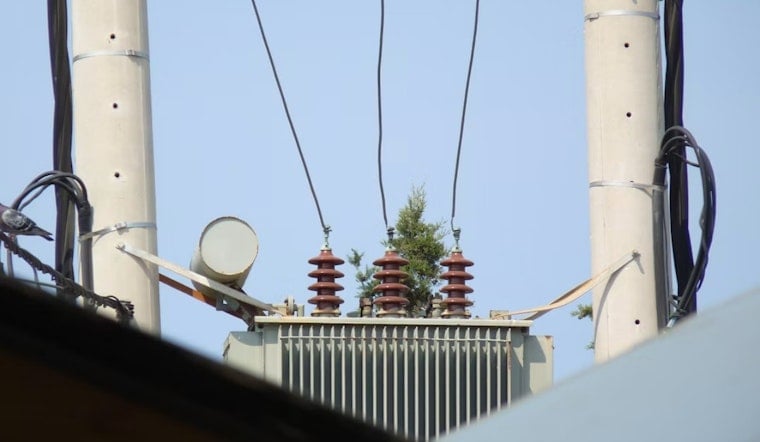
St. George city officials declared a red alert Thursday night after a regional transformer failure knocked out power to more than 14,000 Rocky Mountain Power customers across southwestern Utah, and now they're asking residents to hold off on running dishwashers and laundry machines during the evening hours while the local grid finishes recovering.
The outage struck as temperatures in St. George reached 104 degrees, a heat spike that drove heavy air-conditioning use right as the grid lost its main supply, according to KSL News. City officials said the blackout was caused by a PacifiCorp regional transformer issue that temporarily cut the main supply feeding local distributors. The failure dropped substations offline across St. George, Hurricane, and surrounding communities at once, since PacifiCorp operates the high-voltage backbone that feeds municipal and cooperative providers throughout Washington County, per St. George Direct.
St. George Energy Services crews worked to restore power in careful, gradual steps rather than flipping the system back on all at once, the station's report notes. Emergency dispatch and utility officials also moved to knock down rumors circulating online, clarifying that the loud pops and flashes of light some residents reported were standard protective circuit breakers automatically tripping high-voltage lines to isolate the damage — not transformer fires.
Why the 3 to 7 P.M. Window Matters Most
Officials designated 3 p.m. to 7 p.m. as the highest-risk window for power use, a stretch driven by solar generation dropping off in the late afternoon just as household demand spikes into the evening. Residents are being asked to delay heavy appliances like dishwashers and laundry machines until after 7 p.m., per the same account, with officials framing collective conservation as the thing keeping the recovering system stable.
City officials said the local grid was still recovering as of Thursday night and asked all residents to conserve energy while crews continued to monitor conditions. St. George Energy Services prioritized critical services during the recovery and, according to the article, routed a smaller backup feed to help stabilize supply. Power outages persisted into Friday morning for several residents even after the broader system came back online.
Backup Generators Standing By
St. George officials said emergency diesel generators were ready to deploy if the grid approaches critical limits again. That local capacity comes from the city's own MillCreek Gas Generation facility, which houses two 40-megawatt gas turbines, plus 20 megawatts of diesel generation split between the Bloomington and Red Rock facilities, according to the City of St. George. That gives the city roughly 100 megawatts of internal generation to lean on, though it still depends on PacifiCorp's regional transmission network for the bulk of its power delivery. St. George Energy Services serves about 33,000 residential and commercial accounts with an annual peak demand of 215 megawatts.
The outage also rippled into other infrastructure. Dammeron Valley Water Works issued an urgent request for residents to conserve water after the blackout disrupted regional pumping systems, warning that storage reserves needed to be protected for essential needs and fire suppression, per KSL.com. Ten regional electric entities across Southern Utah coordinated emergency operations during the blackout, bringing backup generators online and balancing shared electrical loads, according to KSL NewsRadio.
A Week-Long Wait for Answers
Rocky Mountain Power said completing a full technical investigation into the exact cause of the transmission equipment failure could take up to a week. In the meantime, restoration crews have been bringing power back online in controlled stages — in increments of around 20 megawatts — to avoid overloading the recovering system with a sudden demand surge.
The outage has also renewed local questions about whether Southern Utah's transmission infrastructure can keep up with the region's growth, as St. George Direct's reporting notes that Washington County remains among the fastest-growing areas in the state. It's a familiar strain this summer: Hoodline has reported repeated August grid failures tied to peak summer heat elsewhere in Utah, including a blackout that left thousands of Salt Lake City-area customers in the dark earlier this month.





