

























































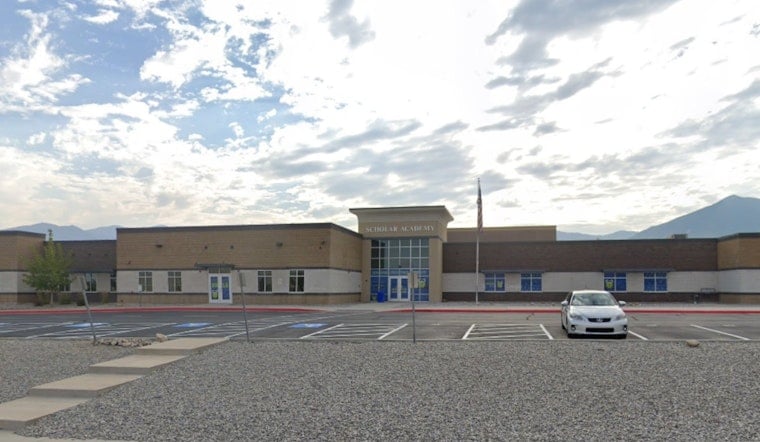
Drayke Hardman was a 12-year-old student at Scholar Academy in Tooele when he died on February 10, 2022, after his heart rate dropped from roughly 146 beats per minute to about 40 and medical staff performed CPR. His parents say he had endured nearly a year of bullying at school before his death, a claim that continues to shape how Utah lawmakers and school districts talk about student safety more than four years later.
His mother, Samie Hardman, told KUTV that Drayke was taken to the hospital on February 9, 2022, and that visual evidence indicated he had been lured by a bully with his favorite chips and a drink. She said he had been picked up and body slammed, and that days before his death he came home with a black eye. Drayke told his sister he had been punched in the face in a bathroom, according to his mother's account.
Samie and Andy Hardman said they contacted Scholar Academy administrators before their son's death and that they checked on his mental health, asking directly whether he had suicidal thoughts. Samie Hardman said Scholar Academy suspended the student involved in the alleged assault, but that the student later returned to the school, after which Drayke experienced retaliation, per her account to the station.
School Says Confidentiality Limits What It Can Share
Jeff Hall, speaking for Scholar Academy, said the school could not discuss video footage, disciplinary actions, or allegations involving individual students because of confidentiality obligations. Scholar Academy denied KUTV's interview request for the story. In a statement to the same outlet, Davis School District — which was not involved in the Hardman case — said it would not comment on the circumstances of a tragedy in another school district, but added that its work to improve student safety is never finished.
Before he died, Drayke had posted a self-love message in a TikTok video, saying people should practice self-love and list two things they love about themselves each day for a week. That message became a foundation for the #DoKindForDrayke campaign his family launched to promote kindness and raise awareness about youth suicide and peer abuse, according to a video shared on Facebook.
What Utah Law Now Requires of Schools
Utah's legal framework around bullying has shifted substantially since Drayke's death. Under Utah Code § 53G-9-604, amended in May 2024, public schools must notify parents whenever a student is involved in a bullying incident or threatens suicide, and must provide suicide prevention resources along with advice on limiting access to fatal means, according to the Utah Legislature. School administrators must keep records verifying that parent notification and any action plan actually happened.
A companion statute, Utah Code § 53G-9-605.5, enacted in the same May 2024 session, explicitly bars administrators from requiring a targeted victim to change class schedules, educational placement, or participation in school activities as part of a bullying action plan. Schools are instead required to use supportive measures that preserve a victim's access to their own education, rather than shuffling the bullied student out of the way.
How Local Districts Say They Respond
Several Utah districts described their current bullying response systems to KUTV. Jordan School District said it requires mandatory bullying training for employees at every level, allows reports through administrators, trusted adults, or the SafeUT app, and said it is committed to inclusion and safety for every student, investigating incidents immediately and thoroughly. Granite School District said cyberbullying, hazing, and retaliation are not tolerated, that validated bullying reports are investigated under district policy and state law, and that it created a full-time parent advocate position while committing to maintain communication with families during investigations.
Alpine School District said bullying and cyberbullying concerns will be addressed promptly under district policy and applicable law, and that it has developed policies and procedures for responding to allegations. The district uses a Culture, Climate, and Connection survey that asks students whether they feel safe from bullying and safe talking to an adult about school problems, and said there is no indication bullying is rising districtwide. Davis School District, separately, said it provides annual employee training on recognizing, reporting, and responding to bullying and harassment, and maintains an online reporting system along with an office of equal opportunity staffed by trained investigators.
The Numbers Behind the Policy Push
State data cited by KUTV shows Utah bullying rates have remained relatively stable with a slight decrease in recent years, with about 18% of students, or roughly 1 in 5, reporting they have experienced bullying. The Utah State Board of Education recorded 2,910 bullying incidents in 2025. Sixth- and eighth-grade students reported the highest number of incidents; bullying tends to occur more often in person during middle school, and incidents decrease as students reach 10th and 12th grades, with the pattern shifting toward digital cyberbullying in high school.
That middle school vulnerability tracks with outside research. A 2025 machine-learning study that analyzed 345,506 Utah student survey responses from 2009 to 2021 found that younger grade levels, social isolation, and frequent family conflict were the strongest predictors of adolescent bullying victimization in the state, according to findings published on ResearchGate. Nationally, the Centers for Disease Control and Prevention reported in August 2024 that 19% of U.S. high school students experienced in-person bullying and 16% experienced cyberbullying, with LGBTQ+ youth facing far higher rates of 29% and 25%, respectively, per the U.S. Centers for Disease Control and Prevention.
A Pattern of Systemic Struggles Beyond One District
Utah's difficulties are not confined to a single school. In October 2021, the U.S. Department of Justice settled with Davis School District after a two-year federal investigation found hundreds of unaddressed incidents of severe racial harassment and physical assaults against Black and Asian-American students between 2015 and 2020, according to the U.S. Department of Justice. That settlement mandated federal oversight of systemic policy changes and equal opportunity tracking within the district.
Utah's mental health data underscores what is at stake when bullying goes unaddressed. According to the Utah State Board of Education's 2023 Student Health and Risk Prevention survey, 17.6% of Utah youth seriously considered attempting suicide, and 42.7% of students who felt persistent sadness or suicidal ideation said they did not talk to anyone about their feelings. The state's SafeUT app, created after 2014 legislation and launched in 2016, offers 24/7 confidential crisis counseling and anonymous tip reporting for K-12 students, with chats handled by licensed clinicians at the University of Utah Health's Huntsman Mental Health Institute, according to SafeUT. Hoodline previously reported on SafeUT's push nationwide, as lawmakers and mental health leaders announced plans in January to expand the app into a national model after a decade of state operation.
Family Says More Resources Are Still Needed
Separately, Utah House Bill 84, signed into law in March 2024, required all K-12 public, charter, and private schools to complete comprehensive safety evaluations by late 2024 and roll out updated incident management policies, emergency response protocols, and threat-reporting systems through 2025, according to the Utah Legislature. The bill also introduced armed school guardian standards and wearable panic alarms as part of a broader campus safety overhaul.
For the Hardman family, the policy changes have not erased the loss of their son. Samie Hardman told KUTV that schools and families need more resources to address bullying, a call that echoes across a state where thousands of families each year turn to tip lines, district reporting systems, and survey data in an effort to catch warning signs before another child is lost.





