

























































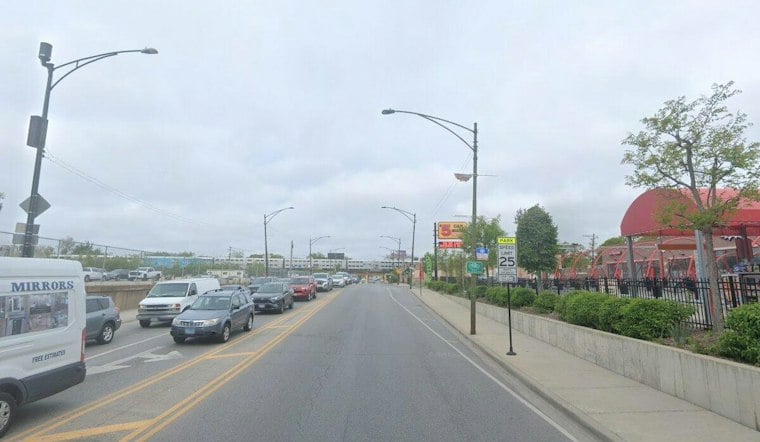
A restaurant-heavy stretch of Lawrence Avenue in Albany Park is about to become the newest front in Chicago's fight against rats — and this time, the weapon isn't poison. The North River Commission plans to launch a rat birth-control pilot in late October, targeting a corridor that runs from Central Park to Spaulding avenues along Lawrence Avenue, with a portion of Kimball Avenue between Leland and Lawrence avenues also included.
The trial, first reported by WTTW News, will rely on SenesTech's Evolve product, which the outlet describes as formulated only to affect the fertility of rats rather than killing them outright. The North River Commission has purchased enough bait to last four to five months, according to the same report, and additional funding is set aside in the commission's 2027 budget to keep the trial going. Rather than hiring contractors to do all the legwork, the commission is recruiting volunteers to help deploy the bait and check traps weekly across the pilot zone.
Albany Park Joins a Citywide Experiment
Albany Park isn't the first Chicago neighborhood to try this. WTTW News notes that a rat birth control trial in Wicker Park kicked off in 2025 and expanded in 2026, while a separate effort has been underway in Lincoln Park. That Lincoln Park pilot, which began in August 2025, is a partnership between the city, Lincoln Park Zoo, the Chicago Bird Alliance and the 43rd Ward office, according to CBS News Chicago. The station reports the program is funded entirely through donations, with $40,000 raised privately, and that it was spearheaded by 43rd Ward Alderman Timmy Knudsen to run for six months.
The city describes the effort as a genuine experiment rather than a proven fix. As the same CBS News Chicago report put it, “The City is conducting a pilot study to determine the effectiveness of contraceptives as an alternative to rodenticide.” Officials told the station they expect to have initial data in summer 2026 to help decide whether and how the program should expand, and the pilot design compares streets treated with contraceptive pellets against streets that are not treated.
Early Signs From Wicker Park and Bucktown
In Wicker Park and Bucktown, the contraceptive push predates Albany Park's by more than a year. Special Service Area No. 33 began placing rat birth control in alleys and tree pits along several major commercial corridors there in spring 2025, according to NBC Chicago. Organizers reported that early results this year showed a decline in the local rodent population, the station's report notes. A more specific figure came from Block Club Chicago, which found SenesTech recorded an 88 percent reduction in the density of rodent tracks picked up by monitoring sensors between August and January.
Timelines for seeing results elsewhere in the city have varied. Speaking about the pilot's trajectory, Knudsen told Audacy, “You start to see the impact, the rat population start to go down around months six through eight … and then they go down drastically after that,” basing that estimate on results from other cities. That outlet also reported the pilot is scheduled to run through the summer, after which officials could consider expanding it further.
A City Rat Program Under Scrutiny
The contraceptive trials are unfolding against the backdrop of a rat-control system that a city watchdog has criticized. NBC Chicago reported that a city audit found the rodent-abatement program was unlikely to achieve long-term control of the rat population because it emphasized reactive efforts over proactive solutions. The station also reported that Chicago's Bureau of Rodent Control was allocated about $12.5 million in 2026 and had budgeted positions for roughly 100 employees.
Separately, CBS News Chicago reported that the Bureau of Rodent Control fields more than 100,000 311 requests a year and deploys between 20 and 25 baiting crews citywide during peak season. Those numbers help explain why alderman-driven and neighborhood-led pilots like the ones in Lincoln Park, Wicker Park and now Albany Park have drawn interest as a supplement to the city's traditional approach.
Baltimore's Results Offer a Preview
Chicago isn't alone in testing this approach, and other cities' results give a sense of what officials might be watching for. Baltimore ran a similar rodent contraceptive program from April 2025 through October 2025, according to CBS News, which reported the pilot showed a decline in rat activity in targeted areas. The program's reported success spurred a citywide expansion on February 24, 2026, the outlet noted. Washington, D.C., is following suit with its own pilot using a different product called ContraPest, per the same report.
For now, the exact scope of what success would look like in Albany Park remains undefined, and no primary announcement from the North River Commission detailing a formal sign-up process was available at publication. What's clear is that the commission is betting on a strategy that treats a persistent restaurant-corridor rat problem as a fertility issue rather than a poisoning one — a wager several other Chicago neighborhoods, and now other cities, are already making alongside it.




