

























































A small mobile parklet built from wooden seating, umbrella-shaded picnic tables, and planters of native plants has become an unlikely symbol of how Indianapolis has rethought its public spaces over the past decade. Called the Heart of the Community Parklet, the reconfigurable installation was designed and built by local artist Brose Partington for Big Car Collaborative, according to City of Indianapolis Department of Metropolitan Development on Facebook. The parklet, equipped with lawn games alongside its seating and planters, is built to be moved and reassembled depending on where the community needs it.
The project traces back to a 2016 national grant from Southwest Airlines and Project for Public Spaces, which named Big Car Collaborative and Indianapolis City Market as recipients of the “Heart of the Community” program, according to Project for Public Spaces. That funding, which was renewed in 2018, was designed to support mobile parklets and creative placemaking activations in downtown public spaces, part of a broader Southwest Airlines partnership with PPS aimed at community-driven improvements in select U.S. cities.
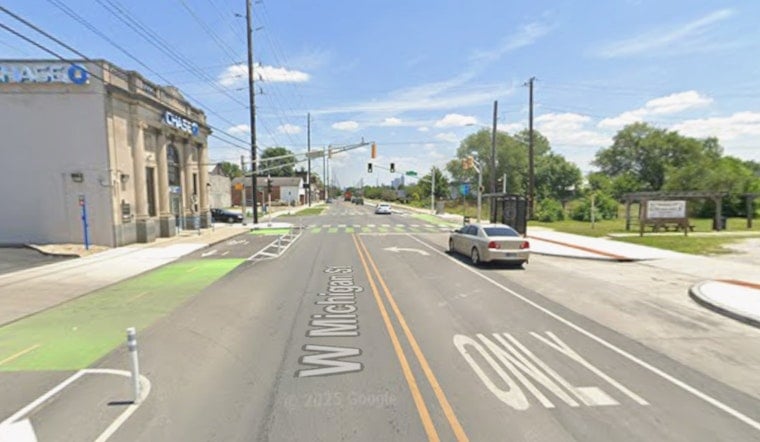
It wasn't Big Car's first foray into this kind of tactical urbanism. Back in August 2017, the nonprofit teamed up with Near Westside arts organization Indy Convergence to install a temporary parklet occupying two parking spaces at 2611 W. Michigan St., using picnic tables and native plants as a traffic calmer and gathering space, according to Big Car Collaborative. That project was supported by LISC Indianapolis through a grant from the Kresge Foundation.
From Prototype to Monument Circle
Those early, low-cost experiments helped set the stage for a much bigger undertaking downtown: SPARK on the Circle, an ongoing placemaking collaboration between Big Car Collaborative, Downtown Indy Alliance, and the city's Department of Metropolitan Development, operating in cooperation with the Indiana War Memorials Commission, per Downtown Indy Alliance. The program transformed a portion of Monument Circle into a temporary pedestrian plaza, building on the parklet concept at a much larger scale.
The numbers behind SPARK's growth are striking. During its 2025 season, which ran from May 31 through September 28, the program hosted 61,744 visitors across 203 public programs and paid 147 local artists a total of $225,780 for creative work on the Circle, according to SPARK on the Circle's own accounting. The installation operated daily from 11 a.m. to dusk on Monument Circle's northwest quadrant. For its 2026 summer season, SPARK selected Hanger Coffee — an offshoot of Coat Check Coffee at the Athenaeum — as its official food and beverage vendor for that same quadrant, Downtown Indy Alliance notes, a move meant to draw both weekday office workers and weekend tourists with shaded seating and food options.
Public Money and Private Buy-In
None of this scale would have been possible without public backing. The Capital Improvement Board of Marion County approved a $1.5 million allocation over two years — $750,000 annually — for SPARK on the Circle in 2023, according to the Indianapolis Business Journal. That CIB funding is what allowed SPARK to grow from short-term pop-ups into a seasonal, multi-month installation rather than a one-off event.
Private developers have also started buying in. Developers converting the historic 14-story Circle Tower into a 175-room AC Hotel by Marriott proposed contributing an annual $50,000 donation to support SPARK programming as part of their redevelopment plan presented to the city, Hoodline previously reported. Circle Tower sits directly on Monument Circle, overlooking the SPARK installation below.
Parking Pressures Loom as Placemaking Expands
As more curb space downtown gets converted into parklets and pedestrian plazas, the city is also taking stock of how much parking it has left. In May, the Metropolitan Development Commission authorized DMD to execute a $350,780 contract with Nelson\Nygaard Consulting Associates to conduct an eight-month parking inventory across five urban neighborhoods, including the Regional Center and Fountain Square, the Indianapolis Business Journal reported. The city's previous parking availability study dates back to 2015, meaning the new inventory will offer the first fresh look at downtown parking supply in over a decade as placemaking projects continue to claim curb space.
Big Car Collaborative's footprint has grown well beyond parklets in recent months. In May, the arts collective — formed in 2004 — expanded its southside campus by opening the Contemporary Art Museum of Indianapolis (CAMi), a free 40,000-square-foot arts venue inside a renovated 125-year-old former dairy barn, as Hoodline detailed earlier this year. Big Car operates multiple cultural spaces and artist residences near Garfield Park, making the mobile parklet just one piece of a much larger creative footprint across the city.
Whether that momentum can be sustained long-term remains an open question. Balancing continued corporate and public sponsorship with the city's on-street parking needs is precisely what DMD's new parking study is meant to help sort out, even as programs like SPARK on the Circle and Big Car's original parklet concept continue to demonstrate how much foot traffic and local artist income a few picnic tables and planters can generate downtown.





