

























































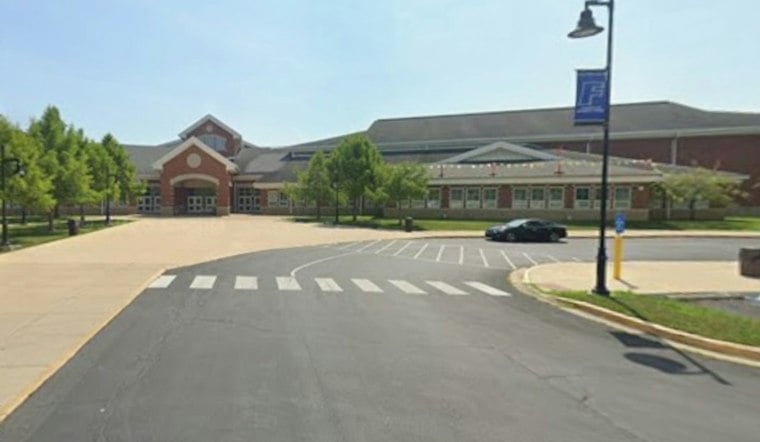
Franklin Community High School has opened a new agricultural education center north of the school and east of the football field, built for hands-on lessons in animal science, plant science and food production. Students, administrators, teachers and loved ones gathered in Franklin to celebrate the building.
The opening is a late chapter in an idea Jasper Carter, who leads the Franklin Community FFA Alumni, dates to 2019, the year he started high school. The Daily Journal reported Friday that the center was completed a little over a year after building work began, following an August 2025 groundbreaking. School officials designed it as a flexible teaching and laboratory environment for a program the district already credits with a working farm and a greenhouse.
A Classroom With Livestock on One Side
The center has a central classroom and two side sections. One will host livestock for lessons, veterinary visits and demonstrations. The other is set up for vegetables, plant science, vegetable handling and soil science. A student can move from an animal in a pen to the produce and the soil, without the lesson depending on a field trip.
That layout was sketched before the walls went up. At the August 2025 groundbreaking, the Daily Journal described a flexible classroom for teaching and presentations, as well as a lab area with livestock pens. Franklin Community Schools said the project was meant to offer hands-on learning experiences that connect classroom instruction to real-world applications. The finished building, as reported Friday, provides those lessons in animal science, plant science and food production.
Students may raise cattle, sheep, rabbits and goats, and the agriculture program has access to pasture for livestock. The permission is broader than the herd already described. The district's farm account includes cattle, egg-laying hens and meat chickens. Sheep, rabbits and goats are animals students may raise at the new center, not species the earlier farm description placed on the property. A lab pen is also a different instrument than pasture. It is where a class can watch a veterinary visit or a demonstration without waiting on the weather outside.
A Tryout for Students Without Farmland
The agriculture program has 140 students. Franklin FFA chapter students told the Daily Journal the facility increases access for classmates who don't have a farmland background. Lincoln Warner said it gives students with limited experience a chance to work with animals and potentially discover a passion. Kendra Meredith said students can try animal and plant science without a major commitment.
The school is pairing that tryout with a more formal destination. Franklin agriculture students are expected to gain team-based, hands-on experience for career or college preparation. Indiana has introduced a new high school diploma system for sophomores and younger students, built around three routes after graduation: entering the workforce, enlisting in public service or enrolling in college. The Daily Journal reported that the center supports career pathways in the workforce, public service and college. A livestock lab can serve any of those routes. It doesn't have to declare which one on the first day a student walks in.
David Clendening said professionals will teach in the building and in a STEM lab. In that account, the hands-on work is supposed to come with instruction from people who already practice the jobs, not only from a student project.
Lettuce, Chickens and the Cafeteria
The laboratory did not have to invent the department's farm. Franklin Community Schools' project account says that farm includes cattle, egg-laying hens and meat chickens, and that the department built a greenhouse with an aquaponics system to grow lettuce and raise fingerling fish. The Daily Journal also reported a farm-to-table program that uses homegrown produce and locally raised animals in the school cafeteria. Some of what students raise is lunch.
Outdoor production has its own site. The Franklin Agriculture Center for Education describes ACE as nine acres immediately adjacent to the high school agriculture department. Students, the group says, produce vegetables from a two-acre garden, raise pastured meat chickens and grow row crops on the remaining seven acres. A two-acre garden and seven acres of row crops use the site as ACE describes it.
Those pieces shouldn't be folded into the new building just because they share a program. ACE is the nine-acre site next to the agriculture department. The education center is the structure north of Franklin High School and east of the football field. Pasture access is listed on its own. What the building supplies is indoor work: livestock for a lesson, a place to handle vegetables, and room for soil science when the rows are not the right classroom. The cafeteria remains the point where homegrown food shows up for students who never set foot in the lab.
Two Prices, One Bond, Seven Years
Carter told the Daily Journal he started high school in 2019, when the vision for the facility began. He now leads the Franklin Community FFA Alumni. An FFA alumni group contributed donations to the project. The construction clock was shorter than the idea. Work began a little over a year before the center was reported complete.
The money shows up in layers, and the layers have dates. In a December 2024 school-board update, the Daily Journal reported that the planned agriculture building would cost a little under $4 million. Franklin Community Schools had committed $1 million so far. An FFA alumni group had contributed $600,000. By the August 2025 groundbreaking, the Daily Journal reported that Franklin's FFA and agriculture program had raised money through fundraisers and donations over the previous four years.
The district's groundbreaking account called it a $2.6 million project and said Franklin Community Schools had dedicated money from a $30 million bond. The bond is the larger fund the district drew on. It isn't the cost of the center. The under-$4 million figure is what the board update estimated in December 2024. The $2.6 million figure is what the district used for the project at the August 2025 groundbreaking. The $1 million commitment and the $600,000 alumni contribution are the amounts reported as of that 2024 update, not a final split of the bill for the building that has now opened.
A Room East of the Football Field
Franklin is opening a finished lab in a state where agricultural education had already been growing again. Farm Progress reported that Indiana FFA enrollment topped 12,500 in 2020, after membership had sat stagnant at or just under 10,000. The same account described South Dearborn High School, near Aurora, restoring ag education and FFA for the 2019-20 school year after a long absence. The first year back offered ag mechanics and an introduction to agriculture, with more classes planned after that.
Those are earlier chapters, and they are not this building's budget. They do mark a bet other Indiana schools were making: agriculture as coursework, including for students who don't arrive with land. Franklin already had a greenhouse and a working farm in the district's 2025 project account. The cafeteria program and the 140-student roster are part of what the Daily Journal described alongside the new center. ACE still describes nine working acres next to the department.
The new difference is architectural. A student without a farm at home can walk to a classroom north of the high school, east of the football field, and try animal and plant science without treating it as a lifelong commitment. The pasture and the two-acre garden stay outside. The veterinary visit, the vegetable handling and the soil lesson now have a room.





