

























































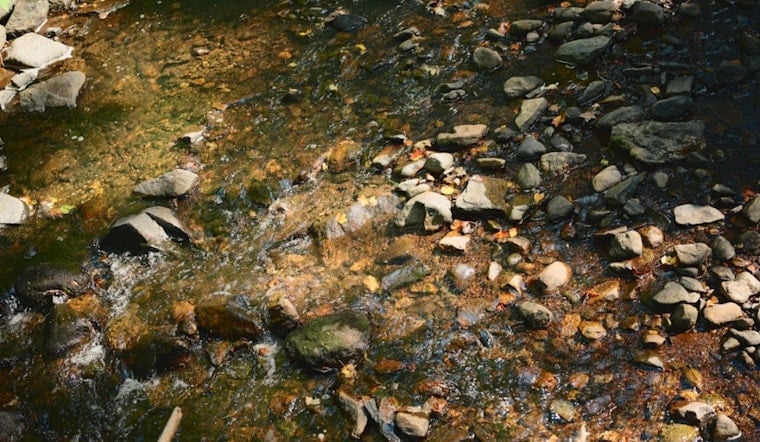
A fossilized Pacific mastodon tooth turned up this summer in a creek bed in San Mateo County.
A Chance Find in San Mateo County
According to the San Mateo Daily Journal, a fossilized tooth was found in a creek bed in San Mateo County.
Paleontologist Wayne Thompson identified the tooth as a worn adult Pacific mastodon molar, according to the open space district. The specimen was undergoing conservation at the Western Science Center.
Why the Species Matters
The tooth belongs to the Pacific mastodon, or *Mammut pacificus*, a species that was only formally recognized as distinct in 2019. That determination came from a study published in PeerJ and co-authored by Alton C. Dooley Jr., which separated the Pacific mastodon from the more familiar American mastodon, *Mammut americanum*. It was the first new North American mastodon species named in 50 years.
A 2025 study reported occurrences in Alberta and Mexico based on previously identified specimens.
Fossils Keep Surfacing Around the Bay Area
The San Mateo County find adds to interest in how extensively Ice Age megafauna once roamed the Bay Area landscape.
Elsewhere in California, fossil sites have yielded remains from different prehistoric periods. In Southern California, 1990s excavations for the Diamond Valley Lake reservoir project yielded more than 100,000 Late Pleistocene fossils, including a massive Pacific mastodon skeleton nicknamed “Max.” Hoodline previously covered the Western Science Center, the institution built specifically to house that haul.
What the Law Says About Fossils on Public Land
Under California Public Resources Code Section 5097.5, knowingly excavating, removing, or destroying vertebrate paleontological resources on public lands without official authorization is a misdemeanor, a protection meant to keep finds like this one in the hands of researchers rather than private collectors.
Hoodline has reported on a similar case involving roughly 500 Ice Age fossils recovered during public transit construction elsewhere in California, where the same state code governed how those remains were handled.
A New Home for Peninsula Paleontology
The discovery adds to local interest in the Peninsula's prehistoric past.





