

























































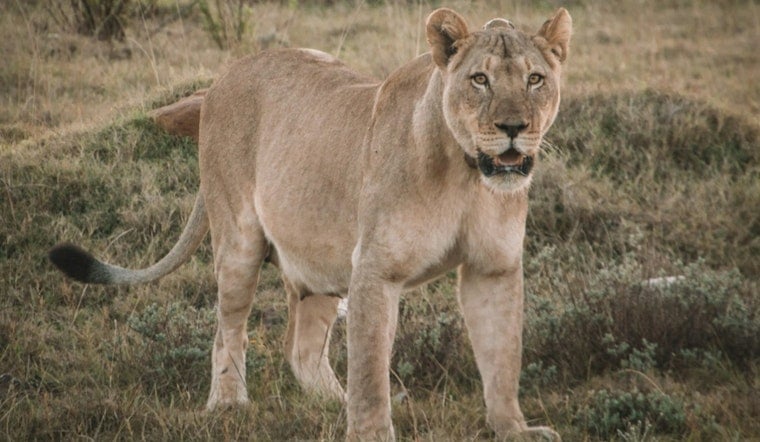
A mountain lion was spotted Saturday night near Fell and Baker Streets in San Francisco's Panhandle, sending Animal Care and Control officers to the scene as city leaders pushed out an urgent public safety alert. The sighting unfolded in a narrow green corridor, a strip of park wedged between residential blocks on the edge of the Western Addition and Haight-Ashbury.
The alert was first shared in a post from the account SF Emergency and amplified on X by Mayor Daniel Lurie, who represents the 46th mayor of the City and County of San Francisco. According to Mayor Lurie, Animal Care and Control was already on scene as of Saturday night. The alert instructed anyone who encounters the animal to make themselves big, wave their arms, shout, and throw objects if necessary, but never to run.
A mountain lion was spotted at the Panhandle near Fell and Baker Streets. Animal Care and Control is on scene. If you see the mountain lion, slowly back away, do not run. Call Animal Care & Control at 415-554-9400 or 911 in a life safety emergency.
— San Francisco Department of Emergency Management (@SF_emergency) September 6, 2026
If you have a child with you -… pic.twitter.com/MU1m5vCpGA
Officials also urged residents to slowly back away rather than flee. Anyone who sees the animal is asked to call Animal Care and Control at 415-554-9400, while those facing an immediate life-safety emergency were told to dial 911.
A Corridor Built for Wildlife to Wander In
The Panhandle's geography helps explain how a mountain lion could end up in such a dense residential pocket of the city. The strip is a 0.75-mile-long, single-block-wide greenway bordered by Fell and Oak Streets that connects directly at Stanyan Street to the 1,000-acre expanse of Golden Gate Park, according to background compiled on Wikipedia. That continuous stretch of parkland links Golden Gate Park with surrounding city blocks.
This is not San Francisco's first brush with a wandering big cat this year. In January, state and local wildlife officials captured a 2-year-old, 77-pound male mountain lion in Pacific Heights after a 30-hour search, ultimately relocating the animal to a more rural part of the San Francisco Peninsula, as reported by The Guardian. Hoodline covered that all-night chase in Pac Heights in February.
Why Young Mountain Lions Keep Turning Up in Cities
The roughly 2-year-old male mountain lion in the January case was in a dispersal phase and could enter urban areas when disoriented, according to reporting from Smithsonian Magazine. That dispersal behavior can bring young pumas into urban and suburban spaces. In June, state wildlife officers tranquilized and relocated a 1-to-2-year-old female mountain lion found in a Redwood City yard.
In the January case, officials tranquilized and fitted the animal with a GPS tracking collar before releasing it on the Peninsula, per the same account. Those captures now carry additional legal weight: in February, the California Fish and Game Commission voted to list Central Coast and Southern California mountain lion populations as threatened under the California Endangered Species Act, according to CalMatters. State and local agencies may use non-lethal capture and relocation when public safety allows it.
Relocation Comes With Its Own Risks
Not every relocation ends smoothly. In June 2020, a juvenile male mountain lion roamed downtown San Francisco, sleeping in a planter box near the Financial District, before it was safely captured and released into the wild. San Francisco has dealt with urban puma sightings before outside downtown, too. In May 2021, residents were advised of a mountain lion sighting in Bernal Heights Park, a case Hoodline detailed in its Bernal Heights sighting coverage.
Despite the alarm such sightings generate, verified attacks on humans remain extraordinarily rare. The January Pacific Heights mountain-lion emergency involved a coordinated response involving Animal Care and Control, San Francisco Police, San Francisco Fire, San Francisco Zoo veterinarians, and state biologists from the California Department of Fish and Wildlife. Animal Care and Control was on scene Saturday night as officers converged on the Panhandle.
As of the alert, it remained unclear whether state wildlife officers intended to dart and relocate the animal spotted near Fell and Baker Streets, or whether the mountain lion had already moved on into Golden Gate Park's broader footprint. Residents near the Panhandle were advised to follow the same guidance issued after prior sightings: stay calm, stand tall, and never turn and run.



