

























































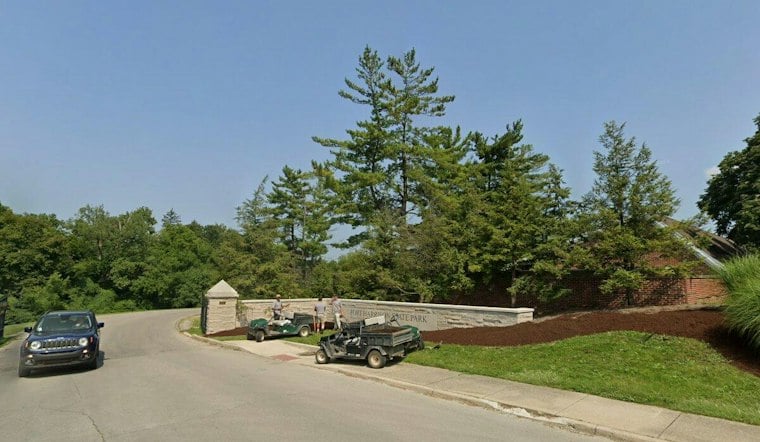
A patch of land along Sargent Road in northeast Indianapolis that once echoed with the splashes of the Fairwood Hill Swim Club is about to become something quieter and far older: Blue Heron Nature Preserve, a roughly 12-acre stretch of old-growth forest and creekside habitat set to open to the public next spring.
The preserve is the latest project from Mud Creek Conservancy, a nonprofit land trust that has spent about two years preparing the site, according to the Indianapolis Star. Visitors will eventually be able to walk a half-mile mulched trail through the old-growth forest and along a stretch of Mud Creek, which flows south to meet Fall Creek inside Fort Harrison State Park, the paper reports.
From Swim Club to Sanctuary
Part of the property's story is almost jarring in retrospect. A 6-acre section of the site was once home to the Fairwood Hill Swim Club, which operated in the 1960s, and the paper notes that a later set of owners had planned to renovate and reopen the property as a private club before instead selling it to Mud Creek Conservancy. That reversal spared a portion of a site the paper describes as otherwise ripe for development.
Alongside that reclaimed ground sits something much older. Mud Creek Conservancy says the preserve includes an old-growth bottomland forest that has gone undisturbed for more than 125 years, according to the conservancy's own account, which also notes that private owners demolished the original pool facility in the early 1990s, well before the eventual sale to the land trust.
Restoration Work Already Underway
Crews have already removed invasive honeysuckle and autumn olive from the property and are working to restore wildflowers and dormant natural seed banks, the Star reports. The habitats being protected mirror those found in Fort Harrison State Park's own nature preserve, and conservancy leaders say the land is home to box turtles, salamanders and flying squirrels — species the paper describes as rare within Indianapolis city limits.
Executive director Ben Miller told the Star that Blue Heron offers views that feel almost out of place in the city. “Ben Miller said Blue Heron has beautiful views unexpected in Indianapolis,” and he called the preserve a small but special part of a much larger conservation push, adding that Mud Creek Conservancy is trying to protect about 1,000 acres of old-growth forest across the broader Mud Creek valley.
How the Purchase Came Together
The Blue Heron acquisition leaned on both state and private money: the Indiana Department of Natural Resources awarded the conservancy a $370,000 Next Level Conservation Trust grant, and private donors kicked in more than $500,000 for conservation work along Mud Creek, according to the Star's reporting. That state program, launched in 2022 with $25 million in federal COVID-19 relief funds, represented the largest single state investment in land conservation in Indiana's history, as WFYI reported at the time, and it required local grantees to secure matching funds of their own.
Mud Creek Conservancy met that bar in a roundabout way. Before pursuing Blue Heron, the group raised over $1 million in community donations to establish the 26-acre Sargent Road Nature Park, which opened in 2024 and effectively served as the local match that unlocked the state grant, per the Indiana Land Protection Alliance. By this September, the Next Level Conservation Trust program had financed 29 land protection projects statewide, permanently preserving 3,621 acres, according to the Indiana Department of Natural Resources, with the program's required 25% match exceeded at 32%.
A National Award Could Bring $30,000 More
Miller and Mud Creek Conservancy are now finalists in a national Cox Enterprises award program that recognizes groundbreaking work toward a healthier planet, the Star reports, with public voting open through October 4. If Miller wins, the James M. Cox Foundation has said it will award $30,000 directly to Mud Creek Conservancy for site amenities and restoration work at Blue Heron, according to Cox Enterprises, which also credits Miller's seven years of leadership with growing the conservancy from an organization holding just $8,000 in assets and 35 acres of easements into one protecting more than 200 acres valued above $4 million. The conservancy is separately raising money for trails and other infrastructure to support public visitors, the Star notes.
Why the Forest Matters Now
The stakes extend beyond one 12-acre parcel. An inventory by the Indiana Forest Alliance's Forests for Indy initiative identified 4,237 unprotected urban forest tracts across Marion County that remain vulnerable to residential and commercial development, according to the Indiana Forest Alliance. The Star reports that urban forests provide better air quality, flood relief and increased property values — benefits that erode as Indianapolis development continues to shrink forested acreage citywide.
The ecological payoff of protecting corridors like this one is already measurable nearby. Bird surveys along the Mud Creek corridor have documented more than 118 species at Sargent Road Nature Park alone, according to the Bird Alliance of Central Indiana, which notes the watershed spans a 2,500-acre corridor connecting to Fort Harrison State Park. Founded in 1994, Mud Creek Conservancy says it has permanently protected more than 96 acres in northeast Indianapolis — part of a statewide movement in which Indiana land trusts collectively managed roughly 159,000 acres of conserved land as of 2022, per WFYI.




