

























































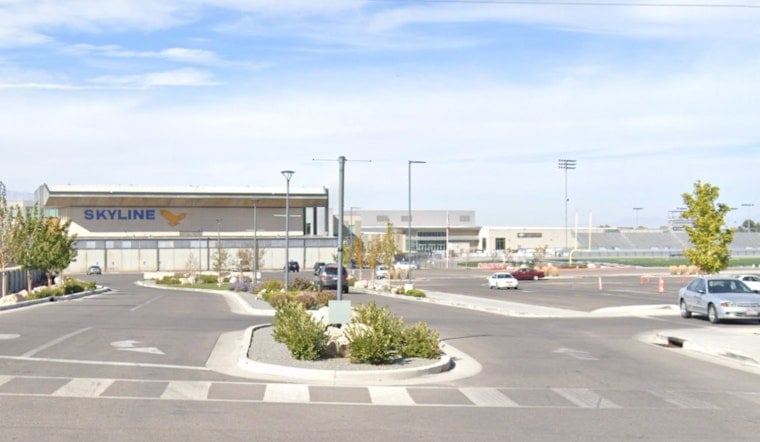
Skyline High School in Millcreek has gone nearly a decade without losing a student to suicide, and staff there say that record is no accident. The school has leaned on a full-time psychologist, a resilience-focused motto called RISE, and a discretionary funding push from its own community council to keep mental health support embedded in daily campus life.
According to KSL News, Skyline High School students are handling stress better, and teachers have reported that emotional wellness at the school is up. The school, located in Salt Lake City and part of the Granite School District, has more than 2,100 students across grades nine through 12, according to Granite School District records. Established in 1962, it is one of eight comprehensive high schools in the district and offers coursework including the International Baccalaureate program.
Victoria Hatton, Skyline's psychologist, studied a teacher's role in suicide prevention at Brigham Young University. She works one-on-one with students to help them develop resilience tools and encourages students to report concerns about friends and look out for each other, per the same KSL report. Hatton said the Skyline community had suffered because of suicide deaths for many years.
Trust Land Dollars Fill a Funding Gap
Keeping a full-time psychologist on staff wasn't guaranteed by state or district budgets alone. Skyline High School's community council agreed to use trust land money to cover the remaining funds needed for the psychologist position, the KSL report notes. Utah's School LAND Trust Program distributes tens of millions of dollars annually in earnings from state trust lands directly to local School Community Councils, which hold discretionary authority to allocate that money toward student support initiatives like mental health staffing, according to the Utah State Board of Education. Those councils are made up of parents, teachers, and principals who allocate trust land revenues based on school-level data.
That local funding gap points to a broader tension in how Utah pays for student mental health support. Enacted in 2019, Utah House Bill 373 created a statewide matching grant program allocating over $26 million to local education agencies to help public school districts hire licensed school counselors, psychologists, social workers, and nurses, per the Utah State Legislature. Even with that state grant program in place, local councils like Skyline's often must step in with discretionary trust money to fully cover clinical positions when district or state funds fall short.
Statewide Numbers Behind the Local Push
The stakes behind Skyline's approach are laid out in Utah's youth suicide rate, which KSL reports is 41% higher than the national average. Suicide ranked as the second leading cause of death for Utah youth and young adults aged 10 to 24 in 2023, with the state recording 696 total suicide deaths that year, according to the Utah Department of Health and Human Services. Utah's age-adjusted suicide rate averaged 20.93 per 100,000 residents from 2021 through 2023, and separately, USAFacts found the rate stood at 19.5 per 100,000 in 2024, still well above the national average of 13.7 per 100,000.
The 2023 Utah Youth Risk Behavior Survey found that 37% of Utah high school students reported feeling sad or hopeless for two or more weeks in a row, while 22.9% seriously considered attempting suicide and 9% attempted suicide at least once in the preceding 12 months, the health department reported. The Utah Youth Suicide Research Project has also found that 74.1% of youth who died by suicide experienced emotional abuse, nearly 80% experienced some form of child maltreatment, and 45.4% experienced physical abuse, according to study findings cited in the KSL report.
A Motto and a Statewide Crisis Line
At Skyline, the RISE motto stands for resilience, integrity, support, and excellence, and it shapes how staff talk with students about mental health day to day. The Utah Department of Health and Human Services released 2026 suicide research results that inform how educators are encouraged to guide students toward SafeUT and 988 resources, particularly as September marks Suicide Prevention Month.
The SafeUT app, created under Senate Bill 175 during the 2015 Utah Legislative Session, connects users with a licensed mental health professional within 30 seconds of logging in and operates as a 24/7 service, per the Huntsman Mental Health Institute. In Fiscal Year 2025, SafeUT logged 24,716 crisis chats and initiated 342 emergency interventions statewide, with crisis counselors successfully de-escalating roughly 70% of potential emergencies without law enforcement or emergency medical involvement, according to the Office of the Utah Attorney General. That same fiscal year, suicide re-emerged as the single most frequently reported tip category submitted to the app, followed by bullying, while tips regarding potential school or campus threats rose by 18% to reach an all-time high.
Utah has built out legal protections alongside those crisis tools. In 2021, the state enacted House Bill 81, expanding public school attendance regulations to officially include mental or behavioral health needs as valid, excused reasons for K-12 student absences, according to the Utah Mental Health Counselors Association. Hoodline has previously reported on how gaps persist in bullying response even as these tools expand across Utah schools.
Crisis Resources
Students, families, and educators can reach the SafeUT crisis line at 833-372-3388, the Huntsman Mental Health Institute crisis line at 801-587-3000, the 988 Suicide and Crisis Lifeline at 988, or the Trevor Project hotline at 1-866-488-7386.





