

























































A 51-year-old South Florida man walked out of U.S. Immigration and Customs Enforcement custody after eight months in detention, following a federal judge’s order granting his habeas corpus petition. Marlon Cervelo was released in Texas, where his wife, Judith Castellanos, traveled to reunite with him after months of separation.
Cervelo had been scheduled for an ICE hearing on September 21, but the federal judge instead ordered his immediate release, according to CBS Miami. The habeas corpus petition allowed Cervelo to challenge the legality of his detention directly in federal court, separate from the immigration court process. Immigration attorney Morella Aguado, who was not involved in the case, told the outlet that a habeas corpus petition can seek either a bond hearing or immediate release, and that it must be filed in the federal court where the person is detained, since federal district courts and immigration courts operate under different legal authorities.
Castellanos said she struggled at times to even locate her husband as he moved through the detention system, and she described feeling happy once the two were finally reunited. Cervelo said he was glad to be back with his family but described feeling traumatized by his months inside detention facilities, per the same report. He was released with an ankle monitor and will remain under immigration supervision until further notice — conditions that do not erase the underlying immigration proceedings against him or his removal order.
A Winding Path Through Florida Detention Facilities
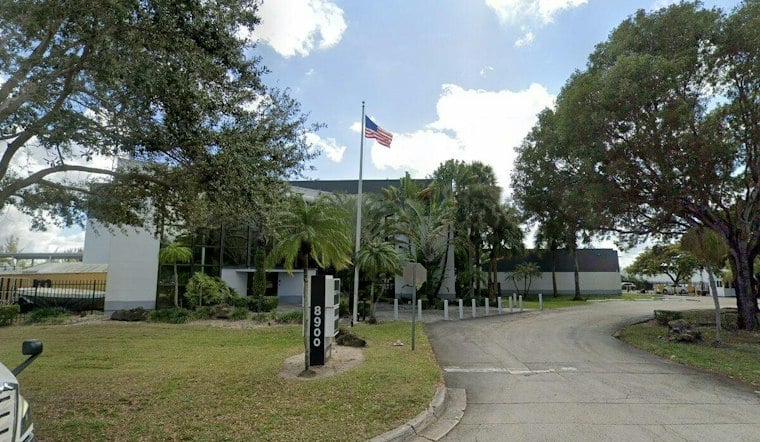
Cervelo was detained in Florida and moved between multiple facilities before his release, including Krome Detention Center and the Federal Detention Center in downtown Miami. The Federal Detention Center is run by the Federal Bureau of Prisons rather than ICE, though the agency transferred detainees there, according to CBS News Miami. That outlet also reported that Cervelo had been held at Alligator Alcatraz.
Accounts of when Cervelo’s detention began differ. CBS News reported he had been in immigration detention since 2023, while WLRN reported that Cervelo Trujillo was detained during a routine immigration appointment at Krome North Service Processing Center in January. WLRN’s report also describes brushfires in June forcing immigration officials to move him and dozens of other detainees to the Federal Detention Center, and it details a lockdown from July 24 to July 27 during which Cervelo told Castellanos, “They’re not even taking us out to shower.” The Miami Herald separately reported that ICE evacuated detainees from Krome to facilities in and outside Florida because of nearby brush fires.
ICE Cites a Prior Drug Conviction
According to a statement from ICE cited in reporting on the case, Cervelo is a Cuban national who was arrested by the agency in January 2025. The same statement says the Drug Enforcement Administration had previously arrested Cervelo in October 2020 for possession with intent to distribute cocaine, and that he was convicted in January 2023 of conspiracy to possess with intent to distribute five kilograms or more of cocaine. An immigration judge ordered him removed from the United States in August 2023, per ICE’s account. Cervelo has a criminal record and had served his criminal sentence, though he was detained during what has been described as a routine ICE appointment.
A System Buckling Under a Surge of Habeas Filings
Cervelo’s case is one small piece of a much larger wave. More than 70,000 habeas cases have been filed nationwide since January 2025, according to an analysis by ProPublica. Filings have slowed somewhat in recent months, the outlet reports, but remain far higher than before President Trump began his second term, adding hundreds of cases to some federal judges’ already crowded dockets.
How quickly those cases move depends heavily on where they land. ProPublica’s analysis found that federal courts in Mississippi and Louisiana have typically taken three months or more to decide habeas cases involving a detainee’s freedom — a median of 92 days in Mississippi’s Southern District and 89 days in Louisiana, where more than 2,600 petitions have been filed. Florida courts, by contrast, have closed habeas cases at a faster rate, usually within weeks, while Minnesota cases have closed in a median of just 12 days, per the same analysis.
Mixed Outcomes in Similar Florida Cases
Other Florida detainees have seen a range of results in recent habeas fights. In December, a federal judge in the Middle District of Florida granted Carlos Justino Bravo-Diaz’s habeas petition and ordered authorities to either give him a bond hearing within 10 days or release him under supervision, according to court records reviewed on Justia. In Orlando, federal judges ordered the release of two immigrant detainees from the Orange County Jail in separate habeas hearings, as reported by Click Orlando, which noted that 224 habeas corpus petitions had been filed in the Middle District of Florida so far this year, up from just three in 2024.
Not every petitioner has won immediate freedom, though. A federal judge in Orlando rejected a habeas petition from Cleon Williams seeking his immediate release, ruling instead that he was entitled only to a bond hearing before an immigration judge, according to the Orlando Sentinel. The Congressional Research Service notes that some lower courts have ruled the Due Process Clause requires bond hearings once detention becomes prolonged, placing the burden on the government to justify continued custody, though that is not a universally applied rule.
The scale of Florida’s detention system helps explain why so many of these cases are piling up in the state’s courts. There were roughly 5,300 ICE detainees in Florida as of early April, according to TRAC researchers at Syracuse University cited by the Miami Herald, and the state had 38 ICE detention facilities in use as of February, per a dashboard analysis from the Vera Institute of Justice. Nationally, the daily immigration detention population hit a record of more than 73,400 people in mid-January, Vera reports, with ICE detaining people across 456 facilities that February even as the agency publicly acknowledged using only 220. For Cervelo and Castellanos, those statistics translated into eight months of uncertainty — and, finally, a reunion neither could fully count on until it happened.





