

























































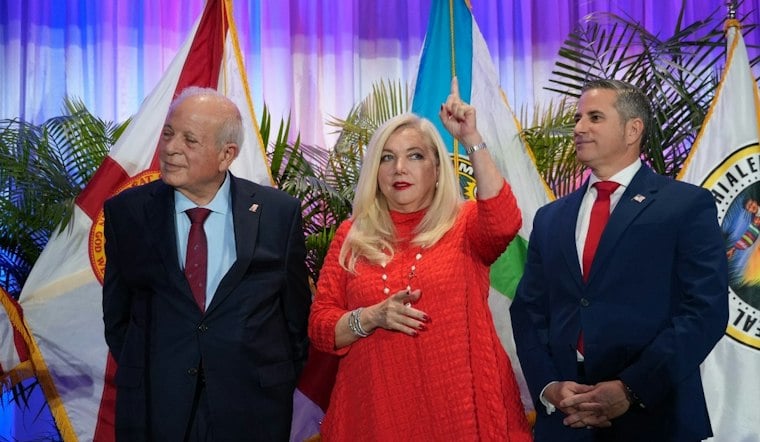
Three of Miami-Dade County's own elected officials are publicly breaking with the county government's warnings and throwing their support behind Florida's Amendment 3, the constitutional measure that would triple the homestead exemption on non-school property taxes. Property Appraiser Tomas Regalado, Supervisor of Elections Alina Garcia, and Tax Collector Dariel Fernandez say they're speaking not as county officeholders but as homeowners and residents who want the tax relief on the November 3 ballot.
According to CBS News Miami, Regalado said the trio wanted to “set the record straight” amid a wave of local government warnings about the amendment's fiscal impact. Fernandez said families and seniors are struggling with the cost of living and worry about staying in their homes, while Garcia argued the amendment would not affect public safety. Amendment 3 would raise the homestead exemption to $150,000 in 2027 and to $250,000 in 2028, shielding a larger share of a home's assessed value from non-school property taxes.
A Mayor's Very Different Math
Miami-Dade County Mayor Daniella Levine Cava has offered a starkly different assessment, warning the amendment could cut county revenue by nearly $390 million in its first year alone, per the same CBS News Miami report. She has said the county could lose as many as 19 fire stations and more than 600 firefighters, and that Miami-Dade could be forced to close 10 of its 51 libraries. That library warning echoes an earlier Hoodline report estimating a $20 million hit to the county's library system.
Edie Ousley, speaking for the Vote No on 3 campaign, warned that the amendment's fiscal math does not work and that public safety will be hit hardest. Florida public safety groups, including the Florida Sheriffs Association, have formally opposed the measure. Amendment 3 requires at least 60% voter approval in November to pass, and the vote is unfolding ahead of the broader midterm elections.
The Statewide Numbers Behind the Fight
The disagreement in Miami-Dade mirrors a much larger fiscal debate playing out across Florida. The Florida Revenue Estimating Conference projected that Amendment 3 would reduce statewide local non-school property tax revenues by $4.9 billion in fiscal year 2027–28, according to Florida TaxWatch, with that loss growing to $8.8 billion the following year and reaching $11.8 billion annually by fiscal year 2031–32. Lawmakers placed the measure, formally known as CS/HJR 1F, on the ballot during a June 2 special session, passing it 75–26 in the House and 30–9 in the Senate.
The amendment also lowers the annual cap on assessment increases for non-homestead properties — including commercial real estate, rental housing, and second homes — from 10% to 5% starting January 1, 2027, according to Ballotpedia. New Florida residents who establish homestead status on or after that date would need to maintain residency for five years before qualifying for the expanded exemptions, per Sarasota County government, remaining at the existing $50,000 exemption in the meantime.
Ripple Effects on Health Care and Renters
Beyond county budgets, the amendment's reach extends into public health care funding. An August analysis by the Florida Policy Institute found the state's 28 public health care taxing districts could lose $323 million over three years, with South Florida systems like Jackson Health System and North Broward Hospital District absorbing more than 70% of that total, WLRN reports. A separate Hoodline report on Jackson Health detailed the hospital system's own revenue projections.
Renters could also feel the pinch if cities and counties respond by raising rates. A September study by Walczak Policy Consulting estimated that if local governments cover the amendment's revenue losses solely through higher property tax rates, the average Florida apartment unit's annual tax burden could climb by $406 in 2028 and $554 by 2031. CS/HJR 1F does include a constitutional restriction requiring counties and municipalities to spend property tax revenue only on core needs such as public safety, infrastructure, debt service, and pensions, according to Bay County government.
Legal Fights and Local Fallout Continue
The measure's path to the ballot has not been without controversy. Three separate lawsuits filed in Leon County Circuit Court challenged Amendment 3's ballot title and summary, alleging the language was written to promote the tax cut rather than neutrally explain it, as Hoodline previously reported. Other Florida communities are already adjusting to the uncertainty: Lake County suspended publication of its 25-year comprehensive growth plan until after the election, while the City of Melbourne has estimated a $15 million operating budget shortfall over two fiscal years if the amendment passes.
With the vote requiring 60% approval to take effect, the split among Miami-Dade's own elected officials underscores how divisive the measure has become even within the same county government. Homeowners hoping for relief and administrators bracing for cuts will find out together on November 3 which vision of Florida's property tax future prevails.





