

























































Labor activists and former Freedman Seating workers marched on the company's Austin facility, demanding a formal agreement to raise wages and fix workplace conditions at the 132-year-old transit seating manufacturer. The rally followed a new report that found the median hourly wage among surveyed Freedman employees was $19.45, well below pay for comparable production work elsewhere in the region.
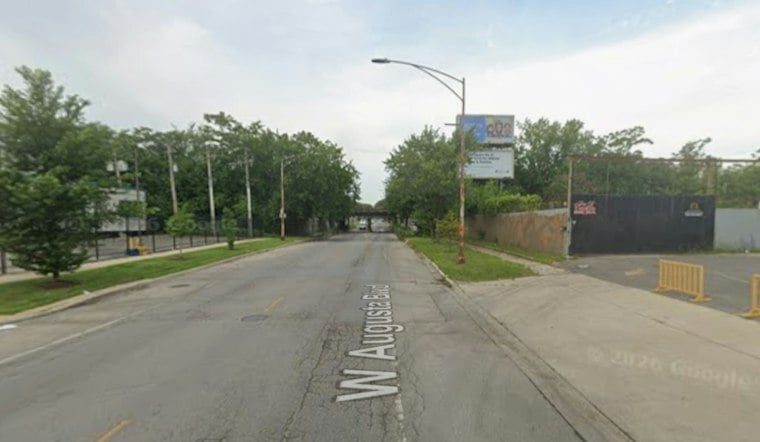
The demonstration, organized by a coalition that included current Freedman employees, Westside Workers United, SMART Union, Get to Work and Working Family Solidarity, began at Augusta Park at 4433 W. Augusta Blvd. before marchers walked across the street to the company's building at 4545 W. Augusta Blvd., according to Block Club Chicago. Organizers are calling for a community benefits agreement with the Austin-based manufacturer, whose factory sits at 4545 W. Augusta Blvd. and employs about 700 people, according to the Chicago Sun-Times.
Among those at the rally was Hassan Blanch, a formerly incarcerated worker who told Block Club Chicago he earned $16 per hour throughout his three years at Freedman before he was fired in early 2025. He said he met performance quotas regularly, but supervisors kept raising them, and that frequent changes in his work station kept him from ever mastering a single job. Freedman supervisors told Blanch his termination came down to failing to meet those shifting quotas, he said, and he argued that workers simply needed to be treated with more respect.
Report Finds Wages Trail the Region, Hazards Widespread
The rally was timed to a report from Jobs to Move America, which partnered with University of Illinois Chicago researchers to survey 116 Freedman manufacturing workers in 2025. The survey found a median hourly wage of $19.45 among respondents overall, which the report calculated as 13.8 percent below the median wage for comparable production occupations in the Chicago metropolitan area. Assembly workers fared worse, with a median hourly wage of $18.85 — a figure the report says sits closer to Chicago's $17.05 minimum wage than to the metro area's $20.99 median for assemblers.
Roughly three-quarters of respondents said they struggled at least sometimes over the past year to pay for utilities, food or housing, the report found. On safety, 81 percent of surveyed workers said they noticed at least one workplace hazard in the preceding 12 months, with a leaky roof, excessive heat inside the factory, rodents or pests, and poor ventilation cited most often. The same survey also found workers reporting barriers to career advancement and fear of retaliation when speaking up about hazardous conditions.
A Company Shaped by Public Contracts and a New Owner
Freedman has supplied transportation seating for the Chicago Transit Authority and other clients for decades, and the Jobs to Move America report notes the company's public-sector customer base also includes the transportation authorities of Los Angeles and New York. The report also points out that Freedman has benefitted from public contracts and public money for facility upgrades, even as it argues the company is now part of a much larger corporate organization following its acquisition by Lippert Components in April 2025.
The Sun-Times reported the company has operated its Austin facility since 1999 and makes between 500,000 and 750,000 seats a year for buses, subways, trains, ferries and trucks. Block Club Chicago reported the company recently expanded to a 650,000-square-foot campus.
Andre Steele, an organizer with Jobs to Move America, said he has asked Freedman and Lippert to negotiate a community benefit agreement that would give workers and community members a voice in how the facility operates going forward. The report itself noted that surveyed workers questioned how existing workplace issues would be addressed under the new ownership structure.
Letter Delivery Turned Away as Meeting Plans Shift
Organizers said rally attendees called for enforceable company commitments to invest in workers and the surrounding community, and their letter argued Freedman was falling short as an opportunity for West Side workers. According to organizers, Freedman leadership initially agreed to schedule a meeting within the next 10 days, and a Freedman employee told organizers she would follow up by email to set a date.
But organizers said Freedman leadership later refused to accept the group's letter, and a staffer turned away organizers who attempted to deliver it in person. Freedman CEO Craig Freedman said the Jobs to Move America report did not accurately reflect the company's workplace culture, values or employee experience, according to Block Club Chicago. In a statement attributed to the CEO, Freedman said the company pays every workforce member above minimum wage and is committed to competitive wages, a safe workplace and opportunities for continued growth, adding that Freedman has been an active member of Chicago's West Side business community for more than 30 years.


