

























































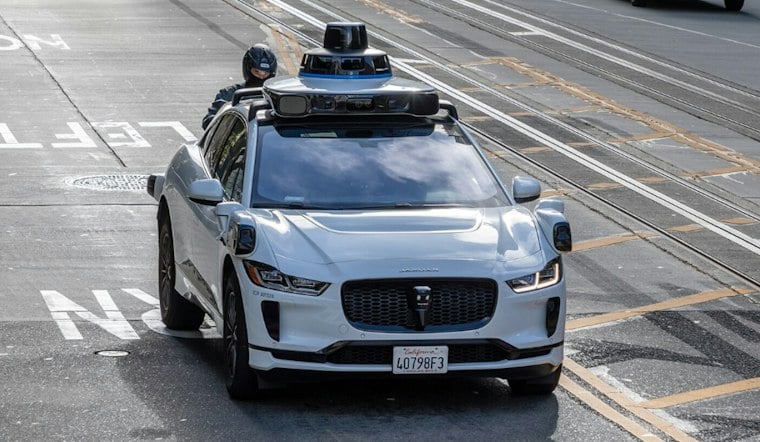
California robotaxi operators now face fines of up to $10,000 per vehicle when their driverless cars block ambulances, fire trucks, or police from reaching an emergency for more than 30 minutes after officials request a technician. Gov. Gavin Newsom signed the measure, Senate Bill 1246, this week, following years of high-profile robotaxi stalls across San Francisco that left first responders and city dispatchers scrambling to physically move stuck vehicles by hand.
The bill, authored by State Sen. Dave Cortese, requires autonomous vehicle operators to maintain written emergency response and immobilization procedures, deploy local incident technicians when requested, and restrict direct remote driving to personnel physically located in the United States who hold valid U.S. driver's licenses, according to a press release from Cortese's office. As reported by Gizmodo, cities and counties may also take AV companies to court for violations, and companies can face separate fines of up to $5,000 for other lapses. Companies must notify local officials about the status and location of vehicles hit by a system failure or outage, and must dispatch local incident technicians whenever vehicles crash, get stuck, block traffic, or block emergency access.
Cortese said clear accountability is required when autonomous vehicles interfere with public safety, per Gizmodo's reporting. The bill drew backing from a wide coalition of labor and emergency groups: SEIU California sponsored it, and it was officially supported by the California Professional Firefighters, the California Police Chiefs Association, the California Association of Highway Patrolmen, Teamsters California, and the League of California Cities, according to a post on Cortese's official Facebook page.
San Francisco's Repeated Robotaxi Freeze-Ups
The new rules trace directly back to San Francisco incidents. Waymo vehicles blocked streets during the city's Fourth of July celebrations this year, and roughly 1,500 Waymo cars stalled citywide during a power outage in December 2025, per Gizmodo. Hoodline previously covered the initial blackout stall that left Waymo vehicles frozen across the city.
During that outage, the San Francisco Department of Emergency Management placed 31 calls to Waymo's dedicated first-responder hotline and was repeatedly placed on hold, according to Hoodline's own reporting, leaving first responders and bystanders to manually move 64 blocked vehicles. The San Francisco Municipal Transportation Agency later created a dedicated dispatch tracking category called Driverless Car Incident for Muni bus and trolley operators, where resolving individual blockages frequently took up to an hour.
Federal Regulators Sound the Alarm
The state law follows a formal warning issued in July by the National Highway Traffic Safety Administration. Administrator Jonathan Morrison told driverless AV developers that an automated vehicle unable to safely interact with first responders is, in his words, “a danger to the general public,” categorizing emergency scene interference as a functional software insufficiency rather than a rare edge case, according to the National Highway Traffic Safety Administration. NHTSA said it had identified a clear pattern of driverless vehicles interfering with law enforcement and other first responders, and Morrison called on AV developers to immediately focus resources on fixing the problem, per Gizmodo.
California isn't the only state wrestling with this. In Austin, Texas, unresponsive or sleeping passengers in driverless robotaxis triggered 99 emergency 911 calls to Austin-Travis County Emergency Medical Services during Waymo's first nine months operating there, since remote operators could not wake sleeping riders through cabin speakers and were obligated by protocol to summon first responders, according to the Los Angeles Times. Separate municipal enforcement records in Austin showed 83 citations issued against Waymo vehicles for parking in tow-away zones, double-parking, and obstructing disabled parking spaces, with fines ranging from $20 to $519, per Benzinga.
From Fleet Caps to Operational Rules
SB 1246 marks a pivot from an earlier, more aggressive approach. Cortese had introduced Senate Bill 915 in January 2024 to give local cities and counties direct authority to cap robotaxi fleet sizes or ban autonomous vehicle deployments altogether, but the measure faced intense tech industry opposition and failed to pass, according to records from the San Francisco County Transportation Authority. California lawmakers had also already passed Assembly Bill 1777, authored by Assemblymember Phil Ting, creating authority for law enforcement to issue a notice of autonomous vehicle noncompliance for traffic violations and requiring AV operators to equip vehicles with two-way communication devices for first responders starting July 1, 2026, per the California State Legislature's Facebook page.
Physical crashes have also shaped the regulatory push. In August 2023, a driverless Cruise robotaxi carrying a passenger entered an intersection and collided with an active San Francisco Fire Department fire truck operating with lights and sirens, an incident that contributed to state regulators temporarily suspending Cruise's commercial deployment permit, according to KTVU. Waymo also limited service in San Francisco after several of its cars were set on fire and destroyed during anti-immigration protests in Los Angeles in June 2025, per Gizmodo, with some vehicles later seen parked at a Waymo facility in the city.
What's Next for the Robotaxi Industry
California remains a major testing ground for the robotaxi industry. Waymo currently offers commercial driverless rides across the San Francisco Bay Area, Los Angeles, and San Diego, while Amazon's Zoox offers limited free rides to select riders in San Francisco, and Tesla holds permits to test autonomous vehicles in the state, according to Gizmodo. Waymo said it is committed to making roads safer in California and continually improving its service, the outlet reported.
The new requirements don't take effect until July 1, 2028, giving AV operators and state regulators time to work out the details. A key open question is how the California DMV will draft implementation rules before that deadline, a gap that industry watchers and local officials alike are expected to track closely in the months ahead.


