

























































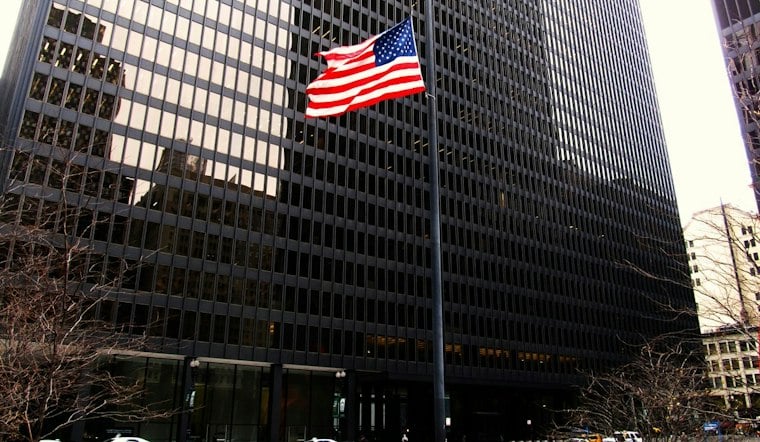
A three-judge federal appeals panel spent an hour Thursday grilling lawyers for the Trump administration and the state of Illinois over whether sanctuary policies in Chicago, Cook County and across Illinois illegally obstruct federal immigration enforcement. The judges walked out without a ruling, leaving the fate of laws that shield undocumented immigrants from local police cooperation with federal agents unresolved for now.
The hearing, held at the Dirksen Federal Building in downtown Chicago, marked the next chapter in a legal fight that began when President Trump's administration sued to invalidate laws barring local law enforcement from assisting federal immigration agents, according to WTTW News. The 7th Circuit Court of Appeals panel is now weighing whether to revive that lawsuit, which a federal judge tossed out without a full trial last year.
Administration attorneys argued that Chicago's Welcoming City Ordinance and the Illinois TRUST Act obstruct federal immigration-law enforcement and impede communication between law enforcement agencies, per the same report. Trump administration attorneys went further, contending the policies reject the federal immigration-enforcement system entirely and discriminate against federal immigration officials.
DOJ Says Agents Are Locked Out and Forced Onto the Street
Department of Justice attorney Michael Talent told the panel that Illinois policies make it difficult for federal agents to detain undocumented people once they are released from custody. He said Illinois policies bar federal agents from entering detention facilities across the state and bar local authorities from sharing information with federal agents, forcing agents to try to detain people on public streets rather than receive them directly into federal custody.
Illinois Deputy Solicitor General Alex Hemmer pushed back, telling the court that Illinois chose not to task its police with enforcing federal immigration law and that nothing in the Immigration and Nationality Act requires it to do so, per the WTTW account. Hemmer argued the federal statute requires no state pledge of police resources, no execution of immigration detainers, no prisoner transfers to federal custody and no mandatory responses to federal investigative inquiries.
Judges Press Both Sides on Statutory Gaps
Appellate judges questioned whether states have any duty to cooperate with federal immigration agents at all, a central and unresolved tension running through the case. Judge Rebecca Taibleson said Congress was unclear about what states must do regarding information sharing and custody handovers, and said current immigration laws require no such action by states, per Taibleson's comments cited by the outlet.
Taibleson also cautioned that the court should not turn statutory ambiguity into a mandate through conflict preemption, the station reported. That line cuts to the heart of the administration's legal theory, which rests on the argument that sanctuary policies conflict with and are therefore preempted by federal immigration law.
What Chicago's Welcoming City Ordinance Actually Does
Chicago's Welcoming City Ordinance is designed to ensure residents can obtain city services regardless of citizenship or immigration status, including police protection and medical care, according to the WTTW report. The ordinance, along with the Illinois Way Forward Act and a Cook County ordinance governing ICE detainers, has been the recurring target of federal challenges to the state's sanctuary framework.
Those same three policies were the subject of the original lawsuit that U.S. District Court Judge Lindsay Jenkins dismissed in July 2025 without a full trial. Jenkins ruled that forcing Illinois and Chicago law enforcement to help carry out federal deportation operations would be unconstitutional, a decision WTTW's report describes as a major victory for officials seeking to prevent the federal government from cutting billions of dollars in aid to Chicago and Illinois.
Court records from the U.S. District Court for the Northern District of Illinois show Jenkins granted the defendants' motions to dismiss and threw out the federal government's complaint in its entirety, though without prejudice, leaving the door open for an amended filing. The court held that federal immigration detainers and administrative warrants amount to requests rather than requirements for state and local law enforcement, according to a summary from Elrod Friedman. The ruling further found that no provision of the Immigration and Nationality Act obligates a state to act on a federal immigration detainer, and that because federal law makes state assistance permissive rather than mandatory, Illinois's restrictions on sharing custody, release-date and contact information, along with limits on ICE facility access, did not conflict with federal statute.
The 7th Circuit panel gave no indication Thursday of when it might rule or how it might come down on the dismissal, leaving sanctuary policies across Illinois, Chicago and Cook County in the same legal holding pattern they have occupied since the district court first threw out the government's case. WTTW News reporter Matt Masterson wrote the original report, with Heather Cherone contributing.


