

























































A 69-year-old man with early-onset Alzheimer's disease has been missing from Southwest Miami-Dade since Wednesday afternoon, and deputies are asking the public to help bring him home. Raymond Williams Carr was last seen near the 10200 block of Southwest 175th Street at 3:51 p.m., wearing red basketball shorts and a red lanyard, according to authorities.
The search is being led by the Miami-Dade Sheriff's Office, which took over law enforcement duties for the county in January 2025 after decades under an appointed police director, following the inauguration of Sheriff Rosie Cordero-Stutz. As reported by WSVN, Carr is described as standing 5 feet, 10 inches tall and weighing around 180 pounds, with brown eyes and gray hair. He was last seen in an unknown shirt and unknown shoes, along with the red shorts and red lanyard pictured in photos released by investigators.
A Vulnerable Man
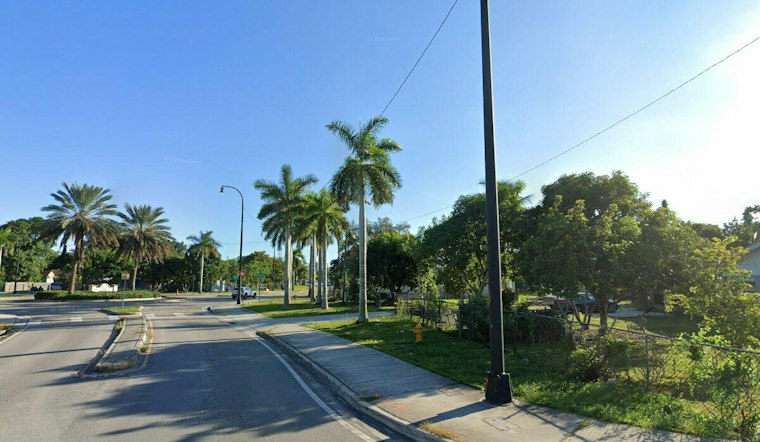
Carr was last seen near the 10200 block of Southwest 175th Street in Southwest Miami-Dade.
Carr's early-onset Alzheimer's diagnosis adds urgency to the search. The condition is diagnosed when cognitive symptoms appear before age 65 and affects roughly 110 out of every 100,000 adults between 30 and 64 nationwide, per the National Institute on Aging. Early-onset cases often bring distinct diagnostic and caregiving challenges compared with dementia that develops later in life.
Why Time and Distance Matter
Wandering is a common risk for people with memory loss. Roughly six in ten people diagnosed with Alzheimer's disease or a related dementia will wander away from care at least once during their illness, according to data from the Alzheimer's Association. Many people with dementia who wander are found within 1.5 miles of where they went missing, which points searchers toward the blocks immediately surrounding SW 175th Street.
The clock is also a factor. Medical safety studies cited by the Cleveland Clinic indicate that up to half of missing individuals with dementia who are not found within the first 24 hours suffer severe injury or death, underscoring why local bulletins like this one move quickly once a vulnerable adult is reported missing. Florida law enforcement agencies face no mandatory waiting period before accepting a missing person report for an endangered or cognitively impaired adult, which allows deputies to issue be-on-the-lookout notices immediately rather than delay.
How Florida's Alert System Works for Pedestrians
How Florida's Alert System Works for Pedestrians Local law-enforcement media broadcasts can be used for disappearances on foot, while statewide Silver Alert highway message boards are activated when a missing person is confirmed to be traveling in a vehicle with a verified license plate. That distinction explains why public appeals for someone like Carr, who vanished on foot, rely on media alerts and local notices rather than highway signage.
Since the Silver Alert program launched in October 2008, Florida has issued more than 3,000 alerts statewide and helped safely recover nearly 300 missing seniors, according to the Florida Department of Law Enforcement. The need for that infrastructure is significant in a state where Alzheimer's prevalence ranks second highest in the nation. More than 580,000 Floridians were living with the disease as of 2023, per UF Health Jacksonville.
Carr's disappearance comes shortly after another Miami-Dade missing-person appeal. Just days earlier, deputies searched for an 87-year-old man who went missing in the county.
How to Help
Anyone with information on Carr's whereabouts is asked to contact Deputy K. Fernandez-Roblin at 305-715-3300 or 305-715-3249, or by email at [email protected]. Tips can also be submitted anonymously to Crime Stoppers at 305-471-TIPS (8477).





