

























































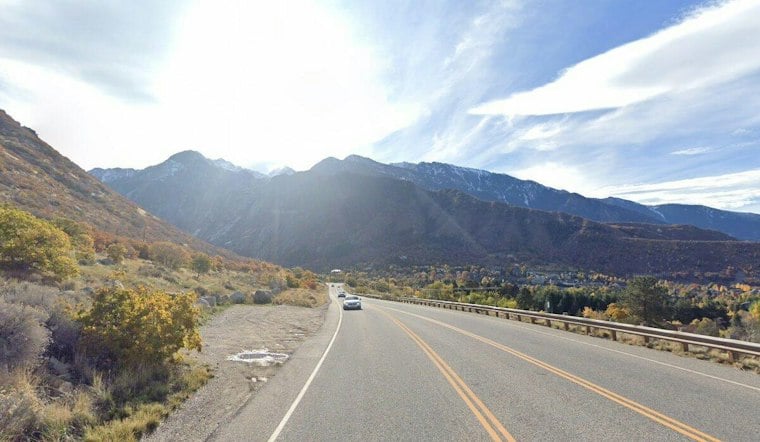
A hiker navigating a boulder field near China Wall in Little Cottonwood Canyon fell about 10 feet Friday afternoon, suffering a serious lower-leg injury that left them unable to stand or walk back to the road. What followed was a multi-team rescue effort stretching across rock, trail, and creek to get the patient to safety.
Salt Lake County Search and Rescue crews were dispatched to the scene near China Wall at about 3:26 p.m. Friday, according to Gephardt Daily. Unified Fire Authority arrived first and provided medical assistance to stabilize the patient's knee while rescue teams made their way to the boulder field.
Multiple Teams Converge on the Boulder Field
An initial Search and Rescue team was dispatched with a litter and helped Unified Fire Authority package the patient for extraction, the outlet's report notes. A second team was then sent ahead to assess the rugged terrain and plan an exit route, while two additional teams followed to support what would become a demanding carry-out.
Together, Search and Rescue and Unified Fire Authority carried the patient across the boulder field, down the trail, and through the creek before reaching the road, per the same account. A family member was waiting there to drive the patient to the hospital for further evaluation. All teams were off the mountain by 5:42 p.m., roughly two hours after the initial dispatch.
A Canyon Known for Technical Rescues
Little Cottonwood Canyon's steep, rocky terrain has tested rescue crews before. In a separate incident described by ABC4, a climber fell 30 feet from the fourth pitch of the canyon's Pentapitch route, injuring an ankle and shoulder. In that case, Unified Fire Authority was also first on scene before calling in Search and Rescue, which deployed Department of Public Safety teams to hoist the patient to a secured landing zone before an ambulance took them to the hospital. That response took about three hours.
Friday's rescue near China Wall followed a different path to safety, with the patient carried entirely on foot by rescuers rather than hoisted by air, and ultimately driven to the hospital by a family member rather than transported by ambulance.





