

























































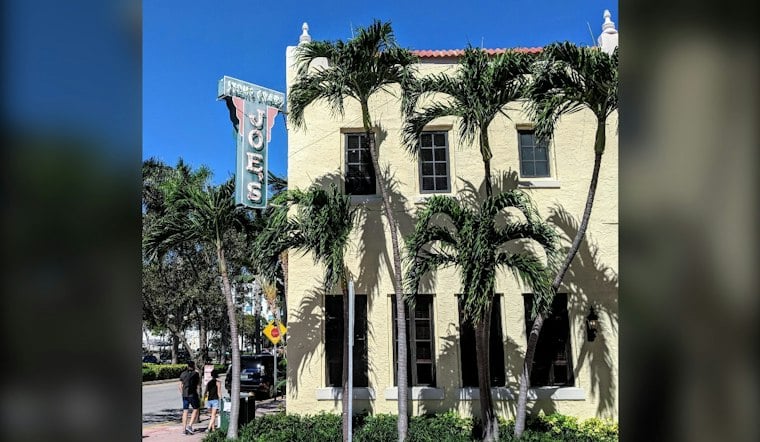
Joe's Stone Crab opens for dinner service Friday, October 16, the day after Florida's statewide stone crab harvest officially kicked off for the year. The century-old restaurant's return to full seasonal service lines up with the state's regulatory calendar, which allows commercial and recreational crabbers to start pulling claws from October 15 through May 1.
The restaurant's return for another year on Miami Beach was covered by NBC 6 South Florida. Florida regulations allow traps to be placed no more than 10 days before the season opens, as described by the Florida Fish and Wildlife Conservation Commission. The agency also enforces rules barring harvesters from taking claws off egg-bearing female crabs and requiring that the crabs themselves be returned to the water alive.
A Fishery Built on Giving the Crab a Second Chance
Unlike most commercial seafood operations, stone crabbing doesn't kill the animal. Harvesters snap off legal-sized claws and release the crab back into the water, where it can regrow the limb over several molting cycles spanning three to four years, per the Florida Fish and Wildlife Conservation Commission. State wildlife officials advise crabbers to take only one claw per crab so the animal keeps a tool for feeding while it regenerates the other.
That non-lethal model hasn't spared the fishery from tightening oversight. In July 2020, the state shortened the harvest season by two weeks and raised the minimum legal claw length from 2 3/4 inches to 2 7/8 inches in response to long-term population declines, the agency said at the time. Regulators also began requiring 2 3/16-inch escape rings in wood and plastic traps to cut down on accidental bycatch.
Florida's Near-Total Grip on the Nation's Claws
Florida's commercial fleets land roughly 99% of all stone crab claws harvested in the United States, according to UF/IFAS Extension, making the fishery one of the state's most economically significant marine industries. Commercial crabbers typically rely on baited plastic or wooden traps set in shallow coastal waters to bring in the harvest.
Joe's Stone Crab sits at the center of that supply chain. The restaurant runs its own wholesale and crab-buying operation, making it the largest single purchaser of Florida stone crab claws and a major financial backer for local commercial crabbers, according to Wikipedia.
From Lunch Counter to National Sales Powerhouse
Joe's Stone Crab generated $49,413,190 in sales in 2024, according to Restaurant Business Magazine. Fellow Miami Beach restaurant MILA actually claimed the national top spot last year with $51.1 million in sales, a sign of just how competitive — and lucrative — South Florida's dining scene has become.
The restaurant's roots go back further than most of its customers realize. Hungarian immigrants Joe and Jenny Weiss opened a seafood service concession in 1913. Stone crabs were added to the menu in the early 1920s after an ichthyologist suggested them.
Joe Weiss traveled to Miami Beach in 1913 and found relief from asthma. When Joe's Diner was established in 1920, Miami Beach was not yet a city.
Keeping the Lights On When the Claws Run Out
Fresh claws are only available during the state's harvest window, but Joe's doesn't shut down the rest of the year. The restaurant keeps serving flash-frozen claws alongside an expanded seafood and steak menu during the off-season, according to Tasting Table, letting the business stay open twelve months a year despite the state's strict harvest calendar.
The restaurant's staying power has earned it national recognition beyond its sales figures. In 1998, the James Beard Foundation gave Joe's Stone Crab its America's Classic Award, an honor reserved for long-established, family-run restaurants that reflect the character of their communities. Hoodline covered last year's season opener, when Joe's kicked off its 113th year on Miami Beach — a reminder that this seasonal ritual, and the economic wave it brings to the city, happens like clockwork every October.




