

























































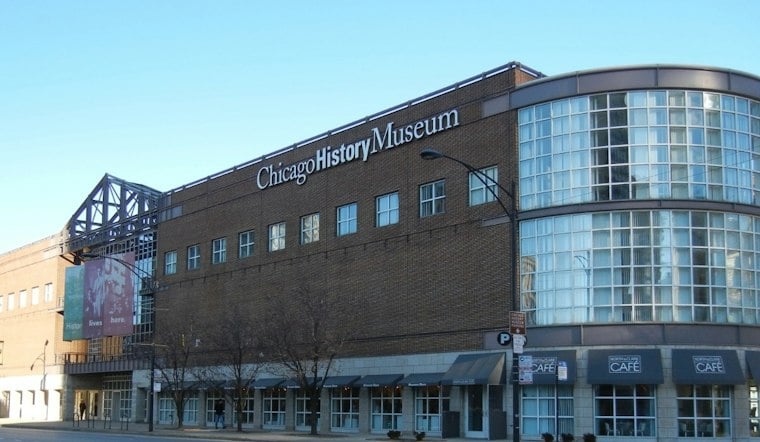
A century-long saga that turned a Chicago factory into one of America's most recognized bicycle brands — and then watched it collapse into bankruptcy — is getting the documentary treatment this weekend. “No Hands: The Wild Ride of the Schwinn Bicycle Company” makes its Chicago and Midwest premiere Oct. 24 and 25, with a screening at the Chicago International Film Festival set for Sunday at the Chicago History Museum in Lincoln Park.
The feature documentary, narrated by Tour de France winner Lance Armstrong, traces Schwinn's history from its founding in Chicago in 1895 to the turn of the 21st century, according to the film's own festival site. Armstrong appears both as narrator and as an interview subject, as Deadline reports, while Unfeatured Films founder Daniel Clarke directs. The film is based on the eponymous 1996 book by Chicago authors Judith Crown and Glenn Coleman, according to the Chicago Tribune.
Schwinn Bicycle Company was founded by Ignaz Schwinn in Chicago in 1895, and the former Schwinn factory employed many local families, according to Block Club Chicago. Ignaz Schwinn established an inheritance trust requiring the company to pass to the first son of the first son, per the outlet, and Edward “Ed” Schwinn Jr. was the last son to helm the company before its 1992 bankruptcy.
A Family Archive Brought Back to Life
Richard Schwinn, a fourth-generation member of the Schwinn family who now owns Waterford Precision Cycles in Wisconsin, is among the documentary's featured voices, per theschwinndocumentary.com. He is the brother of Ed Schwinn Jr. and provided many of the archival photos featured in the film, Block Club Chicago reports; his son, Tucker Schwinn, is also connected to the family story. The documentary crew used artificial intelligence to enhance those images, removing scuffs and color correcting photographs, catalogs and footage so they could be presented in 4K resolution, according to the same report.
The Chicago Tribune separately confirms that Clarke used artificial intelligence to enhance a century of faded photos, ads and catalogs for the film. At its peak, Schwinn was the largest bike manufacturer in the country, producing more than 1 million two-wheelers a year, the Tribune reports — and per Clarke, the brand ranked among the nation's top five for brand recall during a run that lasted roughly 100 years.
From Factory Floor to Bankruptcy Court
Schwinn's dominance didn't last. The company accounted for about a quarter of all bicycles purchased by U.S. consumers during the 1950s, according to WBEZ. By the 1970s bike boom, the station reports, Schwinn's Chicago factory could no longer keep up with demand, pushing the company to rely more heavily on imported bikes. The brand had introduced the Stingray in 1963 after noticing kids in California modifying their own bicycles, a move that helped cement Schwinn's influence on generations of American cycling culture.
By 1983, Schwinn had ceased manufacturing in Chicago entirely, laying off 1,800 employees and shifting most production overseas to Taiwan, the Tribune reports. Deadline notes that despite Schwinn's outsized influence on BMX, mountain biking and cutting-edge bicycle design, the company failed to capitalize on those very trends. By the time of its collapse, Schwinn held just 7% of the U.S. bicycle market, a steep drop from the 25% share it commanded during its 1950s heyday, according to a 1992 Los Angeles Times report.
Court records tell the precise legal timeline. Schwinn Bicycle Co. and several related entities filed petitions for Chapter 11 bankruptcy protection on Oct. 8, 1992. An order confirming Schwinn's reorganization plan was later entered on June 6, 1994, and the same court record shows that motions to dismiss filed by Fairly Bike and Ming-Tay were entirely denied. Some accounts of the bankruptcy's timing have varied — WBEZ's history of the company places the bankruptcy filing in 1991, while Deadline and other outlets cite 1992, which matches the court's own record of the October 1992 filing date.
Where and When to Watch
Block Club Chicago reports that Richard and Tucker Schwinn connect the company's story to Chicago landmarks beyond the factory floor, including the Schwinn mansion that was once home to Ignaz Schwinn and today houses St. Sylvester School at 3027 W. Palmer Square. At an earlier screening at the Mill Valley Film Festival, roughly 80% of the audience raised their hands when asked if they had owned a Schwinn growing up, according to theschwinndocumentary.com.
The Sunday screening at the Chicago History Museum, 1601 N. Clark St. in Lincoln Park, starts at 3 p.m., with tickets priced at $18, per Block Club Chicago. The Chicago International Film Festival is screening the documentary during the same Oct. 24-25 weekend. Clarke has said the film is expected to be widely available by the beginning of 2027.



